


United Flight From Edinburgh Continued to Washington Despite Health Alert
CHICAGO — A United Airlines flight arriving from Scotland landed safely at Washington Dulles International Airport after crew members reportedly handled a possible Ebola-related concern onboard during the transatlantic journey.
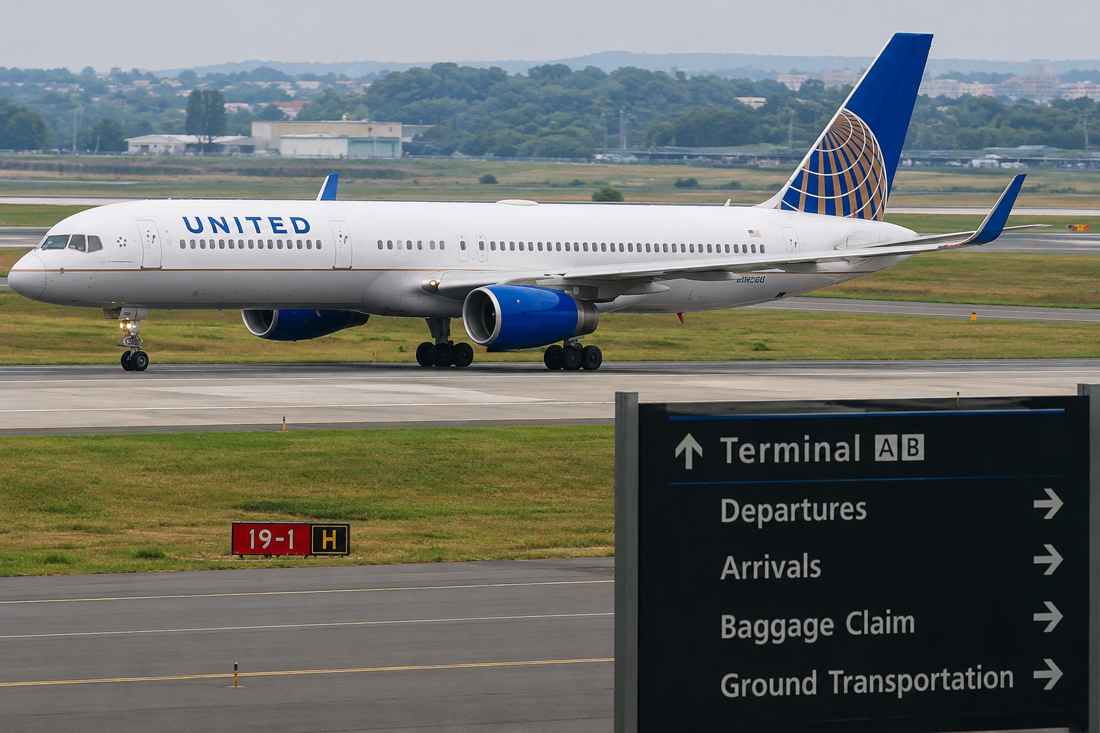
United Airlines flight UA979, operated by a Boeing 757-200, traveled from Edinburgh Airport in Scotland to Washington Dulles International Airport on June 11, 2026. The aircraft ultimately completed the scheduled route despite discussions about potential diversions to Bangor, Maine, and New York John F. Kennedy International Airport.
No U.S. authority has publicly confirmed that any passenger onboard was infected with Ebola, and there is no evidence that other travelers were exposed during the flight.
The incident drew attention after air traffic control audio reportedly indicated that a family who had recently traveled from Uganda showed symptoms during the flight. The crew weighed diversion options before deciding to continue to Washington Dulles, one of four U.S. airports designated for enhanced Ebola screening procedures.
Crew Considered Diversions Before Continuing to Dulles
Flight tracking information shows the aircraft departed Edinburgh at approximately 2:35 p.m. local time and arrived at Washington Dulles around 5:00 p.m. local time after crossing the Atlantic.
During the flight, operations personnel reportedly informed the cockpit crew that customs and border authorities had flagged a possible Ebola concern involving a family of five or six passengers who had recently traveled from Uganda. According to the reported communication, officials could not immediately verify the situation, and no seat assignments for the passengers were available at that time.
The Boeing 757 crew reportedly evaluated diversion possibilities to Bangor International Airport in Maine and New York JFK before electing to continue to Dulles.
It remains unclear how the family traveled from Uganda to Edinburgh before boarding the United Airlines service. Uganda Airlines operates flights between Entebbe International Airport and London Heathrow using an Airbus A330-800neo, though no confirmed itinerary connecting the travelers to Scotland has been released.
Reports surrounding the incident emphasized that a “possible Ebola concern” does not mean a confirmed Ebola diagnosis. The concern may have been tied to travel history or precautionary health screening procedures rather than confirmed symptoms associated with the virus.
Why Washington Dulles Became the Preferred Destination
Dulles Is One of Four U.S. Ebola Screening Gateways
Washington Dulles has been designated by U.S. authorities as one of four approved airports for enhanced Ebola-related screening of travelers arriving from certain African nations.
Under protocols introduced on May 20, 2026, travelers who recently visited the Democratic Republic of Congo, Uganda, or South Sudan are required to enter the United States through one of four designated airports. The approved entry points are Washington Dulles, New York JFK, Atlanta Hartsfield-Jackson International Airport, and Houston George Bush Intercontinental Airport.
Because United Airlines does not maintain a significant operational hub at JFK, aviation analysts noted that continuing to Dulles was operationally logical and aligned with federal health screening procedures.
The Centers for Disease Control and Prevention has stated that U.S. citizens, lawful permanent residents, and U.S. nationals who have recently traveled to affected countries may still enter the United States, but only through designated screening airports. Foreign nationals face stricter entry limitations under the current protocols.
Enhanced screening measures can include temperature checks, travel-history verification, symptom assessments, and collection of contact information for public health follow-up if necessary.
Industry observers noted that if any passengers onboard UA979 had recently traveled through affected regions, Dulles would have been an appropriate arrival airport under existing federal guidance.
Ebola Transmission Risk Remains Low in Aircraft Settings
Virus Does Not Spread Like Airborne Respiratory Illnesses
Public health officials have repeatedly emphasized that Ebola transmission differs significantly from airborne diseases such as COVID-19, influenza, or measles.
There is currently no public evidence that anyone onboard the United Airlines flight had Ebola, nor is there any indication that fellow passengers were exposed during the journey.
Ebola transmission typically requires direct contact with bodily fluids from a symptomatic individual. Health experts have long noted that the virus does not spread through casual airborne exposure in the same manner as common respiratory illnesses.
The CDC has previously described the domestic risk of Ebola transmission in the United States as low, while maintaining that enhanced airport screening remains an important layer in the country’s broader public health preparedness strategy.
Bottom Line
United Airlines flight UA979 from Edinburgh to Washington Dulles completed its scheduled journey on June 11 after a reported possible Ebola concern involving travelers recently arriving from Uganda.
Although the crew reportedly evaluated diversions to Bangor and New York JFK, the aircraft ultimately continued to Dulles, a designated U.S. airport for enhanced Ebola screening procedures.
No public confirmation has been issued indicating that any passenger onboard had Ebola, and authorities have not reported any confirmed exposure linked to the flight.
