


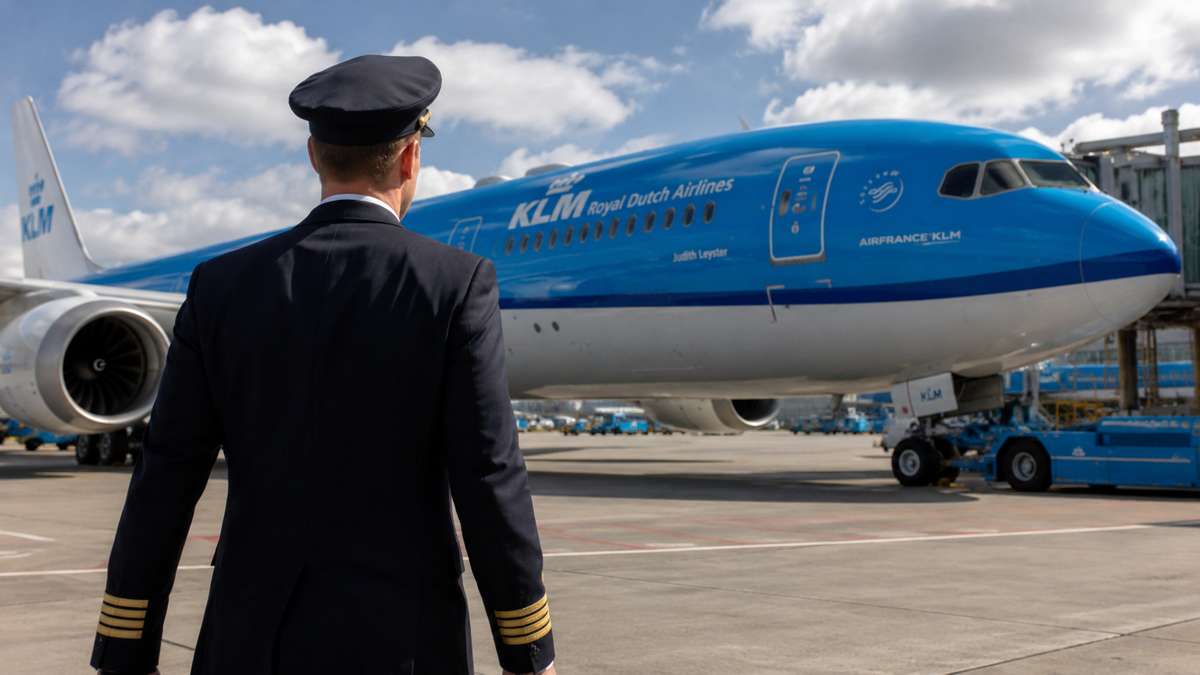
New labor deal also expands post-retirement travel benefits for pilots
AMSTELVEEN, Netherlands — KLM and pilot unions have reached a new collective labor agreement that will raise pilot salaries by 4.75% over the next two years, ending months of difficult negotiations marked by financial pressures, labor tensions, and threats of industrial action.
The agreement, which still requires approval from union members, also expands a long-standing travel benefit program by allowing pilots to access discounted airline tickets for up to four years after the mandatory retirement age of 58.
The deal comes at a challenging time for the Dutch carrier, which has faced mounting operational costs, weaker profitability than sister airline Air France, and rising fuel expenses tied partly to ongoing instability in the Middle East.
According to Dutch financial newspaper Financieele Dagblad, the pilots’ union VNV described the agreement as a compromise that balances the airline’s financial constraints with pilots’ demands for improved compensation.
Pilot Salaries to Increase Over Two Years
Under the terms of the agreement, KLM pilots will receive a combined salary increase of 4.75% spread across a two-year period. The agreement applies to approximately 3,600 pilots represented by VNV, the Netherlands’ largest pilot trade union.
In addition to the pay increase, the revised contract broadens the airline’s discounted ticket scheme for pilots. Under the expanded arrangement, pilots will continue to receive reduced-fare travel benefits for several years after retirement.
“Under the new terms, pilots can receive ticket discounts for up to four years after the retirement age of 58,” VNV chairman Ruud Stegers told Financieele Dagblad.
The previous collective labor agreement covering KLM pilots expired in March last year, leaving negotiations unresolved for more than a year. During that period, tensions between labor representatives and airline management escalated as both sides struggled to bridge differences over wages and cost controls.
Negotiations Shaped by Financial Pressures
The negotiations unfolded against a difficult financial backdrop for KLM. The airline has been pursuing cost reductions as it seeks to improve profitability, which has lagged behind that of Air France within the broader Air France-KLM group.
KLM management initially resisted calls for higher pilot wages, arguing that the company’s financial position did not support salary increases. The airline also faced growing operational costs at Amsterdam Airport Schiphol, one of Europe’s busiest and most expensive aviation hubs.
At the same time, fuel prices increased sharply due to geopolitical instability in the Middle East, adding further pressure to airline operating costs and complicating labor negotiations.
The drawn-out talks led pilots to threaten strike action earlier in the process, raising concerns about potential disruption to flight schedules during key travel periods.
Comparisons With Ground Staff Added Pressure
A major point of contention during negotiations centered on compensation fairness between different employee groups at KLM.
Ground staff had already secured a separate two-year labor agreement that included a 3.25% pay increase, prompting pilot unions to argue that cockpit crews should receive similar treatment.
Pilots maintained that excluding them from wage increases while other employee groups received raises would create an imbalance within the company’s workforce.
The fairness argument had previously been used in reverse during negotiations involving ground workers. At that time, unions pointed to the fact that pilots had received €29 million in returns in January of the previous year while pressing for higher wages for non-pilot staff.
That earlier comparison helped advance negotiations for ground employees and later became part of the pilots’ own argument for salary improvements.
Union Describes Deal as “Balanced Agreement”
Despite securing higher wages and expanded benefits, union leaders acknowledged the limitations imposed by KLM’s current financial conditions.
Stegers described the outcome as a “balanced agreement” that reflects the economic realities facing the airline industry.
“He pointed to KLM’s financial situation, the high costs of operating at Schiphol, and the increase in fuel prices as factors that shaped the final terms.”
The agreement now moves to union members for ratification. A successful vote would formally implement the new collective labor agreement and provide KLM with greater labor stability after more than a year of uncertainty surrounding pilot contracts.
