


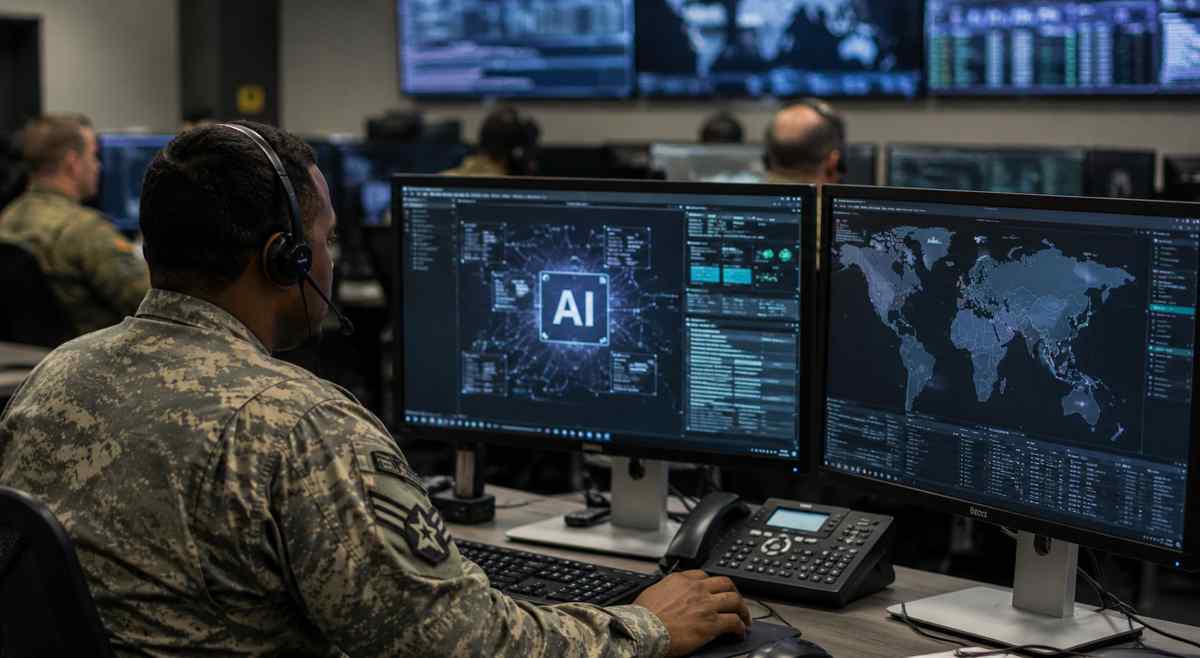
US Air Force Expands AI Push With Service-Wide Training Initiative
The United States Air Force is preparing to launch a sweeping artificial intelligence training initiative aimed at giving every Airman a baseline understanding of AI tools and applications, as the service accelerates efforts to modernize its workforce and operational capabilities.
Chief Master Sergeant of the Air Force David R. Wolfe announced the initiative during a Military Officers Association of America webinar on May 8, describing AI as a transformational technology that could reshape how the Air Force operates across both administrative and combat functions.
The program will originate from the Department of the Air Force’s headquarters in Arlington, Virginia, and forms part of a broader strategy to integrate AI across the service. The effort follows the Department of the Air Force’s recently released AI strategy and coincides with a parallel campaign to recruit and retain highly skilled AI professionals.
Air Force Sees AI as a Generational Shift
Universal AI Literacy Across the Force
Air Force leadership says the initiative is designed to ensure every Airman can effectively use AI-powered tools in daily operations. Officials view the technology as comparable to earlier shifts brought by the widespread adoption of desktop computers and email.
“We have got an opportunity here with AI that we are going all in on,” Wolfe said.
According to Wolfe, the Air Force is finalizing training materials that will establish a baseline level of AI literacy throughout the service. The training is intended not only to support current AI applications but also to prepare personnel for future use cases that may emerge as the technology evolves.
While the Air Force has not disclosed a formal launch date for the program, Wolfe said leadership believes the initiative will significantly improve operational efficiency and workforce effectiveness once fully implemented.
AI Strategy Focuses on Faster Decision-Making
Pentagon Prioritizes AI Across Operations
The training initiative aligns closely with the Department of the Air Force AI Strategy, formally endorsed in April 2026. The strategy outlines plans to use AI to accelerate sensor-to-shooter timelines and strengthen decision-making through predictive analytics and enhanced situational awareness.
The broader Department of Defense has increasingly emphasized AI as a critical force multiplier, particularly as military planners seek to improve operational speed and data processing capabilities in future conflicts.
Under the strategy, AI tools are expected to be embedded across logistics, intelligence, command systems, and operational planning functions. Air and Space Forces officials have described the initiative as part of a long-term modernization effort designed to maintain the military’s technological advantage.
Administrative AI Applications Already Under Review
Promotion and Awards Processes Could Be Streamlined
In addition to operational uses, Air Force leaders are exploring administrative applications where AI could reduce workloads and improve efficiency.
Wolfe said the service is currently experimenting with AI tools that could automate portions of the preparation process for promotion boards and military awards. However, he emphasized that AI would not make promotion or award decisions itself. Instead, the technology would organize and prepare information for review by human officials.
“What we think is in the realm of the possible is we take our already awesome people and make them even more capable than they already are by automating processes that they don’t have to put a bunch of time into,” Wolfe said.
The Air Force believes these types of automation efforts could reduce administrative burdens and allow personnel to focus more heavily on mission-critical responsibilities.
Air Force Competes for AI Talent
Recruitment and Retention Become Strategic Priorities
The Department of the Air Force separately announced plans on April 28 to aggressively recruit, train, and retain AI specialists as demand for technical expertise intensifies across both government and private industry.
Susan Davenport, the Air Force’s Chief Data and Artificial Intelligence Officer, said the service plans to use special hiring authorities and compensation incentives similar to those already used within the acquisition workforce. The goal is to compete more effectively with private-sector technology firms that often offer substantially higher salaries for AI professionals.
Although officials confirmed that financial incentives are under consideration, the Air Force has not released specific compensation figures.
The service also established an AI Center of Excellence in May 2025 to coordinate AI development efforts. The center builds on partnerships with institutions and companies including the Massachusetts Institute of Technology, Stanford University, and Microsoft.
Former Air Force Chief Information Officer Venice Goodwine previously described AI as a broad continuum of capabilities ranging from legal brief summarization and workflow automation to autonomous systems and advanced operational tools. The Center of Excellence is expected to align AI investments with the Air Force’s long-term strategic priorities.
Bottom Line
The Air Force’s latest AI initiatives reflect a two-track strategy focused on both workforce-wide AI literacy and the recruitment of elite technical talent. Together, the programs are intended to accelerate the integration of artificial intelligence across administrative, operational, and combat-related functions as the service prepares for future warfare and increasingly data-driven military operations.
