


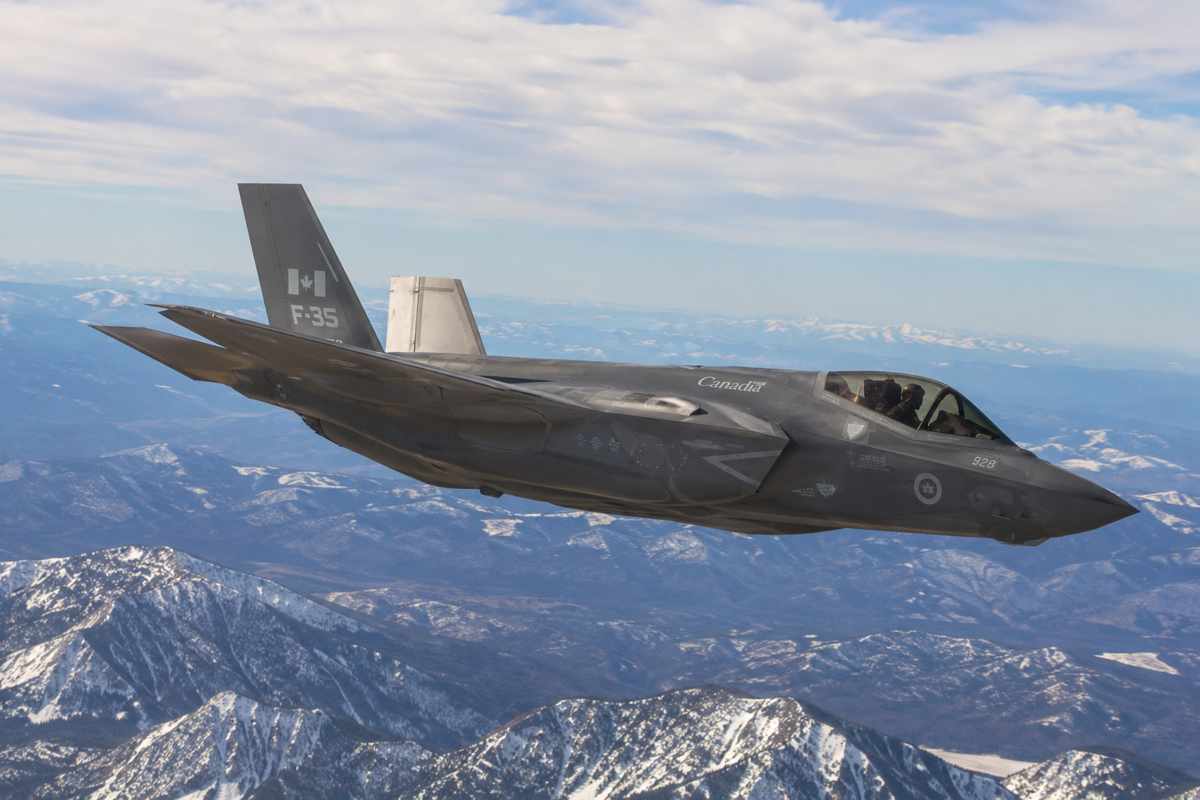
Ottawa Extends Review of 88-Jet Procurement as European Rivals Push Alternative Offers
FORT WORTH — Canada’s federal government is continuing its review of the country’s planned purchase of 88 Lockheed Martin F-35A fighter jets, even as pressure mounts from allies, defense analysts, and rising program costs.
Defense Minister David McGuinty confirmed that fighter aircraft from other countries remain under active consideration as Ottawa reassesses the multibillion-dollar procurement program originally signed in January 2023. The review, initiated by Prime Minister Mark Carney in early 2025, has now stretched well beyond its original September 2024 completion target.
The extended timeline comes amid growing political sensitivity surrounding defense spending, Canada’s military modernization plans, and broader trade and security relations with the United States.
Canada previously signed a CAD 19 billion (US$14.2 billion) agreement with Lockheed Martin for the acquisition of 88 F-35A fighters intended to replace the Royal Canadian Air Force’s aging CF-18 Hornet fleet. Deliveries are scheduled through 2032, with the first 16 aircraft already funded and expected to arrive by the end of 2026.
Carney Government Continues F-35 Assessment
Speaking before the House of Commons Defense committee on April 27, McGuinty said the government is taking additional time to closely study the future fighter fleet.
He confirmed that “the question of jets from other countries is on the table and forms part of the review.”
McGuinty rejected suggestions that concerns over possible political fallout from U.S. President Donald Trump are driving the delay. Instead, he said the government’s extended timeline demonstrates a responsible approach to a major national defense investment.
“He added that the F-35 question remains under review, the Prime Minister is engaged, he himself is very engaged, and colleagues in the emerging Defense Investment Agency are engaged.”
The defense minister also emphasized that Ottawa is reviewing industrial and economic benefits tied to the procurement before making any final decisions.
Rising Costs Add Pressure to Procurement Debate
The procurement review comes as new audits raise concerns over the long-term cost of the fighter program.
Auditor General Karen Hogan recently revised the projected cost of the acquisition upward to CAD 27.7 billion, citing additional requirements for weapons systems, infrastructure, and operational facilities. The audit also identified shortages of trained pilots as a growing challenge for the Royal Canadian Air Force.
Earlier estimates from Canada’s Parliamentary Budget Office placed the 45-year life-cycle cost of the fleet at approximately US$73.9 billion, including maintenance, operations, upgrades, and eventual disposal.
Prime Minister Carney has indicated that the current review applies only to the remaining 72 aircraft, leaving the initial tranche of 16 jets unaffected.
European Competitors Pitch Domestic Manufacturing
As Ottawa reconsiders part of the purchase, several European aerospace firms have intensified efforts to position alternative fighter platforms as viable replacements.
Saab Offers Canadian Production Hub
Sweden’s Saab has proposed establishing a Gripen production facility in Canada under a “Made-in-Canada” manufacturing model. The proposal includes full local production, technology transfer, source-code access, and sovereign control over maintenance and upgrades.
The offer has attracted attention among Canadian policymakers seeking to expand domestic aerospace jobs and reduce dependence on foreign-controlled military software systems.
Rafale and Eurofighter Also Competing
France’s Dassault Aviation has promoted the Rafale fighter jet, while Airbus has advanced the Eurofighter Typhoon as an alternative option. Both aircraft are being marketed as platforms capable of delivering stronger industrial participation and economic benefits for Canada.
However, defense analysts warn that replacing the F-35 with another aircraft type could complicate Canada’s integration with existing North American defense systems.
NORAD and Trade Ties Complicate Canada’s Options
Canada’s defense relationship with the United States remains deeply interconnected through NATO, the Five Eyes intelligence alliance, and the North American Aerospace Defense Command (NORAD).
The U.S. also accounts for the majority of Canada’s international trade activity. Bilateral trade between the two countries reached roughly US$720 billion, with Canadian exports to the United States representing more than 70% of total exports.
U.S. Ambassador to Canada Pete Hoekstra reportedly described the prolonged F-35 review as an “irritant” that complicates broader trade discussions between the two nations.
Analysts say Ottawa must balance domestic political concerns with operational realities tied to continental defense and military interoperability.
Defense Analysts Doubt Canada Will Abandon F-35 Program
Several defense experts remain skeptical that Canada will ultimately cancel the remaining F-35 purchase.
Justin Bronk, Senior Research Fellow for Airpower and Technology at the Royal United Services Institute, said he believes Canada will find there are “no good alternatives” to continuing with the procurement.
Retired Lieutenant General Yvan Blondin, former commander of the Royal Canadian Air Force, offered an even more direct assessment, stating that “there is no reason to cancel and that Canada should just buy it.”
Andrew Latham, Senior Washington Fellow at the Institute for Peace and Diplomacy, argued that Canada’s procurement momentum already suggests the government is committed to the aircraft despite public review efforts.
He wrote that “Canada can keep pretending it is still at the start of the decision tree, but the purchase of long-lead parts suggests it knows better.”
Bottom Line
Canada’s fighter jet review now sits at the intersection of defense modernization, industrial policy, and geopolitical strategy. While Ottawa continues evaluating alternative aircraft for the remaining 72 jets, the combination of sunk costs, NORAD integration requirements, and the urgent need to replace the aging CF-18 fleet makes a full cancellation of the F-35 program increasingly unlikely.
