


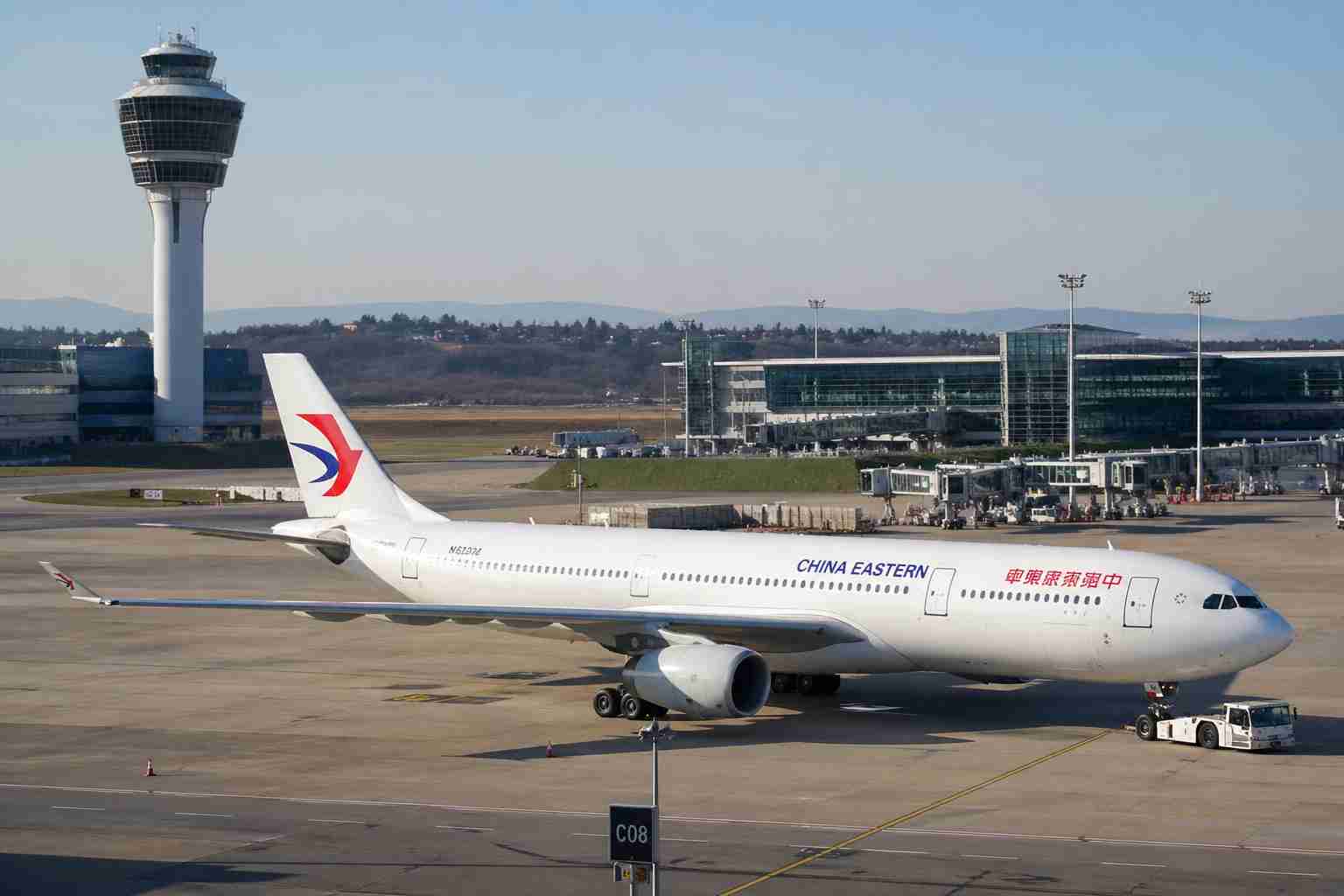
New Service Links Austria to Northwest China With Three Weekly Flights
VIENNA — China Eastern Airlines has inaugurated a new nonstop route between Vienna and Xi’an, establishing the first direct air connection between Austria and northwest China. The move signals a continued push by the Shanghai-based carrier to expand its international footprint while strengthening links between Europe and inland Chinese cities.
The newly launched service connects Vienna, Austria’s capital, with Xi’an, a historic and economically significant hub in Shaanxi Province. The route is expected to improve travel efficiency for both business and leisure passengers by eliminating the need for transfers through China’s major coastal gateways such as Shanghai or Beijing.
Flight Schedule and Aircraft Details
China Eastern will operate the Vienna–Xi’an route three times weekly, with departures scheduled on Mondays, Thursdays, and Saturdays. The westbound flight departs Vienna at 13:30 local time and arrives in Xi’an at 05:50 the following day, offering an overnight travel option designed for passenger convenience.
The return service departs Xi’an at 01:30 and lands in Vienna at 06:10 local time. These timings are structured to accommodate both corporate and tourism travelers while enabling onward connections across China and broader Asia.
The airline is deploying a wide-body Airbus A330 aircraft on the route. The configuration includes 18 business-class seats and 245 economy-class seats, balancing premium service offerings with high passenger capacity. This setup reflects anticipated demand from both business travelers and tourists.
Strategic Expansion Into Europe
The addition of Vienna marks another step in China Eastern’s broader European expansion strategy. The airline already serves major cities including London, Paris, Rome, Amsterdam, and Frankfurt, and the new route enhances its presence in key European markets.
At the same time, the Vienna service supports the airline’s goal of developing secondary Chinese cities as international gateways. Xi’an plays a central role in this strategy, with the carrier now operating 16 international routes from the city, connecting it to 14 global destinations.
By positioning Xi’an as a transfer hub, China Eastern aims to redistribute international passenger traffic beyond traditional entry points, supporting regional economic development and offering travelers more diverse routing options.
Benefits for Travelers on Both Ends
The new route provides tangible advantages for passengers traveling between Austria and China. Austrian travelers gain direct access to Shaanxi Province, home to globally recognized cultural landmarks such as the Terracotta Army, as well as improved connectivity to central and western China.
Additionally, China’s visa-free policy for Austrian passport holders—allowing stays of up to 30 days for tourism, business, or transit through the end of 2026—is expected to further stimulate demand by simplifying entry procedures.
For Chinese travelers, the route opens a direct gateway to Austria and the broader Schengen region, although visa requirements remain in place prior to travel. The connection is anticipated to boost tourism flows, trade relations, and cultural exchange between the two regions.
Vienna’s Appeal as a Global Destination
Vienna continues to rank among the world’s most livable cities, offering a combination of cultural heritage and modern infrastructure. Visitors arriving at Vienna International Airport can reach the city center within approximately 25 minutes via rail connections such as the ÖBB Railjet or S7 Express train.
The Austrian capital is known for its imperial architecture, extensive museum offerings, and established café culture. Compared with heavily visited European destinations like Paris or Rome, Vienna offers a less crowded experience while maintaining a similarly rich cultural landscape.
With more than 100 museums, seasonal attractions such as Christmas markets, and a highly efficient public transportation system, the city consistently earns high marks in global livability rankings.
A City Shaped by History and Modern Growth
Vienna’s historical roots date back to the Roman settlement of Vindobona, later evolving into a प्रमुख center under the Habsburg dynasty. This legacy is still visible in the city’s grand palaces, expansive parks, and Baroque architecture.
The 20th century brought significant political changes, including annexation by Nazi Germany and post-war occupation. Austria regained sovereignty in 1955 with the signing of the Austrian State Treaty. Today, Vienna is home to more than two million residents and is recognized for its high quality of life and diverse urban environment.
The launch of the Vienna–Xi’an route underscores China Eastern Airlines’ dual focus on international expansion and regional connectivity within China. By linking a प्रमुख European capital with a rising inland Chinese hub, the airline is positioning itself to capture growing demand for direct, efficient long-haul travel between the two regions.
