


Defense Contractor Signals Readiness Ahead of Expected August 2026 Contract Award
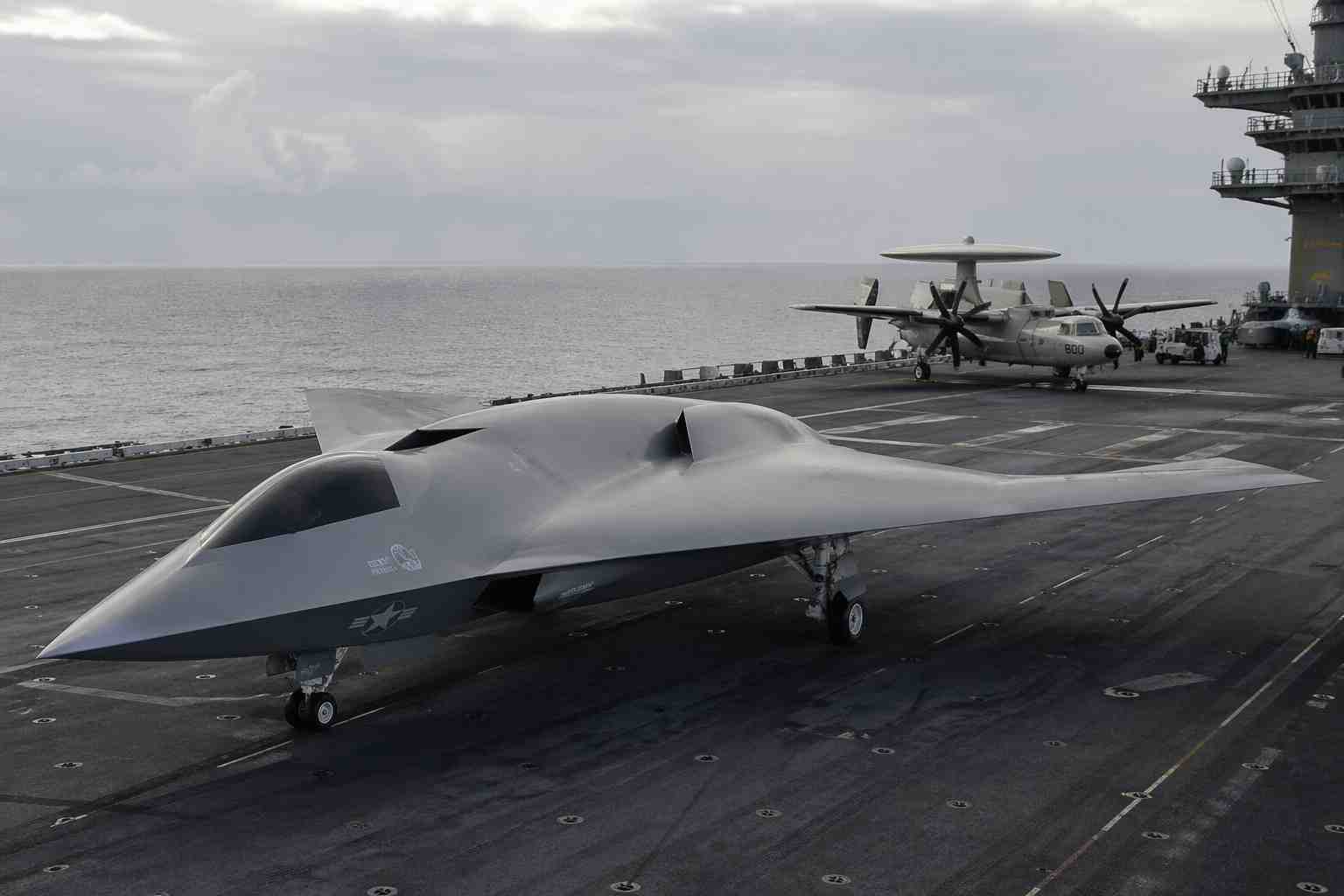
FALLS CHURCH — Northrop Grumman has unveiled a new rendering and concept video of a next-generation carrier-based fighter, offering its most detailed public glimpse yet into its bid for the U.S. Navy’s F/A-XX program. The release comes just months before a highly anticipated contract award decision expected in August 2026, according to Navy leadership.
The timing underscores the intensifying competition between Northrop and Boeing, the two remaining contenders after Lockheed Martin was eliminated in early 2025.
Stealth Design Reflects Next-Generation Combat Priorities
The newly revealed aircraft concept features a tailless configuration, folding wings, and dorsal air intakes—design elements widely associated with sixth-generation stealth fighters. The rendering depicts the jet aboard a Ford-class aircraft carrier, reinforcing its intended role within carrier air wings.
The aircraft’s configuration draws heavily from Northrop’s stealth bomber lineage, including the B-2 Spirit and the B-21 Raider. Its recessed, top-mounted air intakes and lack of vertical stabilizers are designed to reduce radar visibility across multiple frequency bands, a critical requirement for operations in contested environments.
The fighter also displays U.S. Navy markings and carrier-compatible folding wings, both essential for shipborne operations.
“We’re ready to close the distance of next-gen naval aviation with unmatched speed and capacity,” Northrop stated alongside the release.
Strategic Timing Aligns With Navy Announcement
The concept video was published within hours of remarks made by Chief of Naval Operations Admiral Daryl Caudle at the Navy League’s Sea-Air-Space 2026 exposition on April 20. Caudle confirmed that a contractor downselect is expected in August 2026, signaling that the long-delayed program may finally be approaching a निर्णptive phase.
Northrop CEO Kathy Warden reinforced the company’s commitment during a recent earnings call, highlighting the program’s importance to future growth.
“Our suppliers and we are prepared to bring the workforce and infrastructure needed to execute the programme,” Warden said, adding that the company expects “upside to sales and earnings from current guidance” if selected.
Program Aims to Replace Super Hornet Fleet
The F/A-XX is the Navy’s next-generation carrier-based strike fighter and a central component of its broader Next Generation Air Dominance (NGAD) initiative. The aircraft is intended to replace the Boeing F/A-18E/F Super Hornet beginning in the 2030s, though current Super Hornets are expected to remain operational into the 2040s.
The new platform is expected to deliver at least 25% greater range than existing carrier aircraft, including the Super Hornet and the Lockheed Martin F-35C, while integrating artificial intelligence and manned-unmanned teaming capabilities.
Budget Uncertainty Continues to Shape Program
Despite its strategic importance, the F/A-XX program has faced ongoing budget instability and political friction. The Trump administration previously proposed cuts, while Congress has repeatedly intervened to sustain funding.
For fiscal year 2026, the Pentagon initially allocated just $74 million to the program, prompting the Navy to request an additional $1.4 billion through its Unfunded Priorities List. Lawmakers ultimately approved approximately $1.69 billion to keep development on track.
A similar pattern is emerging for FY2027, with the Navy requesting only $140 million in its draft budget. In contrast, more than $5 billion has been requested for the Air Force’s parallel sixth-generation effort, the F-47, highlighting a disparity in institutional backing.
Competitive Pressure and Industry Dynamics
The Air Force’s F-47 program, also led by Boeing, is progressing more rapidly, with a prototype flight expected as early as 2028. That program has received strong support from both the White House and the Pentagon—support that analysts say has been less consistent for the Navy’s effort.
Northrop’s participation in F/A-XX follows its 2023 withdrawal from the Air Force’s NGAD competition, citing financial risks tied to aggressive pricing and development complexity. The company is already managing cost pressures associated with the B-21 Raider program, currently in testing.
Still, increased federal investment in Boeing’s F-47 appears to have reshaped Northrop’s outlook, suggesting confidence that a Navy-led sixth-generation program could receive similar funding stability.
Decision Looms as Navy Signals Urgency
Admiral Caudle has emphasized the urgency of the upcoming decision, noting concerns that one of the competing contractors may not meet the Navy’s required timeline. He declined to identify which company.
After months of limited visible progress, the August 2026 decision is expected to determine not only the future of carrier aviation but also the competitive balance within the U.S. defense aerospace sector.
With its latest reveal, Northrop has made clear it intends to remain a formidable contender.
