


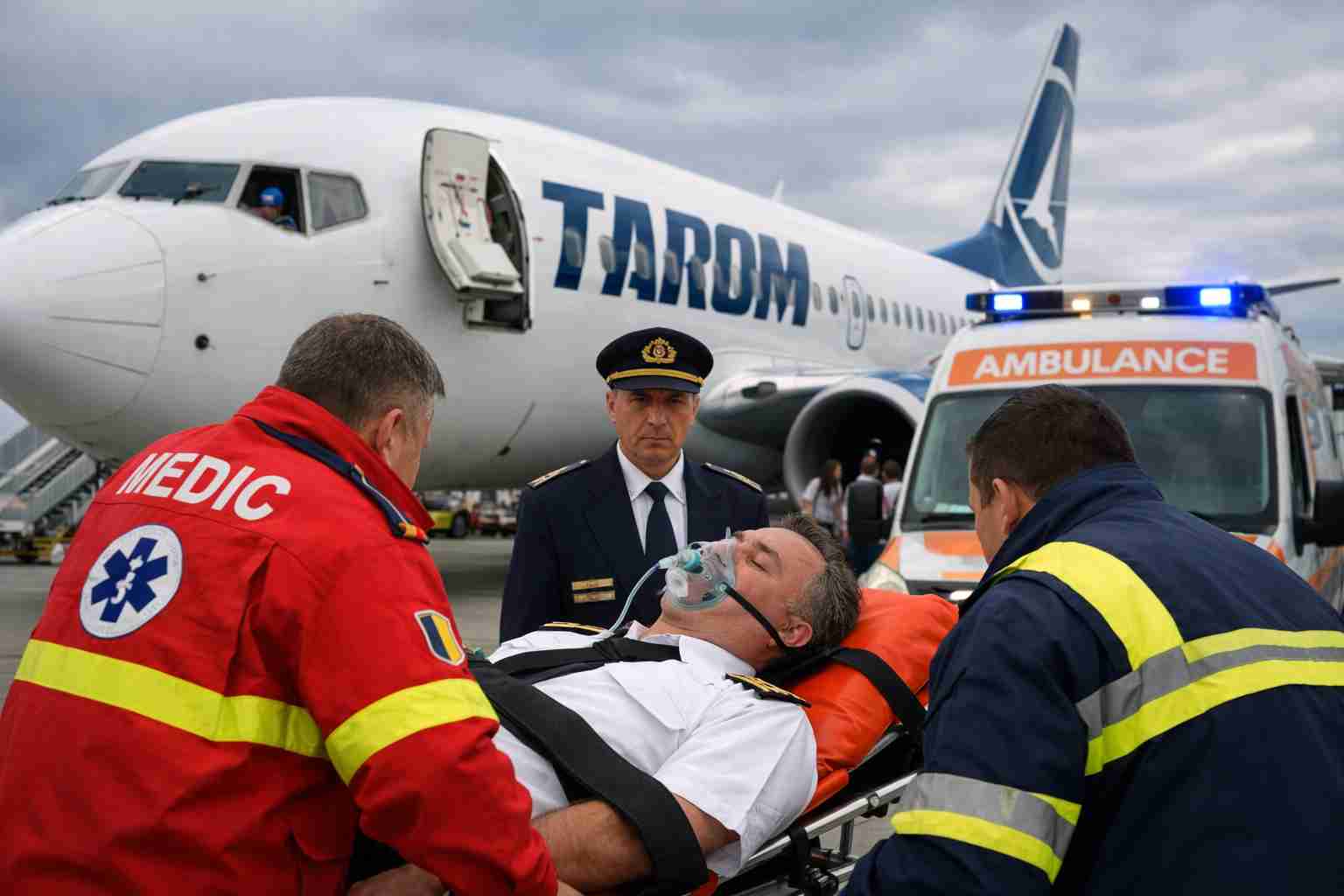
Incident on Amsterdam–Bucharest Route Triggers Emergency Response
BUCHAREST — A serious in-flight incident involving a TAROM Boeing 737 has drawn renewed attention to pilot fatigue risks after a co-pilot collapsed mid-flight following a reported lack of sleep before duty.
The event occurred on a return flight from Amsterdam Airport Schiphol to Henri Coandă International Airport, prompting an emergency declaration and a subsequent safety investigation.
According to reports, the co-pilot, identified as Cezar Osiceanu, admitted he had not slept prior to reporting for duty. His condition deteriorated during the flight, culminating in a loss of consciousness in the cockpit.
Timeline of the In-Flight Emergency
Deterioration Begins Shortly After Departure
The incident involved a 57-year-old co-pilot operating aboard a Boeing 737. On the earlier outbound leg from Bucharest to Amsterdam, the co-pilot reportedly felt unwell but informed the captain he was fit to continue, stating he would avoid actively handling the controls as a precaution.
Despite these concerns, he proceeded with the return flight.
Approximately 50 minutes after departure from Amsterdam, his health began to worsen. Around 2 hours and 40 minutes into the flight, he lost consciousness in the cockpit, forcing the captain to immediately declare an emergency and request medical assistance upon arrival.
Emergency Landing and Passenger Disembarkation
Upon landing in Bucharest, emergency medical teams boarded the aircraft through the front doors to quickly access the cockpit. Meanwhile, the 87 passengers onboard were instructed to disembark using the rear stairs. It remains unclear how much information was communicated to passengers during the incident.
Romania’s Civil Aviation Safety Investigation and Analysis Authority later classified the event as a “serious incident” due to its direct implications for flight safety.
Investigation Points to Fatigue as Key Factor
Lack of Sleep Confirmed
Investigators confirmed that the co-pilot had not slept the night before the flight, a factor that significantly impaired his physical and cognitive condition during duty.
“As per reports from Observator News, Romania, the co-pilot was identified as Cezar Osiceanu.”
The findings, also reported by aviation outlet Simple Flying, underscore fatigue as a primary contributing factor in the incident.
Operational Pressures Under Scrutiny
At the time, TAROM operated a tightly scheduled rotation, including an early morning departure from Bucharest at 6:00 AM, arriving in Amsterdam at 8:05 AM, followed by a return flight roughly one hour later. Such quick turnaround times highlight the operational intensity faced by flight crews.
Osiceanu had previously spoken publicly about demanding working conditions in an interview on the Romanian television program “În premiereă,” citing scheduling pressures affecting flight crews. These disclosures suggest fatigue may be linked to broader systemic challenges rather than an isolated lapse.
Airline Response and Safety Measures
New Restrictions Implemented
Following the incident, TAROM introduced a series of operational restrictions aimed at mitigating fatigue-related risks:
- The co-pilot is temporarily restricted from flying without direct captain oversight
- Assigned flight sectors are limited to a maximum of two hours
- Night flight duties are suspended
- The co-pilot will not be paired with the same captain involved in the incident
These measures are designed to reduce fatigue exposure and strengthen safety protocols.
Fleet and Operational Context
Founded in 1920 as CFRNA and operating under its current name since 1954, TAROM remains majority-owned by the Romanian government and is a member of the SkyTeam alliance.
The airline currently operates Boeing 737-800 aircraft and is preparing to introduce the Boeing 737 MAX 8 into its fleet, with planned deployment on routes including Amsterdam.
Broader Implications for Aviation Safety
Fatigue Management in Focus
The incident highlights the critical importance of strict adherence to pilot rest requirements. Fatigue is known to impair cognitive performance, slow reaction times, and reduce decision-making capacity—factors that can have serious consequences in high-stakes flight operations.
Industry regulators and airlines face increasing pressure to ensure robust fatigue risk management systems. Effective monitoring of crew health, enforcement of rest compliance, and adjustments to demanding schedules are widely seen as essential steps in maintaining aviation safety standards.
As investigations continue, the TAROM incident serves as a stark reminder of how human factors remain central to operational risk in modern aviation.
