


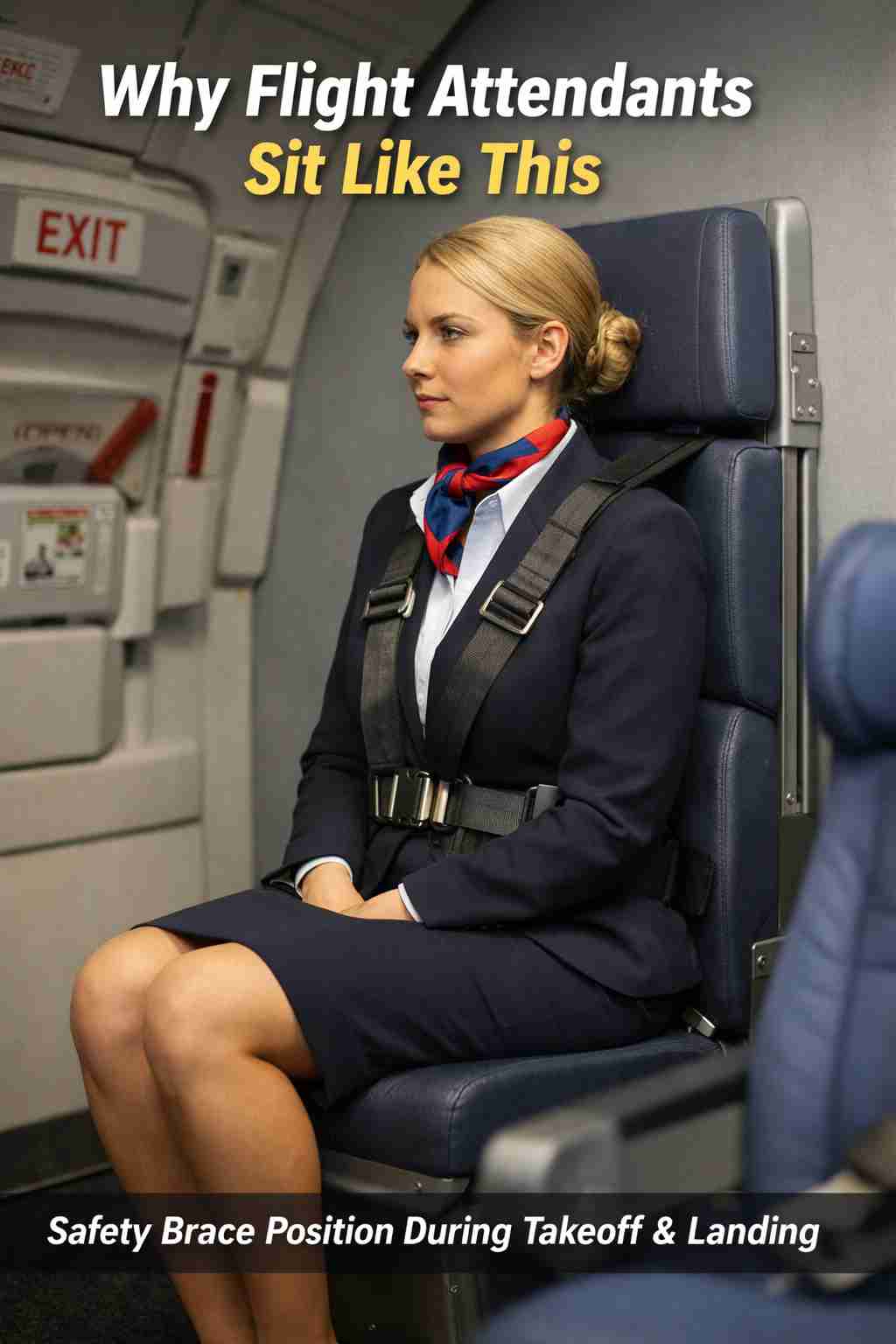
Why Cabin Crew Sit on Their Hands During Takeoff and Landing
Flight attendants on commercial airlines are highly visible during boarding and in-flight service, but their behavior during takeoff and landing often raises quiet curiosity among passengers. One commonly observed practice—crew members sitting upright with their hands tucked under their thighs—may appear unusual, but it is in fact a carefully designed safety procedure rooted in global aviation standards.
This posture is not a matter of comfort or routine habit. Instead, it is a regulated safety measure intended to reduce injury risk during the most critical phases of flight. Takeoff and landing are widely regarded by aviation authorities as the highest-risk periods, when the likelihood of sudden impact or abrupt aircraft movement is greatest.
The Safety Logic Behind the “Brace Position”
Aviation safety experts identify this seated posture as a variation of the “brace position,” a technique specifically developed to protect the body during emergency impact scenarios. By securing their hands under their thighs, flight attendants minimize the risk of uncontrolled limb movement, which can lead to secondary injuries during rapid deceleration.
According to safety guidance referenced in aviation training literature, limiting arm and leg movement helps prevent flailing, a common cause of injury in unexpected turbulence or hard landings.
Former flight attendant Lia Ocampo has explained to CN Traveler that sitting on her hands helps secure her arms tightly against her body.
This approach ensures that crew members remain physically stable and better protected in situations such as aborted takeoffs or emergency landings, where forces inside the cabin can shift suddenly and unpredictably.
Aircraft-Specific Adjustments and Standardization
While the general principle remains consistent, the exact brace posture can vary depending on aircraft design. Flight attendants are trained to adjust their position based on jumpseat orientation, seatbelt configurations, and the placement of emergency equipment.
Despite these variations, the underlying goal remains the same: to maintain stability and readiness while minimizing injury risk. The posture is standardized across the aviation industry, ensuring that crew members worldwide follow similar safety protocols regardless of airline or aircraft type.
Silent Safety Checks During Critical Phases
The physical brace position is only one aspect of a broader safety routine. During takeoff and landing, flight attendants also conduct silent mental reviews designed to prepare for potential emergencies.
These internal checklists include verifying the location and accessibility of emergency exits, confirming the position of evacuation equipment, and identifying able-bodied passengers who could assist in an evacuation if necessary.
Crew members also mentally rehearse standard emergency commands and procedures. This preparation allows for immediate, coordinated action in the event of an abnormal situation, where response time can be critical.
Implications for Passenger Safety
While passengers are not required to adopt the same seated posture, aviation authorities strongly encourage them to familiarize themselves with onboard safety procedures. Safety cards located in seatback pockets provide aircraft-specific instructions, including recommended brace positions for passengers.
In certain planned emergency scenarios, flight attendants may instruct passengers to assume a brace position to reduce injury risk. However, in unexpected situations, there may be little or no time for detailed instructions, making prior awareness essential.
Even frequent flyers are advised to pay close attention to pre-flight safety briefings, as procedures can differ depending on aircraft type and seating configuration. Aviation professionals consistently emphasize that preparedness can significantly improve safety outcomes.
Training and Operational Consistency
Flight attendants undergo extensive and recurring training that includes emergency posture techniques, evacuation drills, and passenger management strategies. These procedures are practiced repeatedly to ensure consistency and reliability under pressure.
Although minor variations exist between airlines, the core safety principles remain aligned across the industry. The “sitting on hands” posture is therefore not symbolic or optional—it is a functional component of a globally recognized safety system.
By maintaining this position during takeoff and landing, flight attendants ensure both their own protection and their ability to respond immediately if needed. It reflects a broader commitment within the aviation sector to prioritize safety through preparation, discipline, and standardized procedures.
