


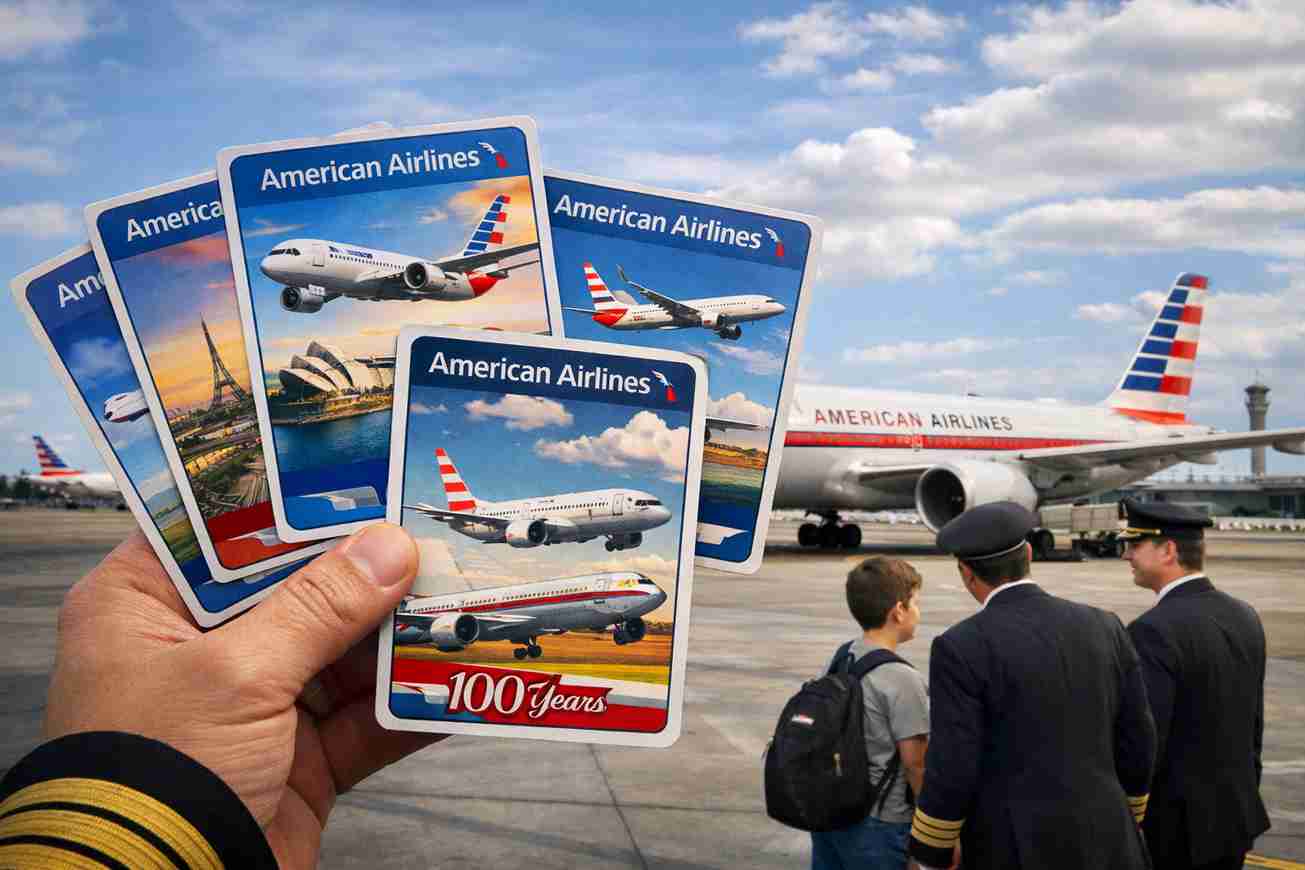
Pilot-Led Initiative Brings Collectibles to Passengers
FORT WORTH, Texas — American Airlines has officially joined the growing airline trading card trend, ending a more than 20-year absence from the collectible space with a program driven not by corporate leadership, but by its pilots.
Passengers who once stopped pilots in airport concourses or visited the cockpit during boarding and deplaning at hubs like Dallas Fort Worth (DFW) and New York John F Kennedy (JFK), only to leave disappointed, can now request these collectible cards directly from crew members.
The initiative comes as trading cards surge in popularity across the aviation industry, fueled in part by social media exposure and long-standing programs at rival carriers.
Union Steps In Where Demand Grew
More than two decades after Alaska Airlines quietly pioneered the concept of airplane-themed trading cards, American Airlines is now entering the space following mounting passenger demand.
Travelers had increasingly approached American Airlines pilots requesting cards, but none were available—until the Allied Pilots Association (APA) intervened.
The union, which represents more than 16,000 pilots at the carrier, developed and launched the collection independently. The move underscores how frontline employees are shaping passenger experience initiatives outside traditional corporate channels.
According to reporting by PYOK, the APA shared images of four initial trading cards. The designs feature some of the airline’s most recognizable aircraft, including the Boeing 787 Dreamliner, Boeing 737, and Airbus A321, depicted flying above global destinations such as Paris (CDG) and Sydney (SYD).
One standout card highlights the Boeing 777-300 in a special 100th anniversary retro livery. The design draws inspiration from the historic “Flagship” paint scheme that once appeared on the airline’s Douglas DC-3 aircraft more than 90 years ago.
The cards are expected to enhance passenger engagement by turning routine interactions—such as greeting pilots at the gate—into memorable moments, particularly for aviation enthusiasts and younger travelers.
From Niche Hobby to Viral Trend
The airline trading card phenomenon has evolved significantly over the past two decades. Delta Air Lines is widely credited with launching one of the first modern programs in 2003, when it created a limited-edition card to commemorate the planned retirement of its McDonnell Douglas MD-11 fleet.
Initially, the cards remained a niche offering, shared primarily among aviation insiders in an “if you know, you know” culture. That changed dramatically in recent years as the trend gained traction on TikTok and other social platforms.
By 2024, Delta passengers had collected more than three million trading cards, reflecting a sharp rise in mainstream awareness. The airline expanded its offerings to include a broader range of aircraft, from flagship Airbus A350 jets to smaller models like the Airbus A220 and Airbus A321neo.
Meanwhile, Alaska Airlines—long considered the originator of the concept in the U.S.—has continued to evolve its program. The Seattle-based carrier first introduced its cards in the 1990s using simple cardstock materials. More recently, it refreshed the lineup with new designs highlighting special liveries, responding to growing collector demand.
Industry-Wide Expansion Reflects Passenger Engagement Strategy
American Airlines is not alone in adopting the trend. Several carriers have launched or expanded similar programs in recent years as airlines look for low-cost ways to enhance customer experience.
Spirit Airlines introduced its own trading card collection earlier this year, while Frontier Airlines offers cards featuring its signature animal-themed tail designs.
These initiatives reflect a broader shift toward personalized, tangible experiences in an increasingly digital travel environment. Unlike traditional loyalty programs or premium upgrades, trading cards offer a simple, accessible way for passengers to engage with airline brands.
Distribution remains informal and straightforward: passengers can request cards directly from pilots or crew members during flights or at airport gates. The approach reinforces a sense of connection between airline staff and travelers, while fostering a growing community of collectors.
A Small Gesture With Big Impact
For American Airlines, the launch represents more than just a collectible—it signals a grassroots approach to customer engagement led by employees on the front lines.
By embracing a trend that blends nostalgia, aviation enthusiasm, and social media appeal, the airline is positioning itself to connect with a new generation of travelers while catching up with competitors that have long capitalized on the concept.
As trading cards continue to gain popularity, the success of American’s pilot-led initiative may serve as a model for how employee-driven ideas can influence broader brand strategy in the airline industry.
