


Carrier Launches Pilot as Canadian Transportation Agency Faces Years-Long Delays
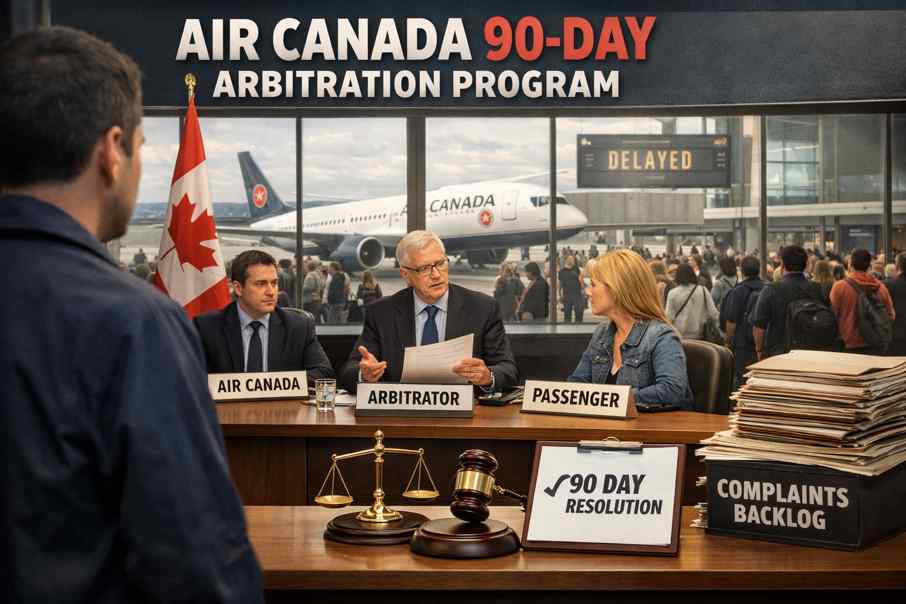
Air Canada has launched a pilot program aimed at accelerating the resolution of passenger complaints, introducing a new arbitration process designed to deliver decisions within 90 days as the country’s aviation dispute system struggles under the weight of a growing backlog.
The initiative comes as Canada’s largest airline seeks to address mounting frustration among travelers whose complaints have become trapped in a regulatory process that can take up to three years to reach a decision. Air Canada said the program is intended to provide passengers with a faster alternative while easing pressure on the Canadian Transportation Agency, which is facing tens of thousands of unresolved cases.
The trial will involve 500 randomly selected passengers with pending claims, who will be offered the option to transfer their disputes to an independent third-party arbitrator. Participation is voluntary, and customers who decline the offer can remain in the existing complaint process.
The airline said passengers who choose arbitration will receive a decision within 90 days after all required documentation is submitted.
Backlog Reflects Broader Aviation Industry Strains
Complaint Queue Has Swelled to Roughly 95,000 Cases
Air Canada’s move comes as the broader aviation sector continues to grapple with operational disruptions and increased scrutiny over passenger rights. Complaints tied to major travel hubs, including Vancouver International Airport, have climbed in recent years, adding to pressure on airlines and regulators alike.
The Canadian Transportation Agency’s complaint backlog has ballooned to approximately 95,000 cases, according to public figures, creating extended delays for passengers seeking compensation or dispute resolution.
Air Canada said the arbitration pilot is intended to test whether a faster and more streamlined process can improve outcomes for travelers while reducing congestion in the traditional regulatory system.
Under the proposed structure, arbitration decisions will be binding on Air Canada. However, passengers who are dissatisfied with the outcome may reject the decision and continue through the Canadian Transportation Agency’s existing complaint process without forfeiting their place in line.
Arbitration Structure Draws From European Models
U.K.-Based Dispute Resolution Affiliate to Administer Program
The arbitration process will be administered by a subsidiary of a U.K.-based dispute resolution organization, reflecting a model commonly used in Europe for handling transportation and consumer disputes.
Air Canada funded the development of the pilot but said it worked in consultation with federal transportation authorities while designing the framework.
The airline has positioned the initiative as part of a broader effort to modernize complaint handling and align Canadian dispute resolution practices more closely with international standards.
Unlike some arbitration systems, the Air Canada pilot will not require strict confidentiality, allowing passengers to discuss their cases publicly if they choose. The company said the lack of confidentiality restrictions is intended to improve transparency and public accountability.
Critics Raise Questions Over Independence and Oversight
Despite the promise of faster resolutions, the pilot has generated mixed reactions from passengers and industry observers, with some raising concerns about whether an arbitration process financed by the airline can remain sufficiently independent.
Consumer advocates and critics have argued that robust oversight will be necessary to ensure fairness and impartiality, particularly given that the airline is funding the initiative.
Industry observers have also called for public disclosure of performance metrics, including how often decisions favor passengers versus the airline, to help assess whether the process is balanced and effective.
Additional concerns have surfaced regarding the credibility of the arbitration provider, with some passengers pointing to unfavorable online reviews of the dispute resolution organization involved.
Still, some aviation experts view the program as a potentially important step toward improving Canada’s air passenger rights framework, particularly if the pilot demonstrates measurable reductions in resolution times and maintains procedural fairness.
Results Could Shape Future Regulatory Reform
Air Canada said it expects to conclude the pilot program by summer and plans to share the findings with government stakeholders afterward.
The results could help inform future changes to Canada’s air passenger complaint system and broader regulatory reforms, particularly as policymakers face increasing pressure to modernize a process many travelers and industry participants view as overwhelmed and outdated.
For Air Canada, the pilot represents both an operational experiment and a reputational test as the airline seeks to rebuild trust with passengers frustrated by prolonged complaint delays.
Whether the arbitration initiative becomes a permanent fixture may depend on whether it can prove that faster resolutions can be delivered without sacrificing fairness or transparency.
As Canada’s aviation sector continues to navigate rising passenger volumes and persistent operational pressures, the outcome of Air Canada’s experiment may offer a blueprint for how airlines and regulators handle disputes in the years ahead.
