


Higher Pay for Shorter Contracts Marks Shift in Pilot Retention Strategy
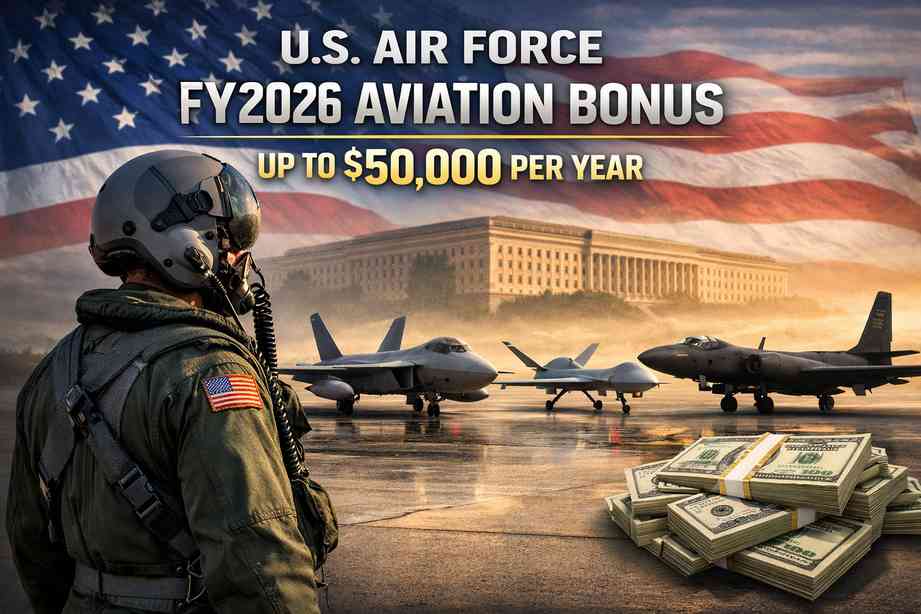
The U.S. Air Force has opened applications for its Fiscal Year 2026 Aviation Bonus program, offering eligible active-duty aviators annual incentive payments of up to $50,000 as the service ramps up efforts to retain experienced aircrew amid continued competition from the commercial aviation sector.
Applications for the FY2026 Aviation Bonus, or AvB, program will be accepted from April 1 through May 31, 2026, according to the Air Force. The incentive is available to qualified aviators who agree to additional active-duty service commitments, with contract lengths ranging from three to 12 years.
The updated program reflects a shift in retention strategy by offering higher annual compensation for shorter commitments in certain critical aviation communities, including fighter, bomber, and U-2 reconnaissance units. The move is intended to make military service more competitive with private-sector opportunities while giving aviators greater flexibility in choosing service terms.
Air Force Expands Bonus Reach as Retention Efforts Intensify
The Air Force estimates that 10,314 pilots will receive an aviator bonus in FY2026, up from 8,941 in FY2025, representing a 15% increase year over year.
That growth is being driven in part by the Rated Officer Retention Demonstration Program, introduced in 2023, which targets pilots nearing the end of their initial 10-year service commitments. The initiative encourages those officers to remain in uniform by offering retention bonuses for commitments of four to 12 additional years.
Air Force Chief of Staff Gen. Ken Wilsbach underscored the strategic rationale behind the program.
“Our Airmen are extremely talented, with critical skills that are highly sought after. The aviation bonus is an incentive that helps us retain expertise and ensures we have the right mix of experienced aviators to meet warfighting demands today and into the future.” — Air Force Chief of Staff Gen. Ken Wilsbach
The Air Force has increasingly relied on bonus and incentive pay programs as it seeks to stabilize pilot retention levels, particularly in highly specialized communities where training costs are substantial and replacing experienced aviators can take years.
Eligibility Includes Pilots, RPA Operators and Other Rated Officers
Who Can Apply
The FY2026 Aviation Bonus program applies to commissioned officers ranked lieutenant colonel and below who are rated for operational flying duty and currently receiving monthly aviation incentive pay.
Eligible applicants include:
- Traditional pilots
- Remotely piloted aircraft (RPA) pilots
- Air battle managers (ABMs)
- Combat systems officers (CSOs)
The program also extends to Air Reserve Component personnel serving on active duty through the Voluntary Limited Period of Active Duty (VLPAD) program.
By broadening eligibility beyond traditional pilots, the Air Force is signaling that retention concerns extend across multiple aviation-related specialties that support modern combat operations.
Payments Expected Within Weeks of Final Approval
Application and Processing Timeline
Approved applicants can expect bonus payments within three weeks after final processing by the Defense Finance Accounting Service, the Air Force said.
The payment timeline begins once an application has moved through the full internal review and approval chain. Eligible service members must submit applications through the MyFSS portal, accessible with a Common Access Card.
All submissions must be completed by May 31, 2026.
Aviation Incentives Dominate Officer Bonus Budget
The Air Force has requested an additional $15.6 million for officer retention bonuses in FY2026 as it anticipates increased participation in incentive programs.
Aviation-related bonuses account for the overwhelming majority of that spending. Flying pay represents 99% of the Air Force’s $469 million incentive pay request for commissioned officers for the fiscal year, underscoring the central role aviation retention plays in force planning.
The military has faced persistent pressure from commercial airlines and aerospace employers seeking experienced pilots, particularly as the global aviation industry continues to contend with staffing shortages and rising demand for qualified flight crews.
By front-loading compensation and offering more attractive short-term contracts, the Air Force aims to retain mid-career aviators who have completed expensive training pipelines and accumulated years of operational experience.
Strategic Retention Tool for Future Readiness
The FY2026 Aviation Bonus program forms part of the Air Force’s broader effort to improve long-term personnel forecasting and maintain readiness across its aviation force structure.
Military officials have said retaining experienced aviators remains essential to meeting operational requirements, particularly as the service modernizes its fleet and adapts to evolving global threats.
The latest bonus structure suggests the Air Force is taking a more flexible and market-responsive approach to retention, prioritizing tailored incentives over one-size-fits-all contracts as it competes to keep top aviation talent in uniform.
