


Carrier to Roll Out Lie-Flat Economy Concept Across Widebody Fleet Starting in 2027
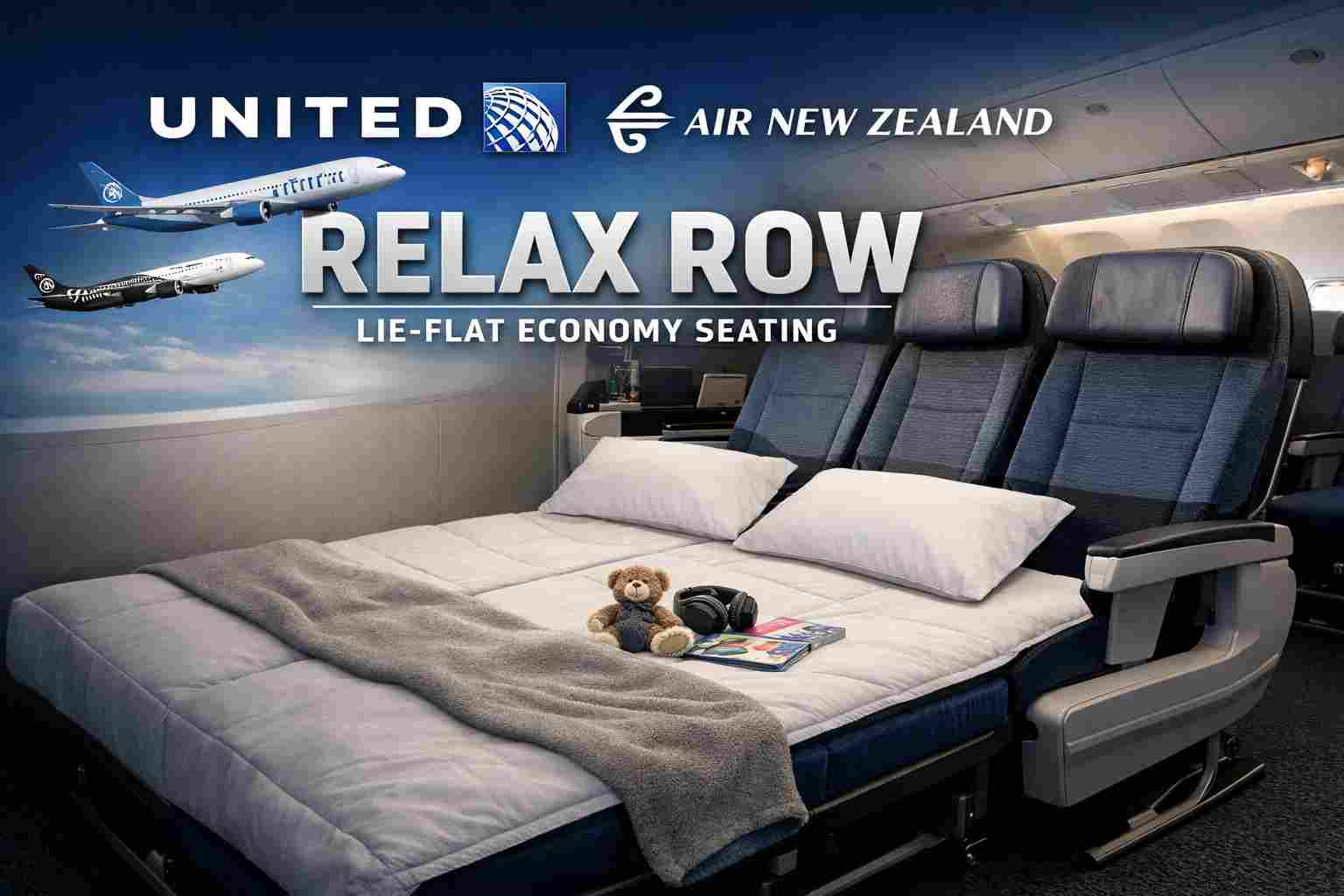
CHICAGO — United Airlines is set to introduce a new long-haul economy seating concept that converts standard seats into a lie-flat surface, signaling a notable shift in how airlines approach passenger comfort in lower fare classes. The product, branded as “Relax Row,” draws directly from an innovation pioneered more than a decade ago by Air New Zealand.
The move reflects a broader push among global carriers to enhance the economy cabin experience without requiring travelers to pay for premium upgrades. United plans to begin deploying the new seating in 2027, with a large-scale rollout expected across its international fleet over the following years.
Reviving a Proven Concept for Modern Economy Travel
United’s Relax Row is based on a concept first introduced by Air New Zealand in 2011, known as the Skycouch. That design reimagined a row of three economy seats by allowing leg rests to extend and align, forming a flat surface suitable for resting or sleeping.
Under United’s adaptation, passengers will be able to book a full row of three seats equipped with adjustable leg rests that fold upward to create a couch-like configuration. The offering is aimed at travelers seeking more comfort on long-haul flights without the higher price tag of premium economy or business class.
The airline confirmed that Relax Row will debut in 2027 and will be installed on more than 200 widebody aircraft, including Boeing 777 and Boeing 787 models, by the end of the decade. Each aircraft could feature up to 12 designated Relax Row sections, positioned between standard economy and premium economy cabins.
Passengers opting for the product will receive additional amenities such as a mattress pad, pillows, blankets, and kits tailored for children—features designed to enhance the overall comfort and appeal of the seating.
Strengthening a Longstanding Airline Partnership
The initiative underscores the deepening collaboration between United Airlines and Air New Zealand. The U.S. carrier has licensed the Skycouch design, securing exclusive rights to offer a similar concept within North America.
The partnership marks one of the most significant validations of Air New Zealand’s original idea since its debut more than a decade ago. Both airlines worked closely to adapt the seating for United’s fleet and customer base, according to reports.
Air New Zealand has previously licensed variations of the concept to other international carriers, highlighting its global relevance. However, United’s scale and extensive international network could bring the concept to a much broader audience, potentially accelerating adoption trends across the industry.
Fleet Expansion and Customer Experience Strategy
United plans to introduce Relax Row progressively across its long-haul network, though it has not yet specified which routes will receive the product first. Over time, the airline intends to standardize the offering across key international routes as part of its broader customer experience strategy.
The rollout aligns with United’s efforts to differentiate its economy product in an increasingly competitive aviation market. By enhancing comfort within standard cabins, the airline aims to attract value-conscious travelers who may be unwilling or unable to pay for premium seating but still prioritize comfort on long journeys.
In parallel, United has been expanding its family-friendly services, including improved seating configurations and upgraded onboard entertainment options. These initiatives are expected to complement the Relax Row concept, particularly for families, couples, and solo travelers seeking flexibility.
Industry Trend Toward Enhanced Economy Comfort
The introduction of Relax Row reflects a wider shift across the airline industry, where carriers are rethinking the traditional economy experience. As competition intensifies and passenger expectations evolve, airlines are exploring new ways to deliver comfort and value without significantly increasing costs.
Innovations like lie-flat economy seating could play a critical role in shaping the future of cabin design, bridging the gap between standard and premium offerings. United’s adoption of the concept suggests that ideas once considered niche may soon become mainstream across global fleets.
With its planned rollout beginning in 2027, United Airlines is positioning itself at the forefront of this evolving trend—leveraging a proven concept from Air New Zealand to redefine long-haul economy travel for a new generation of passengers.
