


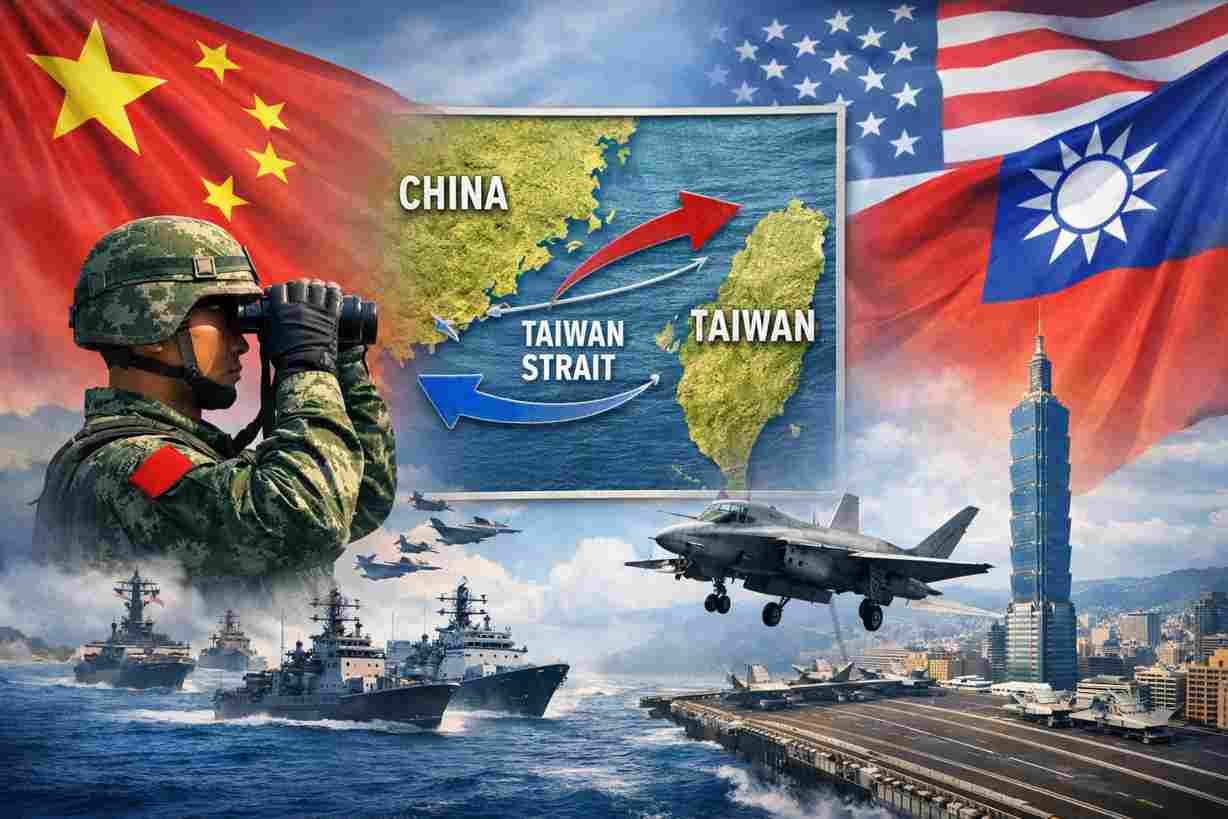
WASHINGTON — A new U.S. intelligence assessment is easing immediate fears of a military conflict in East Asia, concluding that China is not currently planning to invade Taiwan by 2027, despite ongoing military expansion and heightened regional tensions.
The finding, outlined in a recently released global threats report, provides a more calibrated view of Beijing’s intentions toward Taiwan at a time when U.S. policymakers and allies have been increasingly focused on the risk of a cross-strait conflict. While China continues to strengthen its armed forces, the report indicates that its leadership is prioritizing non-military pathways to achieve unification.
Strategic Preference for Non-Military Pressure
According to the U.S. intelligence community, China’s leadership is seeking to bring Taiwan under its control without resorting to war, if possible. The report highlights a strategy centered on political influence, economic leverage, and sustained diplomatic pressure rather than direct military action.
This approach reflects Beijing’s broader objective of achieving its goals while minimizing the risks and costs associated with a full-scale conflict. Analysts note that such a strategy allows China to gradually increase pressure on Taiwan while avoiding actions that could trigger a wider regional or global response.
Crucially, the report states that Chinese leaders do not currently operate under a fixed timeline for unification. It further clarifies that a 2027 invasion is not part of any confirmed operational plan, pushing back against widespread speculation that has framed that year as a potential flashpoint.
Capability Does Not Equal Intent
The 2027 timeline has frequently been referenced in defense discussions, particularly by the Pentagon, which has previously stated that China aims to develop the capability to successfully invade Taiwan by that year.
However, the intelligence report underscores an important distinction: possessing the capability to carry out an invasion does not necessarily mean there is intent to do so. This nuance is central to understanding current U.S. assessments of China’s posture.
While the People’s Liberation Army continues to modernize, the report notes that its progress remains uneven. Advances in areas such as naval power, missile systems, and joint operations are ongoing, but gaps and operational challenges persist, potentially limiting China’s readiness for a complex amphibious invasion.
Rising Military Activity Around Taiwan
China’s increased military presence around Taiwan has contributed to growing concern in recent years. Large-scale drills, frequent incursions into Taiwan’s air defense identification zone, and naval maneuvers have demonstrated Beijing’s expanding ability to project power in the region.
Despite these developments, U.S. intelligence assesses that such activities are intended more as signals of deterrence and coercion than as preparation for imminent conflict. The report describes these actions as part of a broader “multidomain pressure” campaign designed to influence Taiwan’s political calculations and discourage external support.
These tactics also serve as a warning to other countries, particularly the United States and its allies, about the potential costs of intervening in a Taiwan-related crisis.
Regional Concerns and Allied Response
The report highlights increasing concern among U.S. allies, especially Japan, about the stability of the Taiwan Strait. Japanese officials have become more vocal about the importance of peace in the region, with some signaling that a conflict involving Taiwan could directly affect Japan’s security.
U.S. intelligence suggests that China is likely to respond to such statements with heightened diplomatic and military pressure, aiming to deter foreign involvement. This could include stronger rhetoric, economic retaliation, or expanded military demonstrations near disputed areas.
At the same time, Washington continues to walk a fine line between deterrence and strategic ambiguity. The United States has maintained its longstanding policy of supporting Taiwan’s defense capabilities without explicitly committing to military intervention.
Recent arms sales to Taiwan underscore this approach, reinforcing the island’s ability to defend itself while avoiding steps that could be perceived as escalatory.
A Complex and Evolving Situation
Despite the report’s relatively reassuring assessment, tensions surrounding Taiwan remain high. China continues to assert that Taiwan is part of its territory and has not ruled out the use of force to achieve unification.
Taiwan, for its part, rejects Beijing’s claims and maintains that its future should be determined by its own people. This fundamental disagreement continues to underpin the geopolitical friction in the region.
The U.S. intelligence community’s latest findings suggest that while the risk of immediate conflict may be lower than some fear, the long-term trajectory remains uncertain. China’s ongoing military development, combined with its multifaceted pressure strategy, ensures that Taiwan will remain a central issue in global security discussions for years to come.
