


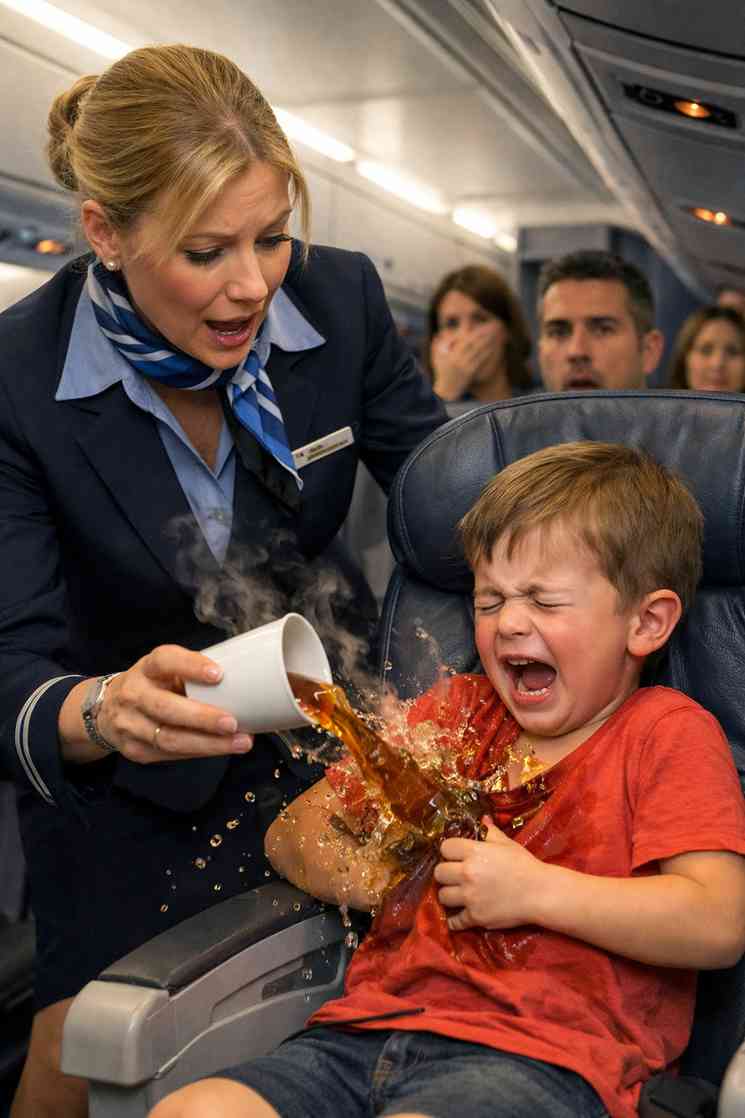
United Airlines is facing a lawsuit after a four-year-old passenger allegedly suffered severe burns when a cup of extremely hot tea spilled during an international flight from Newark to Tel Aviv. The case highlights ongoing safety concerns surrounding hot beverage service on aircraft and underscores how international aviation law limits the damages airlines may face in such incidents.
The complaint, filed by a passenger traveling with family members, stems from an incident that occurred aboard United Airlines Flight 84 during a long-haul flight from Newark Liberty International Airport to Tel Aviv Ben Gurion Airport. According to the lawsuit, the child sustained serious burns and permanent scarring after hot water used for tea—reportedly served at approximately 200 degrees Fahrenheit—spilled during cabin service.
Because the incident occurred on an international flight, the case will be evaluated under the Montreal Convention, the global treaty that governs airline liability for passenger injuries.
Lawsuit Filed Over Onboard Hot Tea Spill
The lawsuit centers on an incident that occurred on April 28 last year involving a family of seven traveling on United Airlines Flight 84 from Newark to Tel Aviv.
According to the legal complaint, the family was traveling with five children when a flight attendant served a cup of extremely hot water intended for tea. The beverage was reportedly uncovered and served at approximately 200 degrees Fahrenheit.
The lawsuit alleges that a crew member handed the cup to a child in the family, causing the hot liquid to spill onto a four-year-old passenger seated nearby. The spill allegedly caused severe burns and permanent scarring.
The complaint alleges that handing a child scalding liquid violated basic safety protocols during onboard service, People.com reported.
Attorneys for the passenger argue that the incident could have been prevented with proper handling of hot beverages in the confined environment of an aircraft cabin.
Questions Over How the Spill Occurred
A central issue in the case is how the spill happened and who was holding the cup at the moment the hot liquid was released.
Reports indicate that the flight attendant may not have handed the drink directly to the four-year-old. Instead, the cup was allegedly given to the family’s eleven-year-old child.
If the beverage was passed between passengers before the spill occurred, United Airlines could argue that the incident resulted from passenger handling rather than crew negligence.
That distinction could play a significant role in determining the airline’s share of responsibility under the Montreal Convention framework.
Legal experts say courts often examine whether the airline’s actions constituted an “unexpected or unusual event,” which is required for liability under the treaty.
Montreal Convention Sets Liability Rules
The Montreal Convention is an international treaty that governs airline liability for injuries occurring on international flights.
Under Article 17 of the convention, airlines are responsible for passenger injuries caused by accidents that occur on board the aircraft or during the processes of boarding and disembarkation.
To qualify as an accident under the treaty, the injury must result from an unexpected or unusual event external to the passenger.
Hot beverage incidents have been litigated under the Montreal Convention in several previous cases. Courts have sometimes ruled that even routine service activities can qualify as accidents if they are performed in an unreasonable or unsafe manner.
However, the treaty also sets strict limits on the amount of compensation passengers can receive.
Since December 28, 2024, the Montreal Convention caps airline liability for such incidents at 151,880 Special Drawing Rights, an International Monetary Fund reserve asset that currently equals roughly $216,470.
Damages Limited to Actual Losses
Even if the airline is found liable, compensation in the case will be limited by the Montreal Convention’s strict rules.
The treaty allows courts to award compensation only for actual damages, such as medical expenses and other injury-related losses. Punitive damages and other non-compensatory awards are not permitted.
As a result, the legal battle may focus less on whether an accident occurred and more on how responsibility is allocated between the airline and the passengers involved.
The calculation of medical costs and long-term injury impacts will likely determine the final damages sought in the case.
Comparisons to the McDonald’s Hot Coffee Case
The lawsuit has drawn comparisons to the widely known McDonald’s hot coffee case involving Stella Liebeck.
Liebeck suffered severe burns after spilling coffee that was served at temperatures between 180 and 190 degrees Fahrenheit. A jury initially awarded $2.7 million in damages, though the final settlement amount was later reduced to $480,000.
Evidence presented during the trial showed that McDonald’s had received hundreds of complaints about dangerously hot coffee prior to the incident. The company later reduced its coffee serving temperature to around 158 degrees Fahrenheit to lower the risk of severe burns.
That case, however, was handled under domestic tort law, which allows punitive damages and broader liability claims.
The United Airlines lawsuit differs significantly because international aviation incidents are governed by the Montreal Convention, which strictly limits the damages airlines may be required to pay.
Broader Questions About Airline Beverage Service
Hot-liquid injuries have been cited in multiple aviation-related lawsuits over the years, often involving coffee or tea spilled during turbulence or routine service.
Past cases have included situations where flight attendants accidentally spilled hot beverages on passengers, sometimes resulting in medical emergencies or even flight diversions.
These recurring incidents have prompted ongoing debate within the aviation industry about whether airlines should modify beverage service procedures, particularly when serving extremely hot liquids in the tight quarters of an aircraft cabin.
Some aviation observers argue that the Montreal Convention’s liability limits may reduce financial pressure on airlines to adopt stricter safety measures.
The outcome of the United Airlines lawsuit could add to that discussion as courts determine how responsibility is assigned when hot beverage service leads to serious injuries on international flights.
