


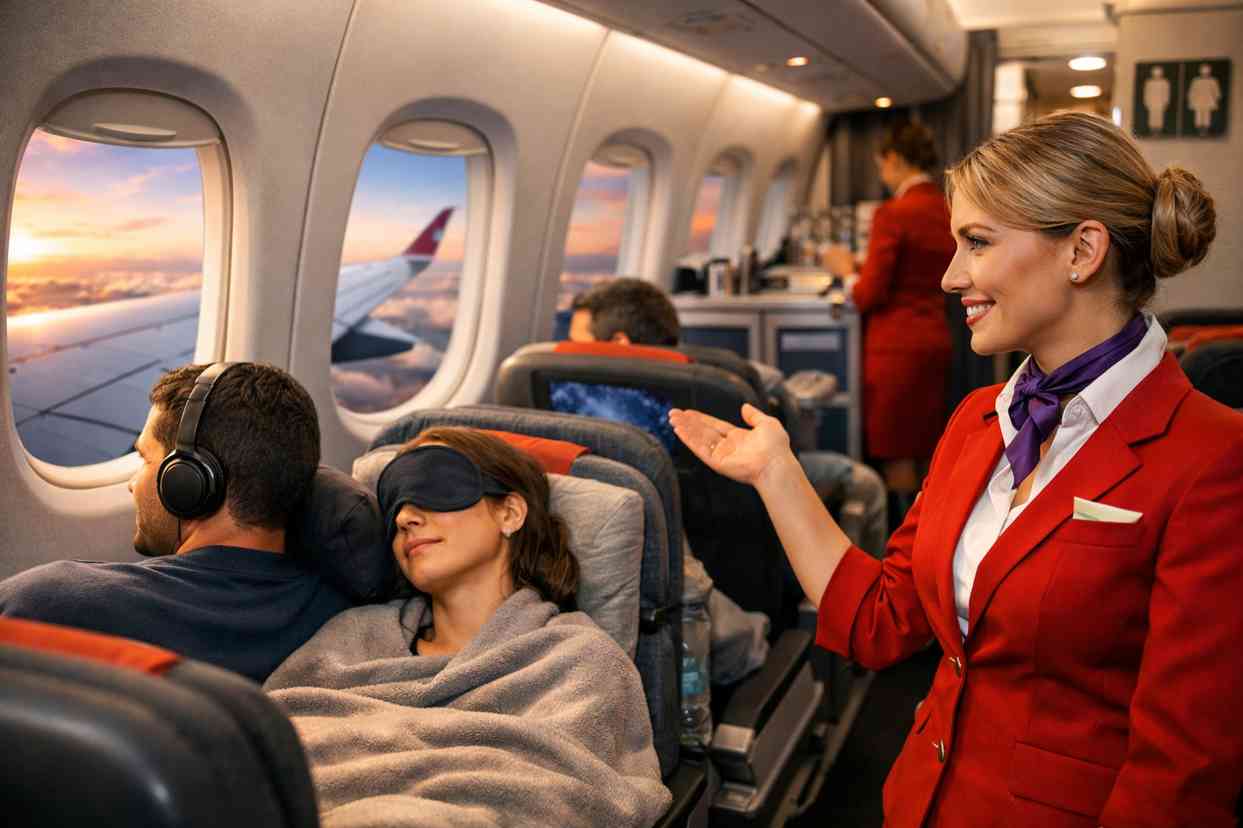
Long-haul air travel often leaves passengers struggling to get meaningful rest, especially in economy class. But according to advice from a senior cabin crew member at Virgin Atlantic, a few strategic choices—particularly when selecting a seat—can significantly improve the chances of sleeping during overnight flights.
The recommendations were shared in collaboration with AllClear Travel Insurance and reported by Travel + Leisure. The guidance focuses on practical factors such as turbulence levels, cabin noise, and the layout of aircraft cabins, all of which can influence how easily passengers fall asleep during long-haul journeys.
The advice is particularly relevant for travelers departing from major global hubs like London Heathrow Airport, where many flights operate overnight or on ultra-long-haul routes. By understanding how aircraft cabins function and planning ahead, passengers can improve comfort and rest even without the added space of premium seating.
Best Seats for Sleep
According to the experienced flight attendant, passengers should prioritize seats located over the aircraft’s wings. These seats sit closest to the plane’s center of gravity, which reduces the sensation of movement during turbulence.
Aircraft movement tends to be felt more strongly at the front and rear of the plane, while the middle section near the wings remains comparatively stable. This makes wing seats one of the best options for passengers who are sensitive to turbulence or motion while trying to sleep.
If wing seats are unavailable, travelers should choose seats toward the front of the economy cabin. Forward sections typically experience less vibration than the rear, where turbulence effects can feel more pronounced.
The crew member also recommends selecting a seat approximately five rows from the front or five rows from the back of the economy cabin. These positions balance proximity to exits and service areas while avoiding high-traffic zones.
Avoid Noise Zones
Seat selection should also consider cabin noise and passenger traffic. Areas close to galleys and lavatories often experience the most activity during a flight.
Cabin crew conduct meal services from both ends of the aircraft, which means passengers seated near these areas may encounter frequent movement, conversations, and equipment noise. Lavatories also generate steady foot traffic throughout long flights.
While exit row seats are often sought after because they provide extra legroom, they may not always be ideal for sleeping. On certain aircraft, these rows can feel colder due to their proximity to emergency doors, and they often attract passengers waiting for restrooms.
The middle section of the economy cabin often provides a quieter environment compared to bulkhead rows or seats near the rear of the aircraft. Passengers seated too close to lavatories may encounter foot traffic and door noise throughout the flight.
Sleep Preparation Tips
Seat selection alone does not guarantee good rest. Preparing properly for the flight can also play a major role in improving sleep quality.
The flight attendant advises passengers to avoid heavy meals before attempting to sleep, as digestion can interfere with rest and make it harder to relax during the flight.
Travelers should also carry essential sleep aids such as earplugs and eye masks. These items help block out cabin noise and light, both of which can increase during full flights due to conversations, announcements, and the constant hum of aircraft engines.
Passengers on overnight or “red-eye” flights are encouraged to follow a sleep schedule similar to their normal routine. Oversleeping during the flight can lead to grogginess upon arrival, especially when adjusting to a new time zone.
For added comfort, travelers can ask cabin crew for an extra blanket, particularly on overnight services where cabin temperatures may fluctuate.
Understanding Cabin Dynamics
Ultimately, the advice underscores that comfort on long-haul flights depends on more than simply securing a seat. Understanding the dynamics of aircraft cabins—from turbulence patterns to service areas—can help travelers make smarter choices before boarding.
By combining thoughtful seat selection with simple preparation strategies, passengers may be able to rest more effectively during long journeys, even in economy class.
For frequent travelers and occasional flyers alike, these insights from cabin crew highlight how small adjustments can make a significant difference in the long hours spent in the air.
