


Record passenger growth drives major investment
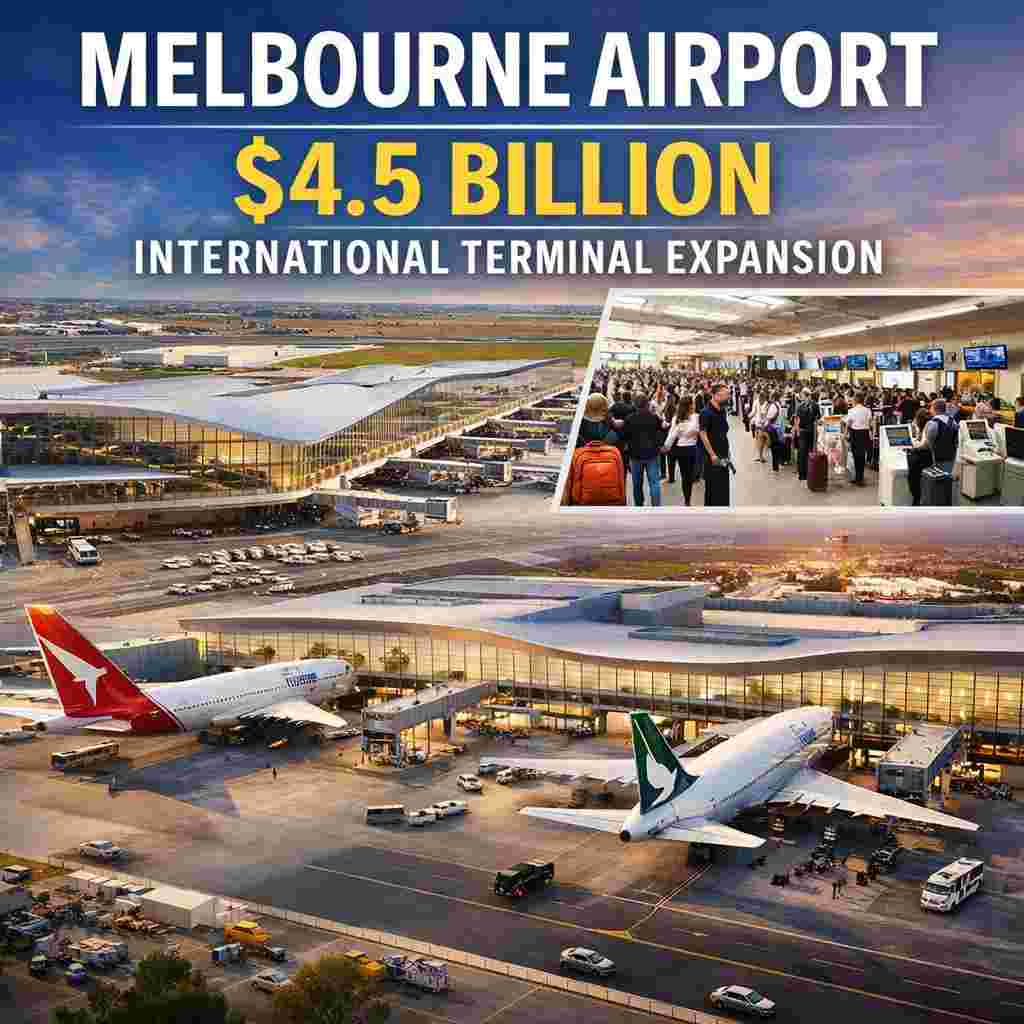
MELBOURNE, Australia — Melbourne Airport has unveiled plans for a sweeping A$4.5 billion expansion of its international terminal, adding gates, aircraft stands and expanded baggage facilities as record passenger numbers strain existing infrastructure.
The announcement follows the busiest summer in the airport’s history for international travel, underscoring Melbourne’s growing role as a key global aviation hub and a critical gateway for Australia’s economy.
Airport management said the multi-year project, which will be privately funded, is designed to significantly expand check-in, baggage handling, gate capacity and passenger waiting areas. The goal is to ensure the airport can accommodate sustained growth while improving the overall travel experience.
The urgency is clear. January alone saw more than 1.26 million international passengers pass through the airport, setting a new monthly record and highlighting the need for additional capacity.
Expanded terminal footprint and baggage systems
The centerpiece of the project is a major expansion of the existing international terminal footprint, aimed at improving passenger flow and airline efficiency.
Plans call for a significant enlargement of the check-in hall, including the installation of advanced common-user baggage systems. These systems will allow multiple airlines to share infrastructure, improving flexibility and reducing operational bottlenecks.
Baggage reclaim areas will also grow, with additional carousels and expanded space for border processing agencies. Airport officials said these changes are intended to reduce congestion, particularly during peak international arrival periods, while maintaining efficiency at the 24-hour facility.
The upgrades are expected to modernize key processing areas and position the airport to handle future increases in passenger volumes.
Five new gates and aircraft stands to boost capacity
A key component of the expansion includes the addition of five new international gates, providing airlines with greater flexibility to schedule flights and potentially launch new routes.
The project will also add five new aircraft stands, capable of accommodating either five widebody aircraft or up to eight narrowbody planes. This increase in apron capacity will allow more simultaneous aircraft movements and help ease congestion during peak travel times.
Airport Chief Executive Officer Lorie Argus stated that increased airfield and terminal capacity will give airlines more freedom to add flights to new and existing destinations.
She emphasized that the investment complements the airport’s planned third runway, which is scheduled to open in 2031.
Together, the runway and terminal expansion represent one of the most significant infrastructure investments in the airport’s history.
Construction to roll out in stages
Because Melbourne Airport operates around the clock, construction will take place in stages to minimize disruption to passengers and airlines.
Work is expected to accelerate after the opening of new pick-up and drop-off zones within the T123 Transport Hub in September 2026. This will allow the international terminal expansion to extend into the current forecourt area.
In addition to operational improvements, the expansion will include upgraded passenger waiting areas, enhanced airline lounges, expanded retail spaces and improved facilities for meeters and greeters.
Airport officials said months of consultation with airlines helped shape the design, ensuring it meets operational needs while improving comfort and convenience for travelers.
Economic benefits and national connectivity
Government officials welcomed the project, emphasizing the importance of airport infrastructure in supporting economic growth and global connectivity.
Assistant Minister for Citizenship, Customs and Multicultural Affairs Julian Hill welcomed the project, noting that Australian airports play a critical role in connecting families, businesses, and global markets. He added that the Australian Border Force will continue working with industry partners to streamline passenger processing as demand grows.
According to airport data, a single average daily international flight contributes approximately A$190 million annually to the Victorian economy, highlighting the significant economic impact of aviation services.
Airport leaders believe expanding terminal and airfield capacity will encourage more international airlines to operate in Melbourne, strengthening trade, tourism and investment.
The project is also expected to support thousands of jobs during construction and through ongoing airport operations.
Positioning Melbourne for long-term growth
Melbourne Airport’s expansion reflects broader global trends, as airports worldwide invest heavily to keep pace with rising international travel demand.
By increasing gate capacity, improving passenger processing and preparing for future runway expansion, Melbourne Airport aims to secure its position as Australia’s leading international gateway.
With passenger volumes continuing to rise and airlines expanding their networks, the A$4.5 billion investment signals confidence in Melbourne’s long-term role as a major hub for global travel and commerce.
