


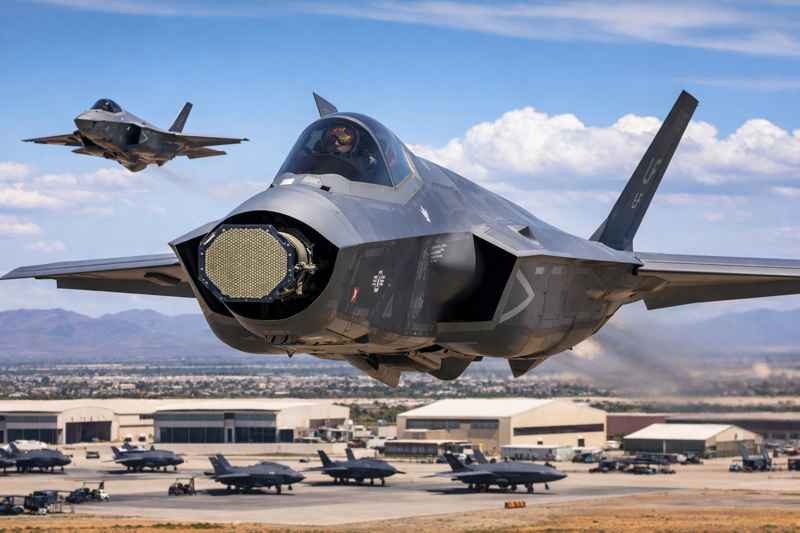
ARLINGTON, Va. — The U.S. Air Force has confirmed that all recently delivered Lot 17 F-35A fighter jets include fully installed and operational radar systems, pushing back against earlier reports that some aircraft arrived without radars during a transition to a next-generation sensor.
The clarification comes as the Pentagon and defense contractors face mounting scrutiny over delays, costs and technical integration challenges tied to the F-35’s sweeping Block 4 modernization effort.
In a statement, the U.S. Air Force said newly delivered aircraft retain operational radar capability, countering prior reporting suggesting that radar installation had been deferred due to complications involving the new AN/APG-85 radar being developed by Northrop Grumman.
The service’s statement followed reporting by TWZ, which examined claims that some Lot 17 Joint Strike Fighters had been delivered without radars as engineers worked through integration issues.
The spokesperson added that modernization plans involving the APG-85 remain classified for program security reasons.
Earlier reporting by Defense Daily, citing an anonymous source, had suggested aircraft delivered since June used mounting configurations incompatible with the current APG-81 radar. That report raised the possibility that some jets might have flown without radars installed, instead relying on ballast adjustments and operating alongside radar-equipped aircraft through networked data links.
The Air Force now rejects that assertion, emphasizing its operational fleet maintains full radar capability.
Block 4 Upgrade and Radar Modernization Face Technical Hurdles
The radar question is closely tied to the broader Block 4 modernization program, a sweeping upgrade package intended to improve the F-35’s combat performance through enhanced sensors, computing power and electronic warfare capabilities.
Northrop Grumman has been developing the APG-85 radar since at least 2023 to replace the current APG-81 system. The upgrade is designed to improve tracking performance, resistance to electronic jamming and integration with new electronic warfare tools.
Block 4 also includes replacement of the AN/AAQ-37 Distributed Aperture System, upgrades to the Electro-Optical Targeting System, a new electronic warfare suite and expanded processing power.
However, the modernization effort has encountered delays tied to engineering complexity, particularly the need for additional electrical power and cooling capacity. Those requirements depend on engine upgrades that are themselves running behind schedule.
Questions remain about compatibility between aircraft configured for the future APG-85 radar and the existing APG-81 system. TWZ reported ongoing uncertainty about whether interim aircraft configurations can accommodate older radar hardware.
A prior report by Breaking Defense suggested structural redesign of the forward fuselage might be necessary to ensure compatibility between radar variants. Program officials have declined to provide additional details publicly, citing security restrictions.
Delays Push Full Upgrade Timeline Further Into the Future
Initial plans called for F-35 aircraft with full Block 4 capabilities to begin arriving as early as 2025. But a September 2025 report from the Government Accountability Office found the timeline had shifted significantly.
According to the GAO, only a limited portion of upgrades will be delivered in the near term, while full modernization may be delayed by at least five years.
The revised schedule reflects the difficulty of integrating new radar, software, sensors and power systems into a platform already in full-rate production and operational use worldwide.
The F-35 program, built by prime contractor Lockheed Martin, remains the most expensive military aviation program in history. Estimated lifecycle costs now reach approximately $2.1 trillion through the 2070s, according to program officials, with inflation accounting for nearly half that total.
Operating costs and sustainment expenses continue to draw attention from lawmakers and partner nations as fleets expand.
Strategic and Financial Stakes Remain High
Despite the Air Force’s latest clarification on radar installations, the situation underscores ongoing tension between maintaining current operational readiness and introducing major technological upgrades.
Radar capability is central to the F-35’s role as a stealth multirole fighter, enabling long-range detection, targeting and electronic warfare integration.
The Block 4 modernization is expected to significantly expand those capabilities, but delays and integration challenges highlight the risks inherent in upgrading a complex weapons system while maintaining production and deployment schedules.
For defense contractors and Pentagon planners alike, the effort represents a delicate balancing act between technological advancement, operational needs and cost control.
While radar-equipped aircraft continue to be delivered, the long-term success of the F-35 modernization effort will depend on resolving power, cooling and integration challenges that remain critical to the jet’s future performance and affordability.
