


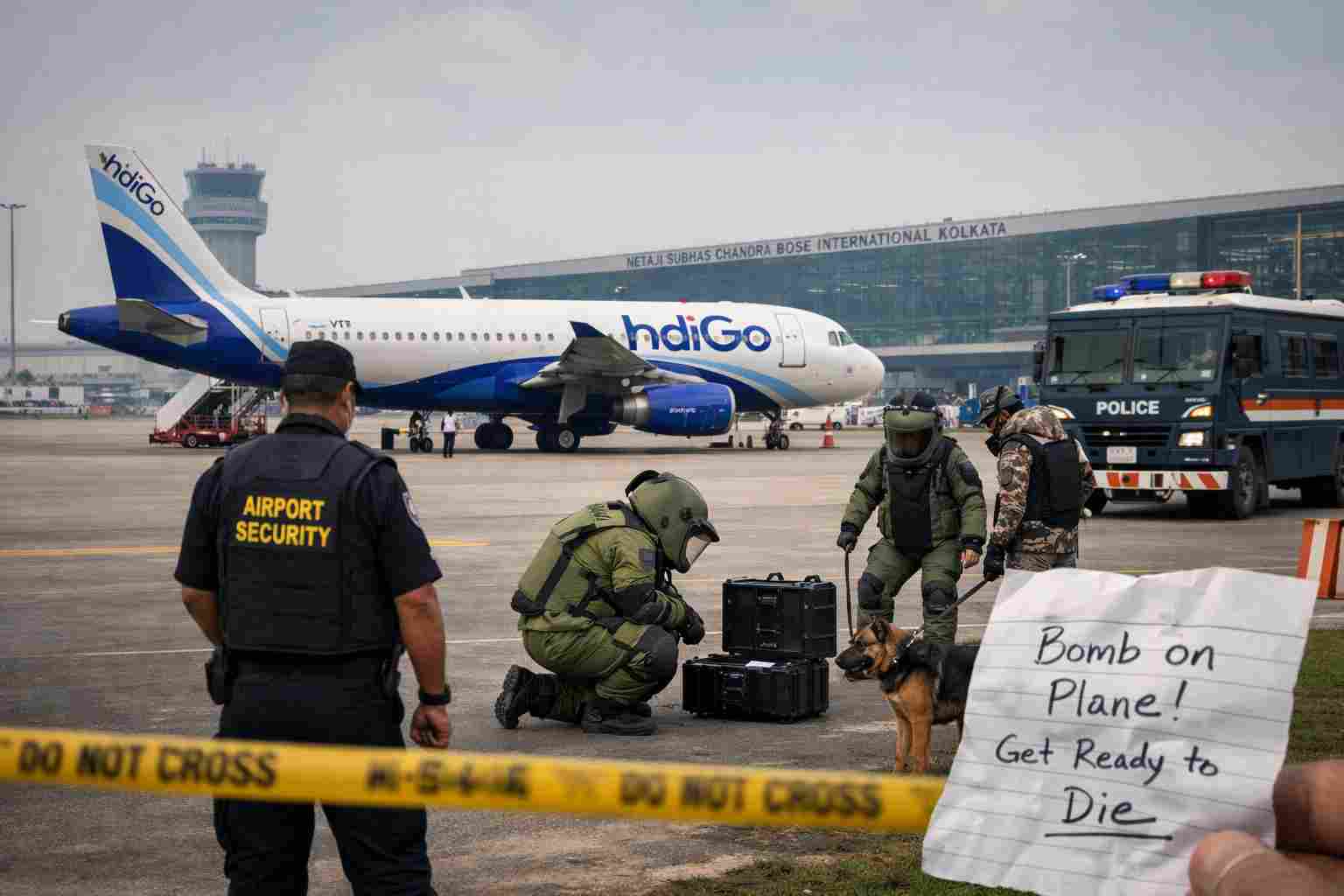
Flight operations at Kolkata’s primary airport were temporarily disrupted Saturday morning after a bomb threat note was discovered onboard an IndiGo flight preparing to depart for Shillong, triggering a full-scale security response and evacuation of passengers.
The incident occurred at Netaji Subhas Chandra Bose International Airport (CCU) and involved an aircraft scheduled to operate to Shillong Airport (SHL). Authorities halted the departure and moved the plane to an isolation bay while security agencies began comprehensive checks.
Threat Discovered During Boarding
According to airport officials, the IndiGo flight was scheduled to depart at 9:15 a.m. on February 14, 2026. During the boarding process, crew members discovered a handwritten bomb threat note inside the aircraft lavatory.
The discovery prompted immediate activation of emergency protocols. The aircraft was relocated to a designated isolation area within the airport premises, and all passengers were safely deboarded as a precautionary measure.
Airport authorities confirmed that specialized security teams initiated inspection procedures shortly after the note was found. Under established aviation security standards, any reported threat requires isolation of the aircraft, evacuation of passengers and crew, and a detailed search before clearance is granted.
As of the latest update, agencies continued conducting thorough inspections to verify the safety of the aircraft and eliminate any possibility of an actual threat.
IndiGo Activates Standard Operating Procedures
IndiGo confirmed the incident in an official statement, noting that the airline immediately informed airport authorities upon discovery of the note and adhered to all prescribed Standard Operating Procedures.
The airline reiterated that passenger and crew safety remains its highest priority. IndiGo also expressed regret over the inconvenience caused but emphasized that precautionary actions are mandatory in situations involving potential security threats.
The carrier said it cooperated fully with airport management and security agencies throughout the process.
The temporary disruption underscores the operational and logistical challenges airlines face when handling security alerts, even when they ultimately prove to be non-credible. Aircraft groundings, passenger deboarding, baggage re-screening, and security sweeps can significantly affect flight schedules and aircraft rotations, particularly at busy regional hubs.
Similar Incident Last Month
The Kolkata incident follows a comparable episode last month involving another IndiGo service. On January 23, 2026, a handwritten threat note was discovered onboard a flight operating between Delhi and Pune after landing.
In that case, passengers were also deboarded and the aircraft was moved to an isolation bay in accordance with established security procedures. Agencies including the Bomb Detection and Disposal Squad carried out extensive inspections of the aircraft and surrounding area.
Authorities later confirmed that no suspicious objects were found, and the aircraft was cleared to resume normal operations without further disruption.
Such recurring incidents highlight the continued vigilance required across India’s civil aviation network. While most bomb threats in recent years have proven to be hoaxes, aviation regulators and airport operators treat each alert with the highest level of seriousness.
Aviation Security Protocols in Threat Scenarios
Indian airports follow a structured response plan whenever a bomb threat is reported. The protocol generally includes:
- Relocating the aircraft to a designated isolation area
- Safe evacuation of passengers and crew
- Deployment of bomb detection and disposal units
- Comprehensive inspection of the aircraft, baggage compartments, and cargo holds
- Close coordination among airline officials, airport authorities, and security agencies
- Clearance granted only after full verification and assessment
These measures are designed to minimize risk, prevent panic among travelers, and maintain operational integrity while investigations are underway.
For airlines such as IndiGo, India’s largest domestic carrier by market share, managing such disruptions requires balancing safety compliance with schedule reliability. Though precautionary steps can result in delays and passenger inconvenience, industry experts note that strict enforcement of security protocols is essential to sustaining traveler confidence.
As inspections continued in Kolkata, airport authorities urged passengers to remain patient and cooperate with security personnel. Further updates were expected once agencies completed their checks and issued a formal clearance.
Operations at the airport were being closely monitored to limit downstream delays across the network.
