


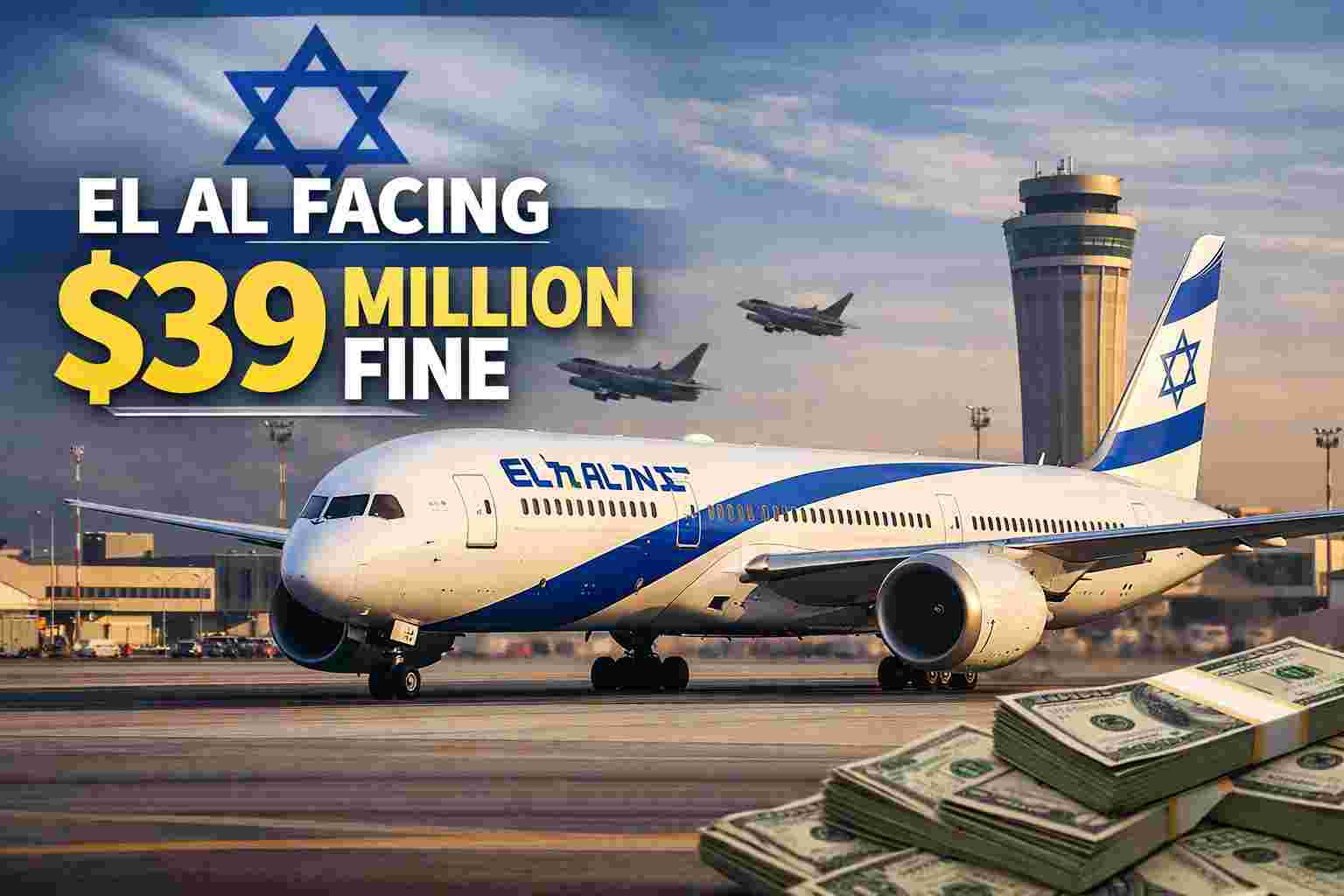
The Israel Competition Authority has moved to impose a significant financial penalty on El Al Israel Airlines, alleging that the country’s flag carrier charged excessive airfares during the early months of the war that began in October 2023. The proposed fine of up to NIS 121 million, or roughly $39 million, represents the maximum sanction allowed under Israeli competition law and underscores heightened regulatory scrutiny of pricing practices during national emergencies.
The case centers on flights to and from Ben Gurion International Airport, Israel’s primary international gateway, at a time when the aviation market was severely disrupted. Following the outbreak of the war, most foreign airlines suspended services to Israel, sharply reducing capacity and leaving El Al as the dominant operator on many international routes.
Regulator Alleges Excessive and Unfair Pricing
The Israel Competition Authority said it has informed El Al of its intention to levy the fine after concluding that fare increases during the war were excessive and unfair. The authority’s position was first reported by Globes. Any final decision, however, remains subject to a formal hearing in which the airline will be given the opportunity to present its arguments.
According to the regulator, the structure of the aviation market changed dramatically after October 7, 2023, when security concerns prompted a wave of flight cancellations by international carriers. With competition largely absent, El Al rapidly accumulated substantial market power that persisted for months.
Data reviewed by the authority show that El Al’s share of passengers surged from about 20 percent before the war to more than 70 percent within days of the conflict’s outbreak. In the initial months, the airline carried more than half of all travelers passing through Ben Gurion Airport, effectively becoming the backbone of Israel’s international air connectivity.
Monopoly on Key International Routes
The investigation found that El Al held a monopoly on at least 38 of the 53 routes it operated during the period under review. These routes included major global destinations such as London, New York, Paris, Bangkok, Tokyo and Los Angeles, markets that are typically served by multiple competing airlines in normal times.
Regulators said this level of dominance significantly limited consumer choice at a moment when air travel had become an essential service rather than a discretionary one. For many passengers, particularly those seeking long-haul flights, El Al was often the only practical option available due to the prolonged suspension of foreign airline services.
While other Israeli carriers maintained limited operations, El Al ran the largest network and the highest flight frequencies. The authority argued that this position magnified the impact of the airline’s pricing decisions, making fare increases especially burdensome for consumers during an already volatile period.
Analysis of Wartime Fare Increases
To assess El Al’s pricing behavior, the Competition Authority analyzed millions of tickets sold by the airline between October 2023 and the end of May 2024. The regulator compared those fares with prices from the same period a year earlier, applying economic models designed to account for seasonality and typical demand fluctuations.
The analysis found that average fares increased by approximately 16 percent during the war. On certain routes, price hikes were more pronounced, ranging from 6 percent to as much as 31 percent. Investigators also identified fare increases on flights that were not fully booked, suggesting that higher prices were not solely the result of capacity constraints.
On those underfilled flights, fares rose by about 25 percent, affecting roughly 16 percent of passengers during the period examined. The Competition Commissioner said such increases were not justified under normal market conditions and reflected exploitation of emergency-driven market power.
The authority noted that classifying pricing as “excessive” is rare in Israel and has previously been applied only once, in a case involving a life-saving medication. That precedent highlights the exceptional nature of the current enforcement action.
El Al Pushes Back
El Al has rejected the regulator’s findings, arguing that the reported fare increase figures are inaccurate and that the use of such data as a basis for an excessive pricing claim is unprecedented. The airline said it intends to present its full position during the upcoming hearing and, if necessary, in appropriate legal forums.
The outcome of the case could have broader implications for how Israeli regulators approach pricing by dominant companies during emergencies. For the aviation sector, the decision may set an important benchmark on the limits of fare increases when competition collapses and air travel becomes a critical service rather than a commercial convenience.
