


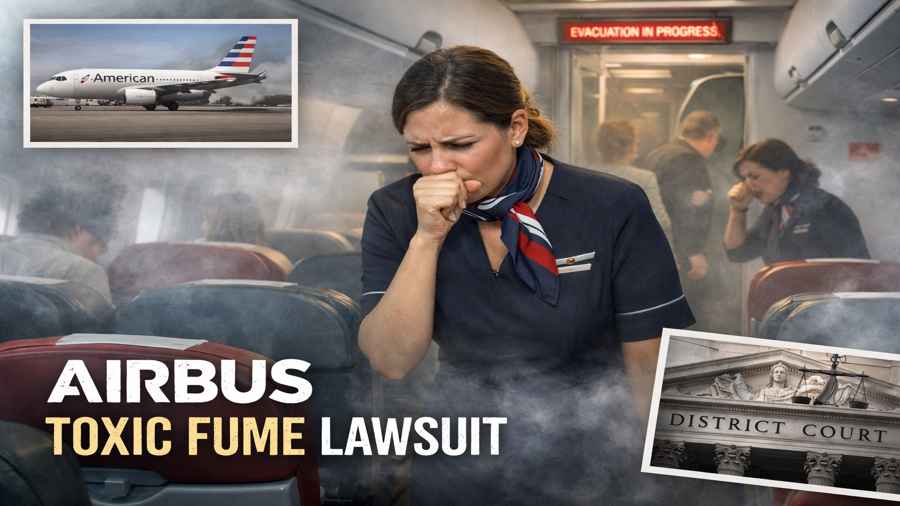
Airbus is facing renewed legal pressure after a U.S.-based flight attendant filed a lawsuit alleging long-term neurological and psychological injuries caused by exposure to toxic fumes aboard one of the manufacturer’s aircraft. The case adds to a growing body of litigation challenging the safety of cabin air systems widely used across the global commercial aviation fleet.
The lawsuit was filed in a New York district court by Tamar Ferrel, an American Airlines flight attendant based in Phoenix, and centers on an incident that occurred on January 14, 2024, during boarding of an Airbus A319 at Phoenix Sky Harbor Airport. The complaint places American Airlines ground operations and Airbus aircraft design under scrutiny, as industry debate over so-called “fume events” continues to intensify.
Incident During Boarding
According to the lawsuit, Ferrel was standing midway through the aircraft cabin assisting passengers as boarding was underway when the aircraft captain activated the auxiliary power unit, or APU. The APU, a small engine located in the tail of the aircraft, supplies electrical power and air conditioning while the plane is on the ground and is commonly used before engine start.
Shortly after activation, a strong odor described as resembling “dirty socks” reportedly spread through the cabin. Ferrel moved toward the rear of the aircraft, where she encountered another crew member who was coughing and gagging. The captain subsequently ordered passengers to evacuate the aircraft.
While passengers exited, Ferrel and other crew members remained onboard for nearly an hour, according to the complaint. During that time, Ferrel experienced coughing, confusion, and severe headaches. The crew was eventually transported to urgent care facilities for medical evaluation.
Health Issues After Returning to Work
Despite the symptoms, Ferrel was initially cleared to return to duty and resumed flying after taking one day off. During a subsequent flight to Mexico, however, she reportedly became severely ill, began shaking, and required oxygen support onboard the aircraft.
Her condition worsened over the following weeks, forcing her to take extended time off work. The lawsuit states that she had no alternative source of income during this period. Ferrel later sought treatment from neurologist Dr. Robert Kaniecki, who compared the exposure to the effect of a concussion, but caused by chemicals rather than physical trauma.
Ferrel alleges that she now suffers from daily headaches and panic attacks associated with post-traumatic stress symptoms, conditions that she claims have prevented her from returning to flying duties.
Allegations Against Airbus
According to the complaint, the lawsuit alleges that Airbus knew about contamination risks within its aircraft air systems but failed to take adequate corrective action. The suit seeks both compensatory and punitive damages and accuses the manufacturer of reckless indifference to the safety of passengers and crew.
The claims are part of a broader legal and regulatory debate over whether existing aircraft designs sufficiently protect occupants from exposure to potentially harmful substances during rare but documented fume events.
How Cabin Air Systems Work
Most commercial aircraft rely on a bleed air system to supply air to the cabin. In this design, compressed air is drawn from the aircraft’s engines, cooled through air conditioning packs, and circulated throughout the cabin.
Critics argue that if engine oil or lubricants leak into this airflow, they can vaporize and contaminate the cabin, potentially exposing occupants to harmful chemicals. Some experts believe the risk may be higher when the APU is operating, particularly if seals or components are compromised.
Aircraft manufacturers and airlines maintain that such incidents are uncommon and that current systems meet all regulatory safety standards. Nonetheless, lawsuits continue to question whether long-term health risks have been fully evaluated or mitigated.
Similar Legal Actions
The case follows other lawsuits involving alleged cabin air contamination. In May 2023, a United Airlines flight attendant sued Airbus after an A319 incident at Denver International Airport, where activation of the APU reportedly filled the cabin with chemical fumes. A pulmonologist treating that flight attendant reportedly compared her airway injuries to those seen after chlorine exposure.
Boeing has also faced litigation over similar claims. In a separate case, a Delta Air Lines passenger and law professor alleged long-term brain and respiratory injuries following exposure to contaminated cabin air on a Boeing 737 flight.
Industry Implications
The aviation industry maintains that most passengers and crew recover quickly after fume events and that lasting harm is rare. Advocacy groups, however, argue that a small subset of those exposed develop chronic neurological and respiratory conditions.
Scientific consensus on long-term effects remains inconclusive, and further research is ongoing. Nearly all commercial jets use bleed air systems, with the primary exception being newer aircraft that rely on electrically powered compressors instead.
Ferrel’s lawsuit adds to mounting legal and reputational challenges for aircraft manufacturers and could influence future aircraft design, regulatory oversight, and airline procedures related to cabin air quality and crew safety.
