


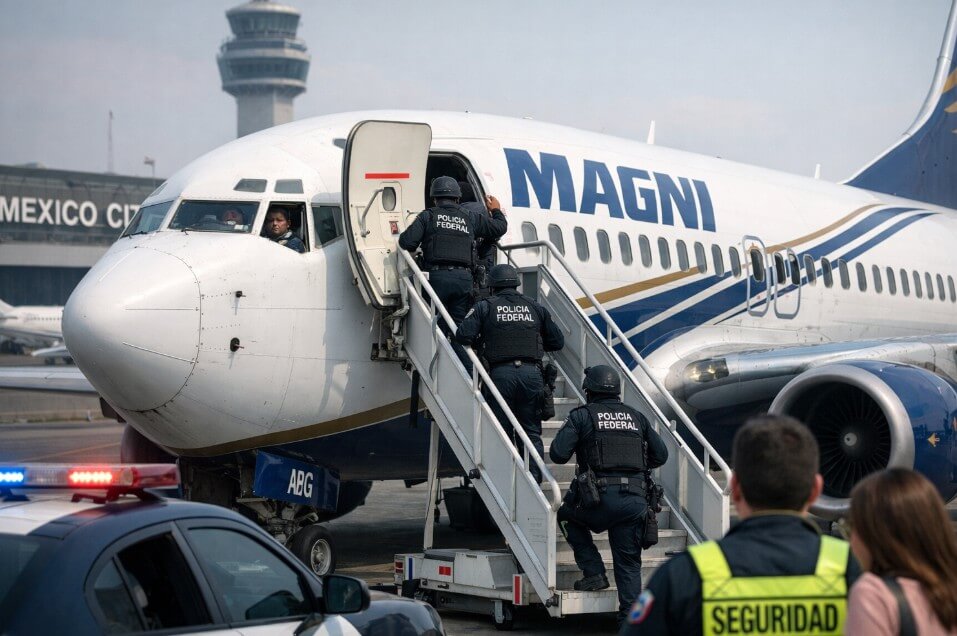
MEXICO CITY — A wage dispute at Mexican leisure airline Magnicharters escalated into a major operational and security incident Friday when a pilot refused to operate a scheduled Boeing 737 flight, locking himself inside the cockpit and forcing authorities to intervene at Mexico City International Airport. The event disrupted airport operations, stranded passengers, and prompted a formal investigation by aviation regulators.
Magnicharters Flight 780, scheduled to operate from Mexico City to Cancun, was fully boarded and preparing for departure when the captain declined to proceed with the flight, citing months of unpaid wages. The aircraft, a Boeing 737-300, remained grounded as the situation unfolded.
Cockpit Standoff Halts Departure
The incident occurred at approximately 3:00 p.m. local time on Friday, December 19, 2025, as the aircraft neared its scheduled pushback. According to eyewitness accounts, the captain locked himself inside the cockpit and informed passengers that the flight would not depart until outstanding pilot salaries were paid.
Passengers reported that the captain claimed Magnicharters had failed to pay pilot wages for roughly five months. He also alleged that he had personally paid for essential navigational charts after the airline failed to provide them. During his address, the captain referenced his family obligations and noted his nearly three-year tenure with the airline, emphasizing that he had never previously disrupted a flight.
Observers described his tone as one of protest rather than aggression, though the action effectively immobilized the aircraft and triggered airport security protocols.
Airline Financial Strain Under Scrutiny
Magnicharters operates primarily domestic leisure routes within Mexico and relies heavily on an aging fleet of Boeing 737-300 aircraft. Such aircraft require consistent maintenance investment, increasing financial pressure on smaller carriers.
The airline has previously been linked to financial instability, including allegations of delayed payments and strained labor relations. While authorities have not confirmed the full scope of the wage dispute, the incident has renewed attention on the carrier’s employment practices.
Unverified reports suggest the pilot may have been informed of his dismissal shortly before the flight. Regulators and airline officials have not confirmed that claim, and it remains part of the ongoing investigation.
Security Response and Passenger Impact
After negotiations failed to resolve the situation, airport security personnel boarded the aircraft and forced entry into the cockpit. The pilot was arrested without reported injuries, and all passengers were subsequently deplaned.
Magnicharters canceled the flight and did not immediately provide an alternative aircraft or a confirmed timeline for rebooking affected passengers. Mexican aviation authorities have since launched a formal investigation to determine whether aviation security rules or labor laws were violated.
Why Authorities Treat Grounded Aircraft Incidents Seriously
Even though the aircraft never left the ground, aviation authorities treat any act that restricts aircraft movement or mimics hijacking behavior as a serious security threat. Such incidents automatically trigger emergency response procedures designed to protect passengers, crew, and airport infrastructure.
Under aviation law, flight crew — particularly captains — are held to a high standard of conduct due to their responsibility for safety and security. Authorities generally consider protest actions involving aircraft control unacceptable, regardless of whether labor grievances are later substantiated.
Comparisons to Rare Pilot-Control Incidents
The Magnicharters event has drawn comparisons to rare cases in which pilots misuse cockpit authority for personal objectives. One notable example occurred in February 2014, when Ethiopian Airlines Flight ET702 was diverted from its planned route to Rome and flown to Geneva after the co-pilot seized control to seek asylum.
In that case, the Boeing 767 landed safely, passengers were evacuated without injury, and Swiss authorities arrested the co-pilot upon landing. Although more severe due to its inflight nature, the case remains a reference point for how aviation authorities respond to cockpit-related security breaches.
Bottom Line
The Magnicharters incident highlights the intersection of labor disputes and aviation security, underscoring how unresolved employment issues can escalate into major operational crises. If wage payment allegations are confirmed, labor regulators may pursue separate action against the airline. However, the pilot involved now faces potential criminal charges and long-term consequences for his aviation career.
For airlines, regulators, and passengers alike, the event serves as a reminder that even ground-based standoffs can carry serious legal, financial, and reputational risks.
