


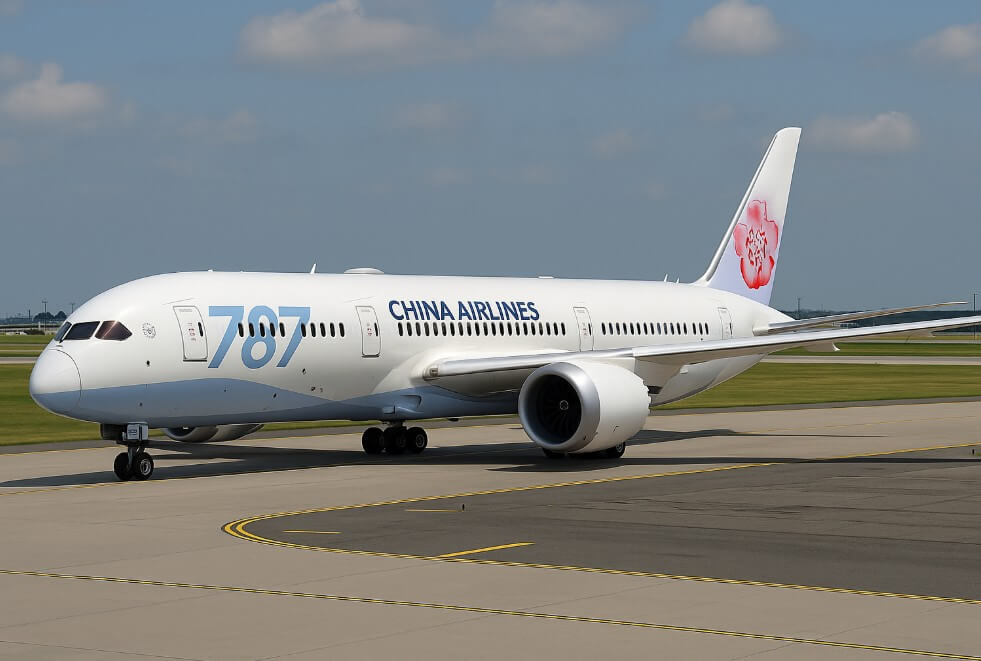
TAIPEI — China Airlines is preparing to usher in a new era of passenger service with the arrival of its first Boeing 787 Dreamliner, set to begin commercial operations by mid-2026 on regional routes such as Bangkok and Tokyo. The move marks a major step in the Taiwanese flag carrier’s fleet modernization strategy, aimed at replacing aging Airbus A330s and enhancing onboard comfort.
A Milestone in Fleet Renewal
At a recent media event in Thailand, China Airlines President Chen Han-ming confirmed that flight testing for the new Boeing 787s is underway. “Flight tests for the new Boeing 787s are underway,” Chen said, calling it a key milestone in the company’s long-term renewal plan.
China Airlines placed its first order for 16 Boeing 787 aircraft in August 2022, followed by an additional eight in May 2023, bringing the total to 24. Six of the aircraft will be the higher-capacity 787-10 variant, which is particularly suited for regional and medium-haul routes within Asia’s busiest markets.
The airline had originally expected its first delivery in 2025, but industry-wide production delays have shifted the schedule to early 2026. Between three and five Dreamliners are now expected to enter service that year.
Replacing an Aging Workhorse
The new 787s will replace China Airlines’ Airbus A330 fleet, long criticized by passengers for its dated interiors and inconsistent cabin experience. The introduction of the Dreamliner, known for its fuel efficiency, composite structure, and passenger-friendly features such as larger windows and improved air quality, is expected to significantly elevate the airline’s product offering.
The A330s have served as the airline’s primary widebody aircraft on short and medium-haul routes for nearly two decades. As part of a broader modernization push, China Airlines intends to gradually retire the older jets, cutting maintenance costs and aligning with global sustainability goals.
“The deployment of the Boeing 787 will mark a major upgrade for passengers traveling on regional routes,” an airline spokesperson said. “It will also help improve operational efficiency and reduce environmental impact.”
Expanding Toward the Long-Haul Future
The 787 order forms part of a much larger fleet renewal plan extending into the next decade. In addition to the Dreamliners, China Airlines has confirmed the purchase of 10 Airbus A350-1000 aircraft, with deliveries beginning in 2029. These widebody jets will serve long-haul destinations in North America and Europe, operating alongside future Boeing 777-9 passenger aircraft and 777-8F freighters scheduled to arrive from 2030.
The dual-sourcing approach reflects China Airlines’ commitment to maintaining flexibility and competitive service standards across its network. The A350-1000 and 777-9 will anchor its intercontinental strategy, while the 787s will strengthen regional connectivity in Asia.
Industry analysts say the diversified fleet could position the airline to capture post-pandemic travel demand and meet sustainability benchmarks as airlines worldwide transition toward more efficient aircraft.
Cabin Upgrades and Passenger Experience
Alongside new aircraft acquisitions, China Airlines is also investing heavily in the passenger experience. The carrier has commissioned Airbus to refurbish the cabins of 15 existing A350 jets, bringing their interiors in line with the next generation of aircraft arriving later in the decade.
The upgraded cabins will debut in 2027, featuring refreshed seating, improved lighting, and updated inflight entertainment systems. The move aims to ensure consistent comfort across the airline’s long-haul and regional fleets.
“This combination of new deliveries and modernized cabins underscores China Airlines’ commitment to providing improved efficiency, sustainability, and onboard comfort across both regional and international routes,” the company said in a statement.
Positioning for Asia’s Competitive Market
With competition intensifying among Asian carriers, the introduction of the Boeing 787 is expected to give China Airlines a strong advantage in premium regional markets. Bangkok’s Suvarnabhumi Airport and Tokyo’s Haneda Airport—both among the most visited destinations in Asia—are likely to be among the first routes served by the Dreamliner.
The upgraded product will also help the airline compete more effectively with regional rivals including EVA Air, Japan Airlines, and Thai Airways, all of which have recently expanded or refreshed their widebody fleets.
Looking Ahead
As the first Boeing 787 joins its fleet in early 2026, China Airlines will enter a new phase of growth defined by technological innovation, sustainability, and enhanced customer experience. The combined introduction of the 787, A350-1000, and upcoming 777-series aircraft positions the airline for long-term success across Asia and beyond.
