


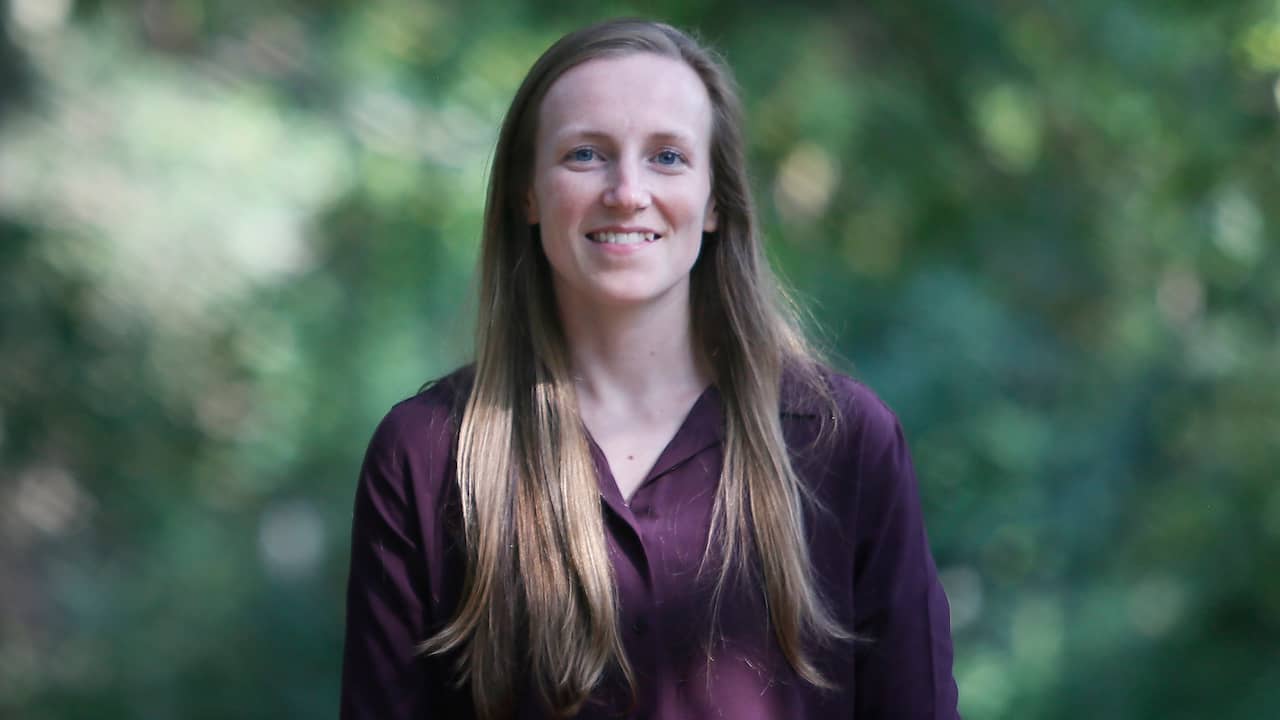
Shaming the climate crisis? Not necessary at all. Because if we put our shoulders to the wheel, the world can become truly sustainable, argues Scottish researcher Hannah Ritchie. She told NU.nl of her “realistic optimism.”
Niet het einde van de wereld is de veelzeggende titel van Ritchie’s nieuwe boek. Ze wil een hart onder de riem steken van alle mensen die de hoop zijn verloren door al het sombere klimaatnieuws. Ritchie kan erover meepraten: toen ze zelf in Edinburgh milieuwetenschappen ging studeren, dacht ze ook dat de wereld onleefbaar zou worden voor haar en haar kinderen.
“Niet alleen door klimaatverandering, maar ook luchtvervuiling, verzuring van de oceanen, zeespiegelstijging… Al die milieuproblemen werden erger en erger”, vertelt ze tijdens een bezoek aan Nederland. “Het voelde alsof dat nooit beter zou worden, dat alles hopeloos was.”
Pas jaren later kwam Ritchie het werk van de Zweedse statisticus Hans Rosling tegen. Hij liet zien hoe de wereld juist wél beter werd: veel minder armoede, minder kindersterfte, meer meisjes die naar school kunnen. “Het liet me zien dat het ook weer niet zó slecht ging met de wereld als ik dacht.”
Ontvang meldingen bij nieuws
Many trends are moving in the right direction
Since 2017, Ritchie has been a principal researcher at Our World in Data, a website that collects all kinds of statistics about the global economy, climate and our health. By drawing on this vast knowledge base, it repeatedly dispels misunderstandings about the world.
For example, we now breathe cleaner air in rich countries than many generations before us. According to her, there are signs that things are also moving in this direction with regard to carbon dioxide emissions: per capita greenhouse gas emissions have already decreased slightly. Total emissions are likely to peak in the coming years.
The growth of solar and wind energy continues to break records, and cars are quickly becoming electric. The goals of the Paris Agreement have not yet been achieved quickly enough, but the outlook is becoming more positive year after year.
“More than enough food for everyone”
According to Ritchie, concerns about overcrowding are unfounded. “Many people think we only produce enough food for all 8 billion people on Earth,” she says. This is not incomprehensible, considering that 800 million people have very little. “But we actually produce enough food for everyone.”
In fact, if we were to distribute global food production fairly, each person would get twice the calories they need. Ritchie does not see the growing world population or global economy as a problem. “We cannot leave the global economy as it is and shrink it. And then leave billions of people in poverty.”
 7:13
7:13We have to eat less meat to save the climate
Race against climate change
But problems don't solve themselves either. Take natural disasters for example: they have become less deadly in recent decades due to improved warning systems. But they will become more common and worse due to climate change.
“We are in a race against climate change,” Ritchie says. “So far, we are moving fast enough. Disasters are becoming more severe, but our capacity to deal with them is growing faster. There is no guarantee that they will continue. Climate disasters will escalate further and faster, forcing us to act faster.”
We must therefore do everything we can to limit the temperature rise to less than two degrees. Ritchie also believes that “this is a huge challenge.” “But I think it's manageable, not hopeless.”
Eating less meat is not yet possible
However, the Scottish writer is not optimistic in all areas. Take agriculture for example: 41 percent of global grain production is currently processed into animal feed, and 11 percent is converted into biofuel. So we eat less than half of it ourselves. The increasing demand for meat (beef) is now causing a lot of emissions and deforestation, because we need more and more land.
the solution? Especially as we all eat less meat and give the land we save back to nature. This trend has not yet emerged. “As long as electricity is cheap and reliable, people don't care where it comes from,” Ritchie says. “Food is a more difficult issue because it is a very personal choice you make three times a day.”
Although better alternatives to meat are increasingly emerging, they do not yet see a major shift in global eating patterns. “I'm pinning my hopes on the rise of processed meat. I think a lot of people won't convert unless they can replace their meat one by one with fake meat that is indistinguishable from real meat.”
Pay attention to the contents rather than the bag
It will take many years before lab-grown meat becomes affordable and widely available. But according to Ritchie, there is little point in asking people to become vegetarian.
She believes that “people simply do not allow themselves to be told what to do.” “If you're too aggressive about it, people will fight back.” Richie's tip: Try to cut back. This applies to meat, but also to air travel or buying things.
Such steps can make a big difference, while people now often focus on small things that have a much smaller impact on the environment and climate. “It's great that people take their own bag to the supermarket to save plastic, but they don't think about what's in that bag,” Ritchie says. “Whereas the choice of food has a much greater impact than the bag.”
Om een vraag te kunnen stellen dien je in te loggen. Log in of maak binnen 1 minuut jouw gratis account aan.
