


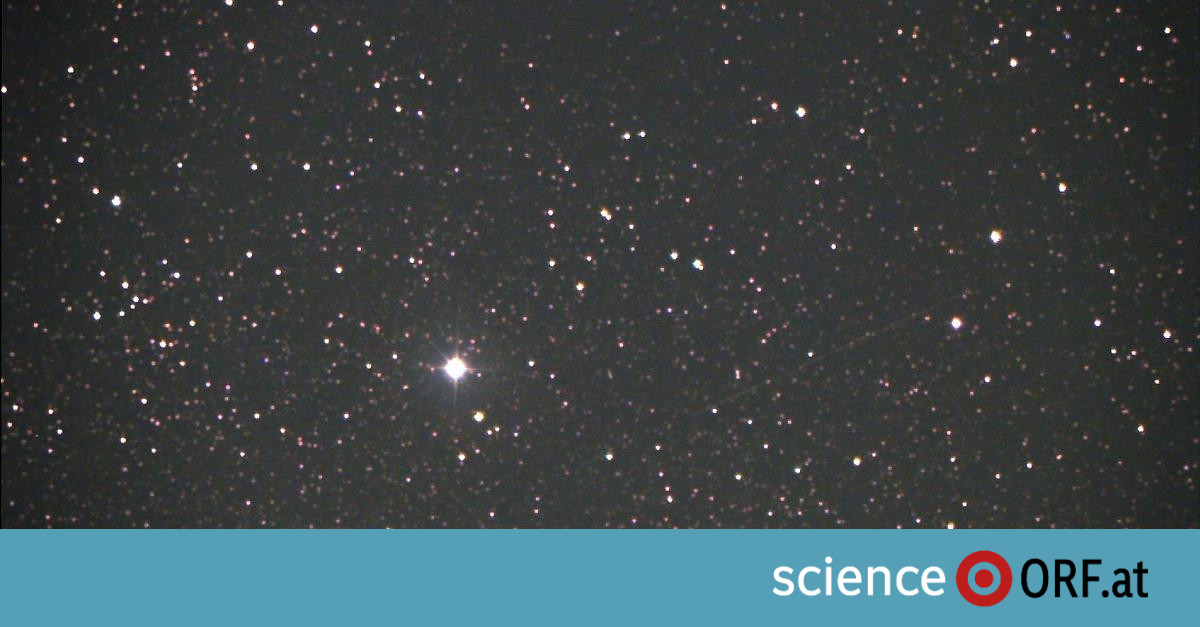
A study now published in the journal Nature shows that the Blue Walker 3 satellite could shine up to 100 times brighter than researchers recommend.
The satellite in question was developed by the American company AST Space Mobile and was launched into space on September 10, 2022. About two months later, the 64-square-meter antenna of the communications satellite-type prototype was deployed in a near-Earth orbit of 500-600 km. About 100 examples of it will be in orbit in the future in order to provide the world with additional broadband Internet service being taken care of from there.
Since then, BlueWalker 3 has been considered one of the brightest artificial objects in the night sky. A team of researchers and amateur astronomers wanted to know exactly how bright it is. To do this, they aligned large and small telescopes from Chile, the United States, Mexico, New Zealand, the Netherlands and Morocco towards the satellite. The current analysis by the team led by first author Sangeetha Nandakumar from the University of Atacama in Chile and Austrian astrophysicist Siegfried Eagle from the University of Illinois in the USA reaches surprising results.
A “pearl necklace” made of satellites
As a board member of the International Astronomical Union Center for the Protection of Dark and Quiet Skies from Satellite Constellation Interference (IAU CPS), Eagle’s mission is to determine the brightness of newly launched satellites regardless of manufacturer information, according to Space Interface. and scientists researching astronomy to APA. The problem of sunlight reflected from satellites is becoming more serious, and now causes difficulties for high-tech research using highly sensitive detectors, but also for amateur astronomers.

Since SpaceX has launched thousands of Starlink satellites, many “night owls” have noticed it, especially shortly after the satellites are launched as they move over the horizon in a “string of pearls.” “But this is just the beginning,” Eagle says. The current number of 7,000 to 8,000 satellites in orbit will “rise to more than 40,000” through SpaceX’s ambitions alone.
“BlueWalker 3” is well above the pain threshold
At least 20 countries are currently planning to install their Internet access in space. Then the number of moving artificial celestial bodies will be much greater than the number of visible stars. This becomes a bigger problem for astronomers working in the radio-frequency range, because every satellite here can appear as bright as the Sun, Eagle says. Since there are no laws to protect the night sky yet, the IAU CPS, together with satellite operators, is trying to find a solution so that the reflections from the instruments do not reach the astronomical pain threshold of seven magnitudes (of values above seven, the satellite can no longer reach to the naked eye (note).
In any case, BlueWalker 3 is well above this pain threshold: in the brightest phase during the observation period, the satellite reached a magnitude or “apparent brightness” of 0.4. This makes it as bright as Procyon and Achernar, the brightest stars in the constellations Little Dog and Eridanus, respectively. In their work, the study authors recommend that a critical assessment of the impact of satellites on space and Earth’s environment be part of pre-launch approval processes.
