


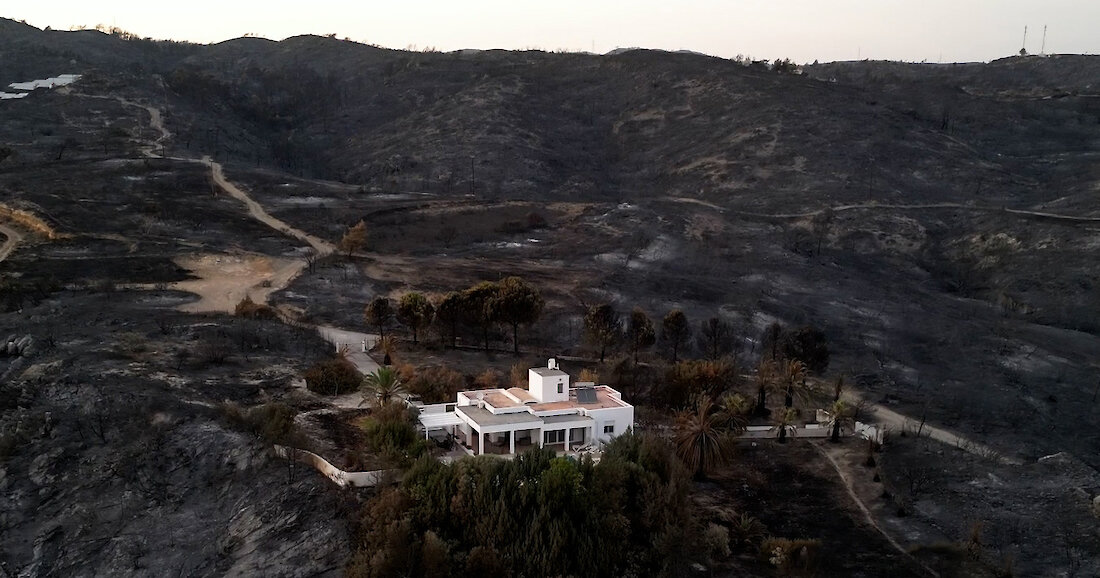
In July in particular, heat and drought translated into wildfires. But despite all the stunning images from Greece and the Canary Islands, Europe has not had an exceptional fire year, according to impressive records from the natural fire organization EFFIS. At the end of August, about 400,000 hectares of nature were burned, which is much less than last year, and “only” about 100,000 hectares more than average.
A study a few years ago showed that since 2000, the amount of green space burned annually has decreased by about 25 percent worldwide. However, the same applies here: averages don’t say everything. But it’s the extreme conditions that are getting worse, says Kathleen Stove, a wildfire expert from Wageningen University.
“We’re seeing an increase in extreme fire behavior, and fires that are becoming more dangerous and unpredictable. We’re seeing fires in places we’re not used to, like last year near London. And the fire season is getting longer. Northern hemisphere wildfires are now also occurring in the month of November or early February. Almost all year round.
But there are often other causes behind wildfires that require a lot of attention, Stoff says. Take, for example, this year’s fires in Europe. Although the fire season was not unusually intense, fires did occasionally break out in tourist areas, making it feel closer to home. Another thing: Greece now has stricter rules, after a forest fire killed 104 people in the summer village of Mati in 2018. “So Greece is now focusing more on warning systems and evacuations,” Stoff says. “It’s good for safety of course, but it also ensures that residents and tourists are more aware of an approaching bushfire. Which makes the news again.
Such complexities also play a role in Canada, where wildfires this summer broke the record for area burned: from 7 million hectares in 1995 to at least 15 million hectares now. Pure nature: “Unlike Europe, the vast forests there are less managed by humans,” Stoff says. An academic analysis has found that climate change has doubled the risk of fire-prone conditions, at least in eastern Canada.
However, Stove believes more attention has been paid to the fires, simply because smoke has blanketed the air in New York. It made an impression, and the photos went around the world. “Bushfires are never just about climate, they’re also about people’s exposure.”
Meanwhile, the most intense — and most significant, according to Stoff — wildfires were in Hawaii, where flames wiped out the city of Lahaina in early August. Dozens of people killed: Deadliest US wildfires since 1871.
Stove explains that the situation here is also more complex than climate change being the main cause. “There have been a few fires here.” Now you have different land uses, tall invasive grasses that dry out quickly and then catch fire easily.’ Add to that the fact that many residents didn’t have cars, didn’t speak English well so warnings didn’t get through, and that Lahaina had many historic log homes with verandahs that were a fire hazard — and disaster was just around the corner.
Stoff believes lessons can be learned from this now that fires are more unpredictable and dangerous. “We live by water in the Netherlands. Water is intertwined with everything we do. It also has to be done with fire,” she adds. There are plenty of examples of what this could mean: from the farmer not harvesting his grain during major droughts to preventing field fires Automatically, to avoid thatched roofs in fire-prone areas.
The summer of 2023 was not so much a harsh summer as it was a harsh summer. “The fire comes without warning and burns down your entire city,” Stoff says. The people who lived here have lost everything: their homes, but also their neighborhood, their social lives. You can see the suffering of people here. This kind of suffering will increase. We will also have to take this into account increasingly in the Netherlands.
