


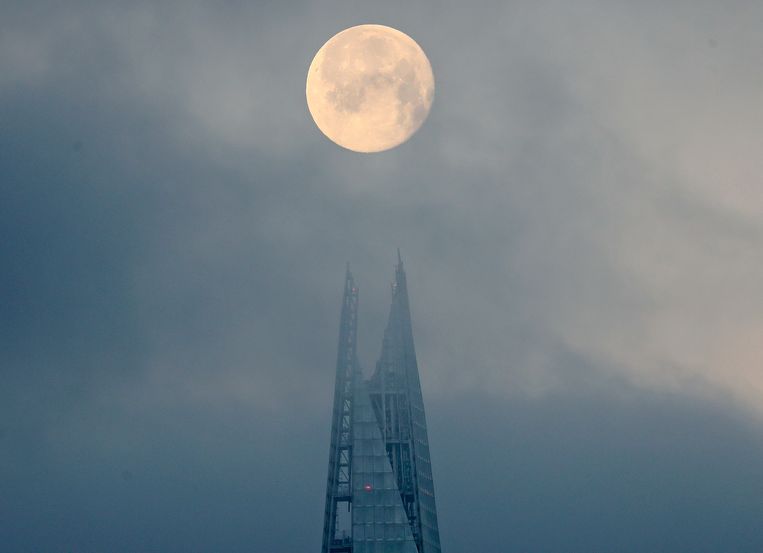
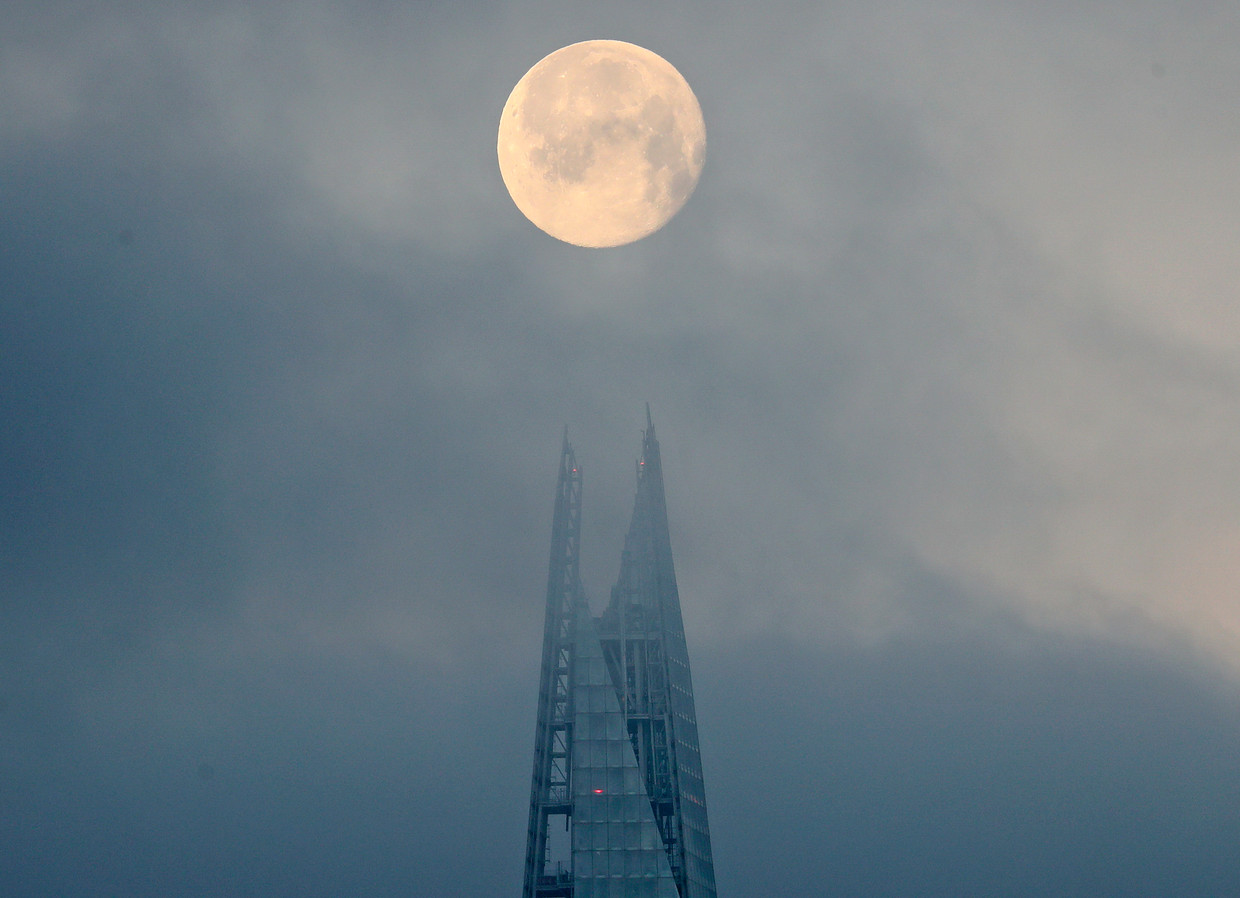
On the five nights before the full moon, participants slept an average of 45 minutes less than on the other nights. In addition, they went to bed 30 to 80 minutes later.
Man’s obsession with the moon goes back centuries. Based on his position, many societies predict how much we will harvest, what our mood will be, and whether natural disasters will occur. Modern science has not yet clearly established whether the Moon has a significant influence on the Earth and its inhabitants, other than the tides in the sea.
Despite previous evidence of a monthly sleep cycle, scientists are skeptical about the moon’s influence on our sleep. The new study is more precise and comprehensive than previous research and should therefore provide more clarity. The researchers gave bracelets to about a hundred people from the indigenous people of Toba and Qom in Argentina, and to more than four hundred students in the American city of Seattle. These bracelets indicate that the test subjects are asleep.
Potential evolutionary advantage
A large portion of the population of Toba and Qom do not have access to electricity, and therefore do not have access to artificial light. For them, the relationship between sleep rhythm and the lunar cycle is the strongest. This result is consistent with other studies. Light is an important factor for the quality and length of our sleep. However, researchers have also discovered this phenomenon among students in Seattle who have electric light at night.
Researchers speculate that there is a Darwinian explanation. Our ancestors would have had an evolutionary advantage if they had stayed awake longer on light nights with an almost full moon. In this way, a person with night blindness can usually use the evening to search for food, care for children, or social events.
Interestingly, research only shows that people sleep shorter and later before the full moon, but not after it. You might think that a nearly full moon would be equally bright in its waxing and waning phases. According to researchers, the difference lies in the phase of the moon. During the days leading up to a full moon, it is already high in the sky in the early evening. That moment would come later in the following days. Then the early evening remains as dark as a full moon night, when the moon is not visible.
Internal clock
“It has already been studied whether the moon phase affects our sleep,” says Ysbrand van der Werf, a neuroscientist and professor at UMC University in Amsterdam. “That was already known from the animal kingdom.” The position of the moon also has an impact on people. He praised the accuracy of the new study, in which he was not involved. “Better, bigger, more precise research is of course always a good thing.”
According to Van der Werff, the big question now is: How does our body know what phase the moon is? Is moonlight enough to affect your biological clock? This seems unlikely, because this phenomenon also exists in places where there is electric light in the evening.
Hence the body may be able to maintain an internal clock, just like the biological clock that sets our circadian rhythm. Van der Werf: I do not know of any monthly system in the human body other than the menstrual cycle. Moreover, it does not have a significant effect on sleep.
