


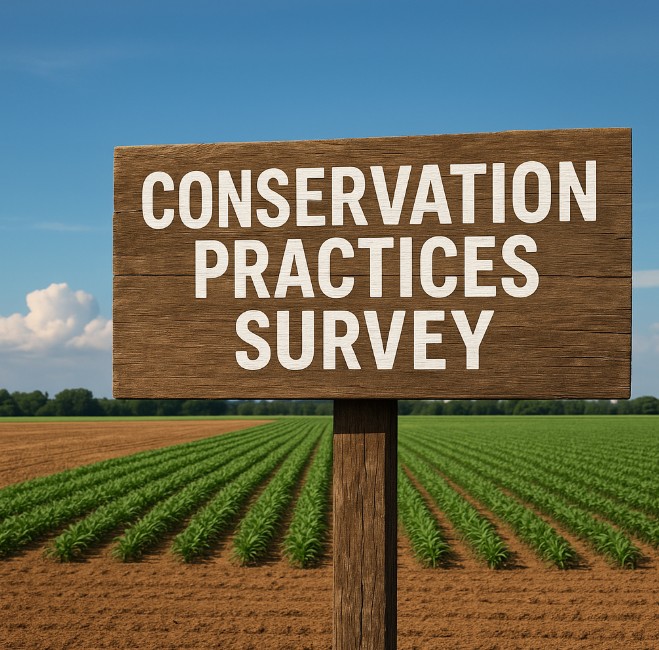
The U.S. Department of Agriculture (USDA) is preparing to conduct one of its most comprehensive surveys yet on conservation practices, seeking to better understand how farmers, ranchers, and agricultural landowners manage natural resources across the country.
The effort, carried out through USDA’s National Agricultural Statistics Service (NASS) in partnership with the Natural Resources Conservation Service (NRCS), will distribute the 2025 Conservation Effects Assessment Project (CEAP) survey to nearly 23,000 operators nationwide. According to USDA officials, the data collected will play a central role in shaping the next generation of conservation programs and services.
Survey Rollout and Process
Local NASS representatives will begin visiting agricultural operators in August and September 2025 to assess eligibility for participation. Those identified as eligible may be contacted between November 2025 and March 2026 to complete the survey.
Questions will focus on core aspects of agricultural operations, including production practices, fertilizer and manure applications, irrigation methods, tillage approaches, and installed conservation measures. NASS will then provide the survey results to NRCS, which is tasked with analyzing and publishing the findings.
Officials emphasized that all responses are confidential. Information provided is protected by federal law and only reported in aggregate form, ensuring that no individual operation is identified.
Understanding Conservation Outcomes
The CEAP Cropland Assessments are designed to measure the environmental outcomes of conservation practices on U.S. working lands. The findings will help USDA evaluate how conservation strategies are performing and what additional resources may be needed.
Specifically, USDA says the survey results will:
-
Evaluate the resources farmers may need in the future to protect soil, water, and habitat.
-
Shed light on techniques farmers use to conserve healthy environments.
-
Improve and strengthen technical and financial programs that help landowners plan and install conservation practices.
-
Support programs that help producers balance profitability with the protection of natural resources.
“This data will help us continue to build science-backed, practical solutions that support producers while also ensuring sustainable resource management,” NRCS officials said in announcing the survey.
Multi-Agency Effort
The CEAP initiative is a multi-agency project led by NRCS and supported by NASS. Under the cooperative agreement, NRCS will combine survey responses with advanced modeling techniques to deliver a comprehensive report on cropland conservation trends and associated outcomes for the period from 2024 through 2026.
The project has already produced two prior national assessments, and the 2025 survey represents the third installment. Together, these assessments are intended to provide policymakers, researchers, and producers with clear insights into conservation practices at both the national and regional level.
For the USDA, the stakes are high. Conservation policy not only affects environmental health but also plays a significant role in the long-term economic viability of American agriculture. By grounding decisions in empirical data, officials hope to design programs that are both effective and responsive to producer needs.
Publication and Access
Once compiled and analyzed, the results of the 2025 survey will be published on the CEAP Cropland Assessments webpage at nrcs.usda.gov/ceap/croplands. The agency encourages producers and stakeholders to consult the reports as a resource for making informed management decisions.
Farmers and landowners with questions about the survey may call 888-424-7828 or visit the NASS website for more information.
Looking Ahead
As agriculture faces mounting challenges from climate variability, water scarcity, and shifting land-use pressures, conservation efforts are increasingly at the center of both policy debates and on-the-ground decisions. The CEAP survey, USDA officials say, is intended to provide the data foundation necessary to meet these challenges head-on.
By gathering detailed insights into how producers are currently managing their land, USDA aims to ensure its conservation programs not only support profitability but also preserve the natural resources on which the future of American agriculture depends.
