

Close Menu
Aviation Analysis – Industry Travel NewsAviation Analysis – Industry Travel News
    Facebook X (Twitter) Instagram
    Facebook X (Twitter) Instagram
    Aviation Analysis – Industry Travel NewsAviation Analysis – Industry Travel News
    Subscribe
    • Home
    • Top News
    • World
    • Economy
    • Science
    • Tech
    • Sport
    • Entertainment
    • Contact Form
    Aviation Analysis – Industry Travel NewsAviation Analysis – Industry Travel News
    Home»Tech»Unusual complete pictures of Jupiter!
    Tech

    Unusual complete pictures of Jupiter!

    Theodore MeeksBy Theodore MeeksMay 14, 2021No Comments2 Mins Read
    Share Facebook Twitter Pinterest LinkedIn Tumblr Email
    Unusual complete pictures of Jupiter!
    Share
    Facebook Twitter LinkedIn Pinterest Email Copy Link
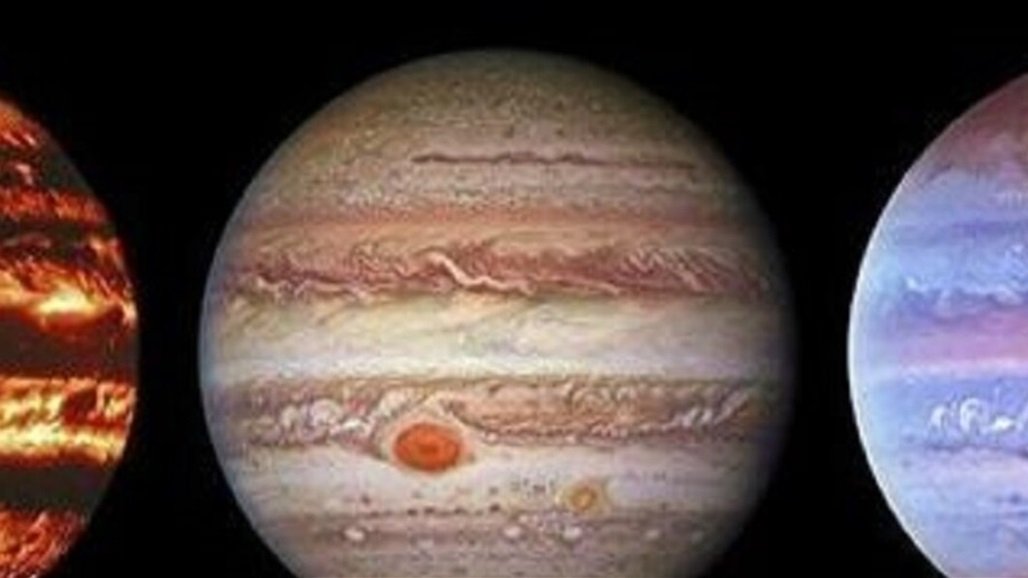
    These images, published on the US National Astronomy Laboratory website, which captured 3 spectral bands simultaneously – infrared, visible and ultraviolet light, on January 11, 2017, allowed the scientists to compare the follow-up at different wavelengths and obtain new, invisible details. Previously about the planet’s atmosphere.

    The multi-spectral images allow astronomers to obtain details that cannot be obtained otherwise. For example, visible light allows identifying the surface of Jupiter, but it does not allow determining the thickness of clouds. And in infrared radiation, we get brighter bands that indicate thin cloud layers, which allow better emission of thermal energy from the planet. As for the ultraviolet rays, it allows scientists to follow the rise and spread of the minutes in the planet’s atmosphere, for example, the upper layers appear red as a result of absorbing ultraviolet light, while the blue areas are the result of the reflection of violet light at small altitudes.

    By observing the large, bright red spot in visible and ultraviolet light, it became clear to scientists that it had vanished in infrared light, and that its smaller counterpart, Oval А, was not visible at all in the infrared image. Against this, cloud streaks rotating in opposite directions are clearly visible in the three images.

    According to the scientists, the reason for this discrepancy is that different structures are detected at different wavelengths: the infrared follow-up showed areas covered with dense clouds, while the visible and ultraviolet ray follow-up showed regions of chromophores accumulation – molecules that absorb blue and ultraviolet light, and give off For red spot and Oval ВА orange.

    And the statement of the American National Astronomy Laboratory indicates that this follow-up provides a beautiful tour around Mars, and gives us visualizations about its atmosphere, where each wavelength studies different layers of clouds and fog minutes. “

    Share. Facebook Twitter Pinterest LinkedIn Tumblr Email
    Theodore Meeks

    Lifelong foodaholic. Professional twitter expert. Organizer. Award-winning internet geek. Coffee advocate.

    Related Posts

    Neodymium Magnet Uses and Safety Tips for 2025

    October 4, 2025

    Halifax Stanfield Airport Pilots Passenger Service Robots in Bid to Boost Traveler Experience

    August 25, 2025

    Battery miracle in test – HP Omnibook X AI: If it takes longer again

    August 29, 2024
    Navigate
    • Home
    • Top News
    • World
    • Economy
    • Science
    • Tech
    • Sport
    • Entertainment
    • Contact Form
    Pages
    • About Us
    • DMCA
    • Contact Form
    • Privacy Policy
    • Editorial Policy
    STAY UPTODATE

    Get the Latest News With Aviationanalysis.net

    OFFICE

    X. Herald Inc.
    114 5th Ave New York,
    NY 10011, United States

    QUERIES?

    Do you have any queries? Feel free to contact us via our Contact Form

    Visit Our Office

    X. Herald Inc.
    114 5th Ave New York,
    NY 10011, United States

    • About Us
    • DMCA
    • Contact Form
    • Privacy Policy
    • Editorial Policy
    © 2025 ThemeSphere. Designed by ThemeSphere.

    Type above and press Enter to search. Press Esc to cancel.