


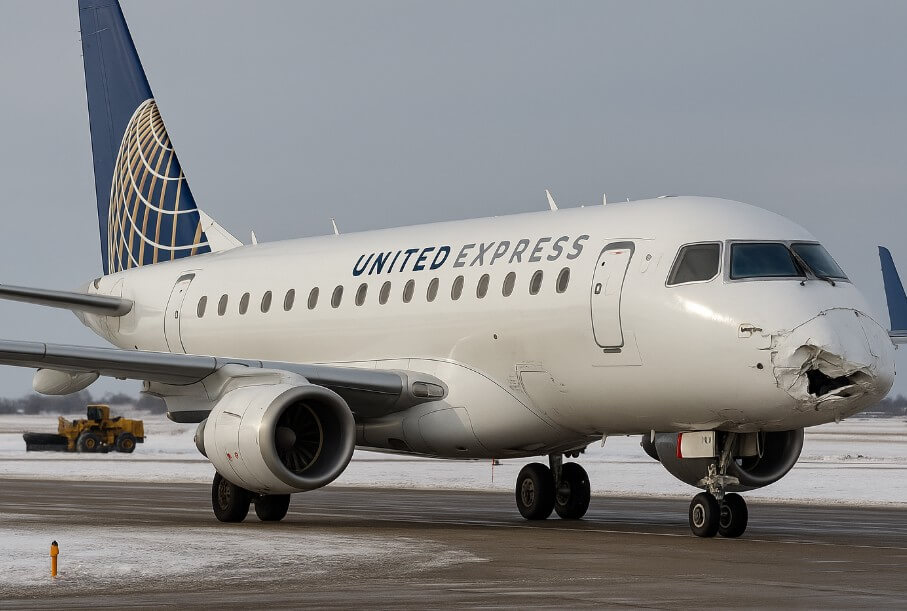
Flight Canceled After Early-Morning Ramp Strike
A United Express Embraer E175 preparing for departure from Minot International Airport was unexpectedly grounded Monday morning after a plow truck struck the aircraft’s nose section, causing visible structural damage and forcing the cancellation of its scheduled flight to Denver. The incident, reported December 9, 2025, disrupted operations at the North Dakota airport and added to a string of recent ground-handling mishaps affecting major carriers worldwide.
Aircraft Removed From Service for Inspection
The aircraft, registered as N135SY and operated by SkyWest Airlines on behalf of United Express, was scheduled to depart Minot at 7:15 a.m. for a 90-minute flight to Denver International Airport. Shortly before departure, a plow truck reportedly made contact with the front of the jet on the ramp. Photos circulated in online aviation forums showed a torn radome—located in the nose of the aircraft—consistent with a direct impact from heavy ground equipment.
United canceled the flight shortly after the collision, and the jet was immediately pulled from service for a formal inspection. Flight-tracking records indicate the aircraft was later reassigned to commercial operations beginning December 11, when it was scheduled to operate a Denver–Palm Springs route following maintenance review.
The damaged E175LR is a 10.7-year-old regional jet configured with 76 seats across two cabins, featuring 12 business-class seats and 64 in economy. The E175 is a core component of United’s domestic regional network, carrying passengers to and from smaller cities and hub airports.
A Common but Costly Operational Hazard
Ground equipment such as plows, tugs, baggage loaders, and service trucks move constantly in and around aircraft, particularly during winter months when airports deploy additional snow-removal vehicles. Aviation safety specialists note that, despite industry precautions, ramp areas remain high-risk operational zones.
The incident at Minot “underscores the persistent risks associated with aircraft ground operations,” according to the summary provided in the initial report. Analysts say that while major events draw public notice, thousands of similar collisions—ranging from minor scrapes to serious structural impacts—occur globally each year.
Some operators argue that many of these incidents remain underreported because they fail to meet the regulatory threshold requiring disclosure. Damage severity can vary widely, and even minor dents can warrant extensive inspection when located near sensitive systems, including radar components housed in the aircraft’s nose.
Recent Global Ground-Handling Incidents
The Minot collision comes amid a series of recent ground-handling events affecting major airlines across several continents. Last week, an Emirates Airbus A380 in Manchester was grounded for more than two days after a fuel truck reportedly struck one of its engine cowlings, resulting in delays for the double-deck superjumbo.
In the United States, ground incidents have also disrupted major hub operations. On November 18, two United Airlines Boeing 737-900ER aircraft made contact during pushback at Houston Intercontinental Airport, damaging both jets’ winglets and prompting schedule adjustments.
Such events highlight the ongoing challenges surrounding ramp-safety oversight, especially as airlines handle heavy travel volumes and navigate staffing constraints. Winter operations—such as those currently underway across the northern U.S.—add further complexity due to icy surfaces, low visibility, and increased movement of de-icing and snow-removal equipment.
Operational and Industry Implications
For passengers, the Minot incident resulted in a same-day flight cancellation and rebooking accommodations. For the airline, the grounding of the E175 added pressure to regional aircraft availability at a time when carriers continue managing tight fleet utilization and lingering parts-supply constraints.
Industry experts say airlines and airports have invested heavily in enhanced ramp-monitoring technology, improved training protocols, and heightened safety procedures. Yet, they also note that the fast-paced, equipment-dense environment of airport ramps continues to present ongoing risks.
Bottom Line
The collision between a plow truck and the United Express Embraer E175 at Minot International Airport reflects the broader, persistent challenges tied to ground-handling safety. While no injuries were reported, the resulting damage forced a flight cancellation and added another case to a growing list of global ground incidents.
The initial report concluded: “The reported collision between a plow truck and a United Express Embraer E175 in Minot underscores the persistent risks associated with aircraft ground operations.” Despite continuing efforts to improve ramp-safety standards, Monday’s incident demonstrates that the issue remains far from resolved.
