


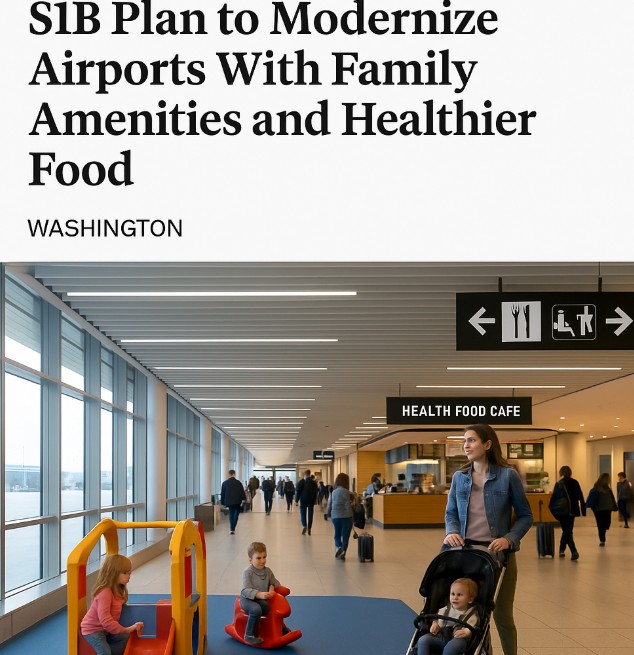
WASHINGTON — The Trump Administration is launching a sweeping $1 billion initiative to make U.S. airports more family-friendly and health-focused, introducing federal incentives for new terminal amenities ranging from nursing rooms to children’s play zones and expanded healthy dining options. The proposal, announced by U.S. Department of Transportation Secretary Sean Duffy and Health and Human Services Secretary Robert F. Kennedy Jr., marks one of the administration’s most ambitious efforts to reshape the passenger experience.
A Strong Push to Improve the Terminal Experience
The initiative centers on a broad redesign of how families navigate airport terminals—an environment federal officials say has not kept pace with the needs of today’s travelers. With roughly 3 million passengers moving through airports each day, the administration argues that improving everyday amenities can meaningfully reduce stress for parents and children.
The new program will provide competitive funding for airports to build or expand family-oriented spaces. Plans call for dedicated children’s play areas, exercise zones and sensory rooms tailored for travelers with special needs. Additional funds would help airports add mothers’ rooms or nursing pods and introduce security checkpoint lanes designed specifically for families.
Officials say these changes are intended to relieve pressure on parents who often struggle to find quiet or comfortable spaces for young children in crowded terminals. The administration is also giving airports flexibility to propose their own improvements, as long as they support the initiative’s family-friendly mission.
According to Secretary Duffy, the investment is meant to demonstrate federal commitment to “improving the overall passenger journey,” a theme that underpins the entire plan.
Healthier Food Options Take Center Stage
A major portion of the announcement focused on reforming airport dining—long criticized for offering limited healthy choices at high prices. Secretary Kennedy argued that frequent flyers face significant challenges in maintaining nutritious diets due to the dominance of highly processed meals.
Kennedy noted that travelers “struggle to maintain a healthy diet due to the dominance of highly processed meals sold at airport concessions,” adding that partnerships with private vendors could help airports introduce menus that promote better health.
The initiative calls for new offerings such as fresh meals, minimally processed snacks and balanced grab-and-go items. Federal officials say the expansion of healthier menus could reduce risks associated with frequent travel and provide alternatives to fast-food-heavy concourses.
Health influencer Paul Saladino, who attended the event, proposed adding compact airport gyms to allow travelers to exercise between flights. Officials said these installations—along with redesigned dining environments—could encourage healthier travel routines, though long-term funding details for fitness spaces remain uncertain.
Critics Raise Concerns Over Priorities
Despite the plan’s broad ambitions, the initiative has sparked debate among transportation policy experts and industry observers. Some argue that the administration is prioritizing terminal amenities at the expense of long-standing infrastructure needs.
Critics point out that modernizing the nation’s air traffic control system—an effort that could significantly reduce delays and congestion—would likely have a greater impact on the overall travel experience than new play areas or healthier food stands. Others note that many airports already offer healthier options, though traveler preferences and pricing continue to affect purchasing decisions.
Still, federal officials insist the initiative addresses the real, immediate challenges faced by families. They argue that small improvements inside terminals can make airports more manageable, especially during peak travel periods.
Balancing Convenience, Health and Long-Term Infrastructure
The Trump Administration’s $1 billion initiative reflects a broader effort to reshape what travelers can expect when entering an airport. Supporters say the plan integrates key elements of comfort, nutrition and accessibility into traditionally overlooked parts of the terminal environment.
In the administration’s view, giving families dedicated spaces to play, calm down or rest—and offering travelers healthier eating options—can reduce the friction that often defines air travel. Whether these upgrades deliver measurable improvements remains to be seen, particularly as questions persist about more urgent aviation-system needs.
For now, the initiative signals a renewed federal interest in the human side of transportation infrastructure. The administration is presenting the plan as an investment in the daily realities of air travel, one aimed at making airports less stressful, more accommodating and ultimately more supportive of modern family life.
