


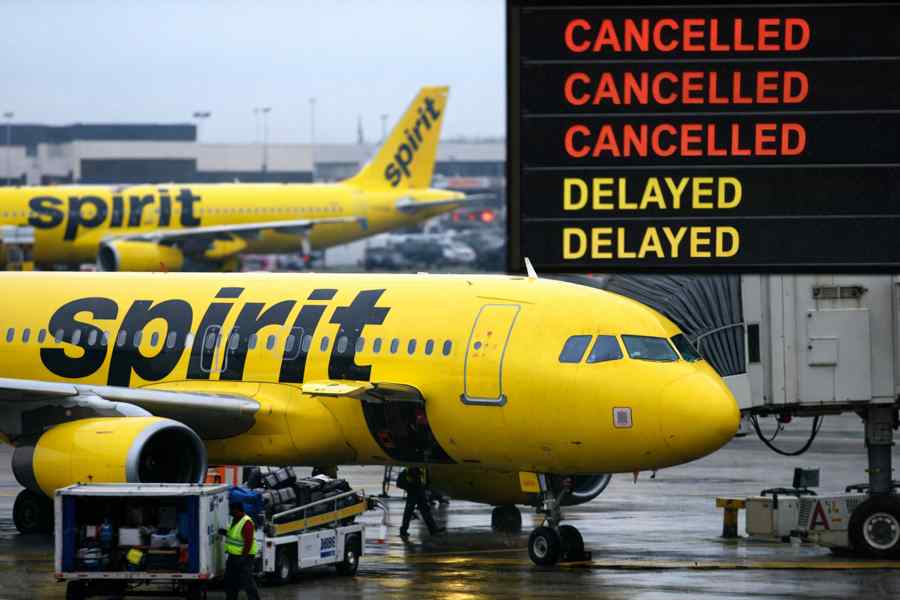
Spirit Airlines began 2026 with significant operational turbulence, emerging as one of the least reliable U.S. carriers in the opening days of the year. The ultra-low-cost airline canceled up to 14 percent of its scheduled flights in early January, while delays impacted more than one-third of departures, according to flight tracking data. The disruptions, driven primarily by staffing shortages and record employee sick calls, raised renewed concerns about the airline’s ability to maintain stability while operating under Chapter 11 bankruptcy protection.
While most major U.S. airlines entered the new year with relatively steady performance following the holiday travel season, Spirit’s operational challenges stood out sharply. The airline’s struggles unfolded across multiple domestic hubs and highlighted the risks of running a lean operation during a period of financial restructuring.
Flight Cancellations Surge at Start of the Year
Spirit Airlines experienced a difficult start to 2026 as cancellations and delays escalated rapidly during the first days of January. On January 1, the airline canceled 11 percent of its scheduled flights, while 38 percent of remaining departures were delayed. The situation worsened on January 2, when cancellations climbed to 14 percent and delays affected approximately one-third of flights.
By January 3, early operational data showed continued instability, with cancellations approaching 10 percent before the day’s full schedule had been completed. These figures far exceeded those reported by other major U.S. carriers during the same period, placing Spirit at the bottom of industry reliability rankings.
Despite having reduced its overall network size over the past year, the airline struggled to maintain consistency even on its scaled-back schedule. The high volume of disruptions left many passengers facing missed connections, long airport waits, and limited rebooking options.
Key Hubs Bear the Brunt of Disruptions
Operational challenges were particularly pronounced at Spirit’s major Florida hubs, including Fort Lauderdale–Hollywood International Airport and Orlando International Airport. These airports serve as critical nodes in the airline’s domestic network, and disruptions there rippled across the system.
Passengers reported receiving limited advance notice of cancellations, compounding travel difficulties during an already busy post-holiday period. The lack of timely public explanations from the airline also drew criticism, as travelers struggled to understand the scope and duration of the disruptions.
The operational breakdown underscored how vulnerabilities at a handful of key hubs can quickly cascade into systemwide problems, especially for airlines with limited spare capacity.
Crew Availability Drives Operational Breakdown
Spirit later acknowledged internally that crew availability was the primary factor behind the disruptions. The airline moved to an elevated irregular operations status after reporting record levels of employee sick calls during the holiday period.
On certain days, sick calls exceeded levels seen in prior years by as much as 250 percent, significantly reducing the number of available pilots and flight attendants. These absences compounded existing staffing challenges caused by depleted reserve pools and higher-than-expected employee attrition.
Although Spirit had previously planned pilot furloughs for early 2026, those cuts were reversed as voluntary departures accelerated. The airline found itself short of crews at a time when staffing flexibility was already limited, forcing widespread cancellations across its network.
Bankruptcy Restructuring Limits Operational Flexibility
Spirit Airlines’ ongoing Chapter 11 bankruptcy restructuring added another layer of complexity to its operational struggles. Cost controls, reduced hiring, and network downsizing have constrained the airline’s ability to absorb unexpected disruptions when staffing levels fall.
The restructuring process has also weighed on employee morale and long-term workforce stability, contributing to higher attrition and a thinner operational buffer. While Spirit continues to operate a reduced schedule, its margin for error has narrowed significantly.
As a result, periods of elevated sick leave or workforce turnover now pose outsized risks to day-to-day operations, leaving the airline more exposed to irregular operations than many of its competitors.
Pressure Mounts to Stabilize Operations
Spirit Airlines’ early-2026 performance highlights the challenges of maintaining reliability while restructuring financially and operating with limited staffing reserves. With more than 10 percent of flights canceled on multiple days and a substantial share of remaining flights delayed, the airline faces growing pressure to restore operational stability.
For passengers, the disruptions have eroded confidence at a time when Spirit is already working to rebuild trust amid financial uncertainty. For the airline, stabilizing operations will be critical as it navigates bankruptcy proceedings and seeks to position itself for long-term viability in a competitive U.S. aviation market.
As 2026 unfolds, Spirit’s ability to address staffing gaps and improve reliability will remain a key test of whether its lean operating model can withstand sustained operational stress.
