


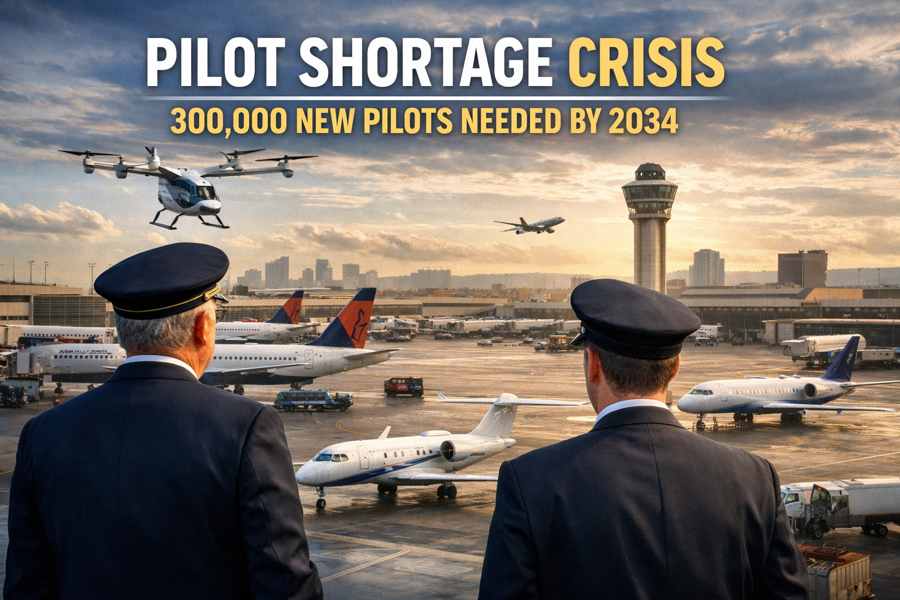
Global aviation is heading into a significant workforce transition as airlines, business jet operators, and emerging air mobility companies compete for a limited pool of qualified pilots.
According to the CAE Aviation Talent Forecast, the industry will require approximately 300,000 new pilots worldwide by 2034 to sustain fleet growth and offset retirements. The projection underscores how quickly demand is rising—and how difficult it may be for the training system to keep pace.
Airlines including Delta Air Lines (DL), United Airlines (UA), and Lufthansa (LH) are expanding operations from major hubs such as Atlanta (ATL), Chicago (ORD), and Frankfurt (FRA), increasing competition for cockpit talent as global travel demand remains strong.
Commercial Aviation Drives the Largest Need
CAE estimates that commercial aviation alone will need 267,000 new pilots over the next decade. Asia-Pacific is expected to represent the biggest share of that demand due to rapid passenger traffic growth and large-scale fleet expansion.
That growth will require a sustained increase in the overall pilot workforce. The global active pilot population is projected to rise from about 382,000 in 2025 to nearly 520,000 by 2034. This implies annual growth of more than three percent, a pace that could stretch existing flight training capacity.
Independent indicators suggest the imbalance is already substantial. Industry analysts estimate a shortfall of roughly 50,000 pilots as of 2025, driven by post-pandemic recovery trends, rising retirement levels, and new aircraft deliveries entering service.
Business Aviation Faces Its Own Talent Pressures
Beyond the airline sector, business aviation is also expected to increase hiring needs. CAE projects the segment will require 33,000 additional pilots, largely to replace an aging workforce while supporting steady growth in private and corporate flying.
While business aviation does not operate at the same scale as commercial airlines, operators often compete for the same experienced talent—particularly as airline pilots move between sectors based on compensation, schedules, and lifestyle preferences.
Retirements and Fleet Growth Tighten Supply
A major constraint on supply remains mandatory retirements at age 65, particularly in North America and Europe. Thousands of experienced captains are expected to exit the workforce each year, creating internal bottlenecks for airlines as they work to upgrade first officers into captain roles.
At the same time, global fleet expansion continues to raise baseline demand for flight crews. Forecasts indicate growth from fewer than 26,000 commercial aircraft in 2019 to more than 47,000 by the early 2040s, increasing staffing requirements across airlines worldwide.
These pressures come as training systems are still recovering from pandemic-era disruptions. Flight schools, simulator centers, and instructors face backlogs, while rising costs remain a barrier for many prospective pilots entering the profession.
Air Taxis Add a New Layer of Demand
The emergence of electric vertical take-off and landing aircraft is also reshaping the long-term pilot outlook. Industry studies suggest that around 12,000 eVTOL aircraft could be in service globally by the mid-2030s, rising sharply as urban air mobility networks expand.
Pilot demand estimates vary widely. Conservative projections place the need near 19,000 pilots by 2030, while more aggressive scenarios suggest significantly higher numbers as air taxi operations scale in major metropolitan regions.
Although timelines depend on certification and infrastructure readiness, most forecasts agree that eVTOL services could require tens of thousands of additional pilots through the 2030s, further tightening the labor market.
Bottom Line
The forecast need for 300,000 new pilots by 2034 points to a structural shift in global aviation employment. With retirements accelerating, fleets expanding, and new aircraft categories entering service, pilot recruitment and training capacity are expected to remain defining challenges for airlines and aviation companies throughout the next decade.
