

Close Menu
Aviation Analysis – Industry Travel NewsAviation Analysis – Industry Travel News
    Facebook X (Twitter) Instagram
    Facebook X (Twitter) Instagram
    Aviation Analysis – Industry Travel NewsAviation Analysis – Industry Travel News
    Subscribe
    • Home
    • Top News
    • World
    • Economy
    • Science
    • Tech
    • Sport
    • Entertainment
    • Contact Form
    Aviation Analysis – Industry Travel NewsAviation Analysis – Industry Travel News
    Home»Tech»Mars is closer to Earth in October than it will be for another 15 years
    Tech

    Mars is closer to Earth in October than it will be for another 15 years

    Theodore MeeksBy Theodore MeeksOctober 5, 2020No Comments3 Mins Read
    Share Facebook Twitter Pinterest LinkedIn Tumblr Email
    Mars is closer to Earth in October than it will be for another 15 years
    Share
    Facebook Twitter LinkedIn Pinterest Email Copy Link

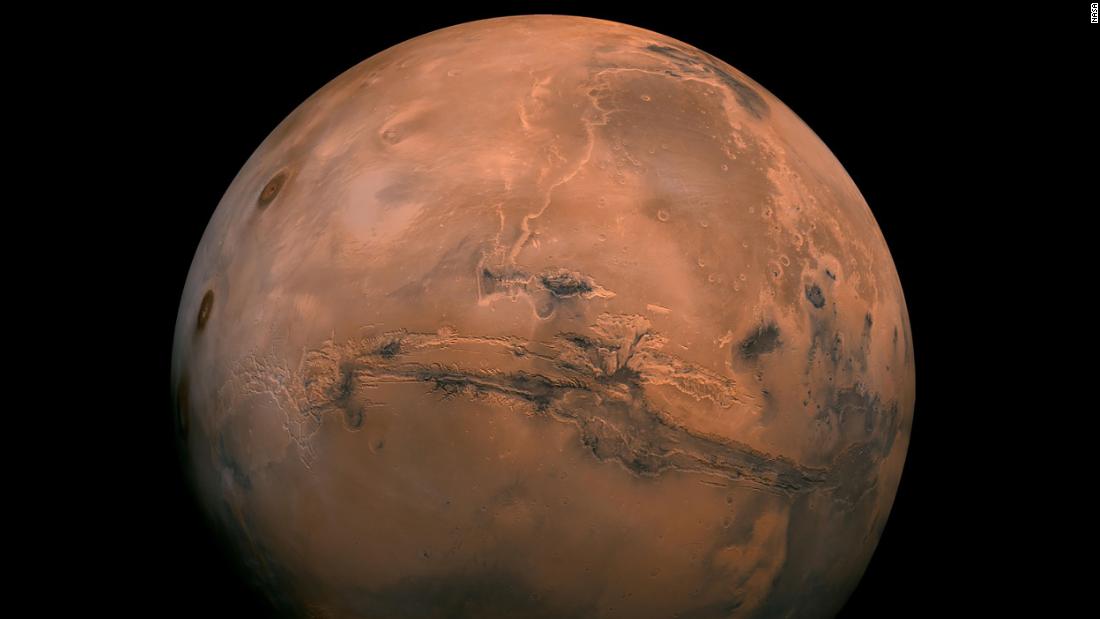
    The planet will be visible at night throughout October, rising to its highest level in the sky around midnight each evening. It will shine in the east every evening and in the west before dawn.

    But Mars doesn’t always look like this. So why is Mars so bright?

    The red planet is approaching Earth at 10:18 a.m. ET on October 6. Mars will be 38,586,816 miles from Earth – yes, that’s close to Mars – and it won’t be close again until 2035.Mars in 2003 took its closest approach to Earth in 60,000 years, approaching 34.65 million miles.

    Next week, Earth will swing between Mars and the Sun.
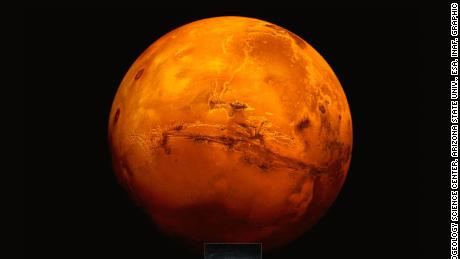
    The event, called Opposition to Mars, occurs on October 13th, as it will be directly on the far side of Earth from the Sun, according to NASA.
    Mars may contain salty pools near its subterranean lake, which increases the possibility of life on Mars

    Mars and Earth do not orbit the Sun in perfect circles or even on the same plane. Instead, the planets have elliptical orbits in the form of ellipses.

    For example, while Earth takes only 365 days to complete an orbit around the Sun, Mars takes 687 days. When the Earth gets closer to the Sun, Mars moves away from it.
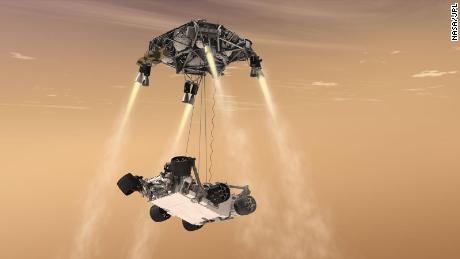
    The persevering rover on its way to Mars.  what is next?

    Currently, NASA’s Perseverance spacecraft is traveling through space on its way to land on Mars in February 2021. It is one of several missions en route to Mars, including the Emirati Hope probe and China’s Tianwen-1 probe.

    The Perseverance was launched on July 30, precisely within a time frame allowing for a faster flight between Earth and Mars when they are in alignment on the same side of the Sun.

    Watch Venus, Jupiter, and Saturn

    In addition to the beautifully shining planet Mars, look for other planets that illuminate the sky.

    Venus, the third-brightest object in the night sky after the sun and moon, is still brighter than Mars – it only appears in the morning.
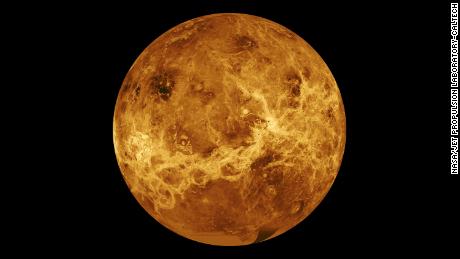
    Mars reigns supreme in the night sky at present, and Venus is showing its brightness in the eastern morning sky, according to EarthSky, a nonprofit and astronomy website.
    A gas discovered on Earth indicates the presence of life in clouds on Venus

    Mars beats Jupiter throughout October.

    But once Mars fades from view, Jupiter will be one of the brightest objects in the evening sky, and Saturn will also be visible in the east of Jupiter.

    This is due to the conjunction of Jupiter and Saturn. The two largest planets in our solar system hold a rare meeting that occurs every 20 years.

    The pairing officially occurs on December 21, 2020, but both planets are now visible in close proximity to each other and will be for the rest of the year in the night sky.

    Jupiter eclipses the stars, while Saturn gives off a bright golden glow.
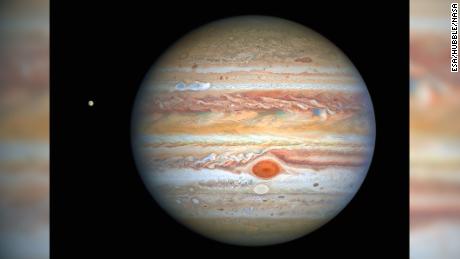
    Hubble spies stormy weather on Jupiter

    During the last major conjunction in 2000, the two giants were close to the Sun from our perspective on Earth, making them difficult to see.

    The reason this conjunction is so rare is due to the orbits of these giant planets – it takes Jupiter 12 years on Earth to complete one orbit around the sun, and it takes Saturn 30 years.

    And every 20 years, Jupiter joins Saturn from our perspective on Earth.

    So take advantage of this rare opportunity to see both up close in the night sky.

    Share. Facebook Twitter Pinterest LinkedIn Tumblr Email
    Theodore Meeks

    Lifelong foodaholic. Professional twitter expert. Organizer. Award-winning internet geek. Coffee advocate.

    Related Posts

    Neodymium Magnet Uses and Safety Tips for 2025

    October 4, 2025

    Halifax Stanfield Airport Pilots Passenger Service Robots in Bid to Boost Traveler Experience

    August 25, 2025

    Battery miracle in test – HP Omnibook X AI: If it takes longer again

    August 29, 2024
    Navigate
    • Home
    • Top News
    • World
    • Economy
    • Science
    • Tech
    • Sport
    • Entertainment
    • Contact Form
    Pages
    • About Us
    • DMCA
    • Contact Form
    • Privacy Policy
    • Editorial Policy
    STAY UPTODATE

    Get the Latest News With Aviationanalysis.net

    OFFICE

    X. Herald Inc.
    114 5th Ave New York,
    NY 10011, United States

    QUERIES?

    Do you have any queries? Feel free to contact us via ourĀ Contact Form

    Visit Our Office

    X. Herald Inc.
    114 5th Ave New York,
    NY 10011, United States

    • About Us
    • DMCA
    • Contact Form
    • Privacy Policy
    • Editorial Policy
    © 2025 ThemeSphere. Designed by ThemeSphere.

    Type above and press Enter to search. Press Esc to cancel.