


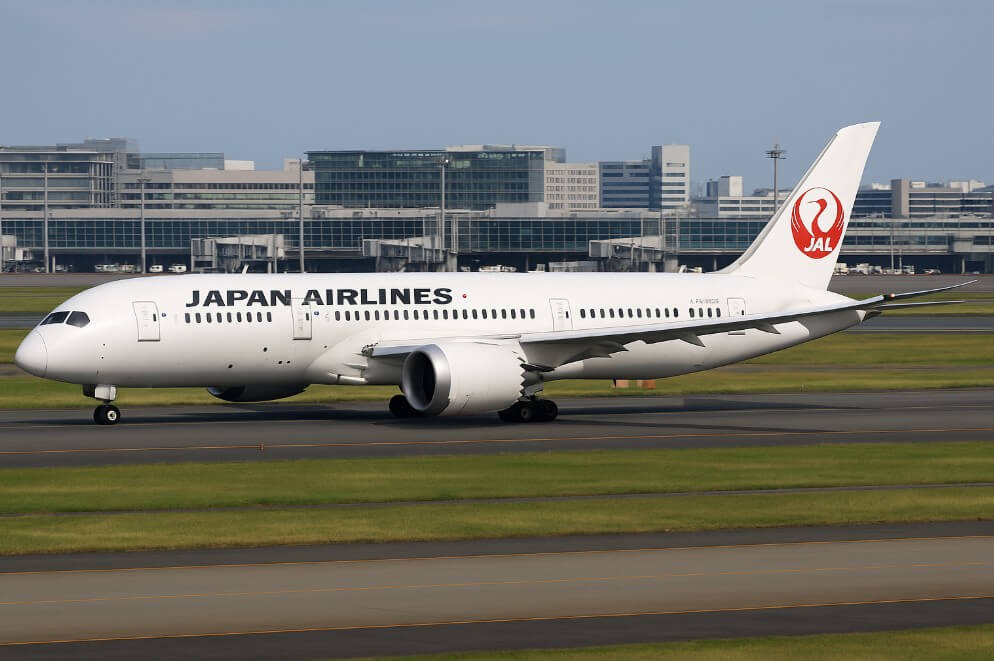
TOKYO — Japan Airlines (JAL) is set to restore its Tokyo Narita–Delhi service, adding a second gateway between Japan and India in a strategic move to capture both business and connecting travelers. The daily flight will resume on January 17, 2026, operated by the airline’s Boeing 787-8 Dreamliner, marking the return of a route that has been suspended for several years.
The new service complements JAL’s existing Delhi route from Tokyo’s Haneda Airport, with each airport serving distinct market needs. “JAL is clearly trying to capture different market segments,” the airline noted in its announcement. “The Haneda route serves point-to-point traffic – Japanese tourists visiting India, Indian business travelers heading to Tokyo, students, and families.”
Dual-Axis Strategy: Narita and Haneda Target Different Passengers
Japan Airlines’ decision to serve Delhi from both of Tokyo’s major airports highlights a dual strategy aimed at maximizing connectivity. Haneda, located closer to downtown Tokyo, is geared toward travelers beginning or ending their journeys in Japan. Narita, situated roughly 60 kilometers from the city center, plays a larger role as an international transit hub.
“The new Narita-Delhi service operates once daily with a Boeing 787-8 aircraft,” the carrier said. Flight JL749 will depart Narita at 8:15 p.m. and arrive in Delhi at 3:00 a.m. the following day, while the return flight JL740 will leave Delhi at 4:35 a.m. and reach Narita at 3:10 p.m. These timings are designed to optimize global connectivity: the evening departure allows passengers to connect from daytime arrivals from North America or Europe, and the afternoon return aligns with onward flights departing Tokyo.
By reintroducing the Narita connection, JAL aims to strengthen its long-haul network and enhance transfer options for travelers connecting between India, Japan, and third-country destinations.
Reconnecting a Historic Route
Japan Airlines’ relationship with Delhi dates back nearly six decades. The airline first launched service to the Indian capital on May 4, 1965, operating primarily through Narita for much of its history. The route was shifted to Haneda in late 2019, just before the COVID-19 pandemic disrupted global air travel.
The 2026 relaunch marks the first Narita–Delhi flight in roughly six years. During that time, JAL maintained its Haneda–Delhi route, ensuring continued service between the two nations. Now, by restoring Narita, the airline is signaling confidence in post-pandemic travel demand and the strength of the Japan–India corridor.
“By running Delhi flights from both airports, JAL covers different passenger needs,” the carrier explained. “Haneda works on direct traffic between Japan and India. Narita targets connecting passengers – Indians flying to the U.S. via Tokyo, or Americans heading to India through Japan.”
Positioning Tokyo as a Global Transit Hub
Industry analysts view the Narita–Delhi relaunch as part of a broader competitive strategy to position Tokyo as an alternative connecting hub for travelers moving between North America and South Asia. “The Narita route goes after connecting traffic,” JAL said. “Passengers flying from America to India might prefer routing through Tokyo rather than the Middle East or Europe. Also, Indians heading to Canada could connect through Narita.”
Japan Airlines also benefits from its codeshare partnership with IndiGo Airlines (6E), India’s largest domestic carrier. The partnership allows passengers from smaller Indian cities to connect through Delhi onto JAL flights bound for Tokyo and onward to North America. “Someone flying from a tier-2 or 3 Indian city on IndiGo could connect to a JAL flight to Tokyo, then onward to San Francisco,” JAL said. “Having both Narita and Haneda options makes this network more flexible.”
The expansion also strengthens JAL’s competitive position against global rivals such as Emirates, Qatar Airways, and Lufthansa, which dominate India–North America traffic through their respective hubs. With the addition of Narita, Japan Airlines can now offer travelers an alternative connection point through Tokyo with comparable convenience.
Greater Choice for Travelers
For passengers, the dual-airport strategy translates into more flexibility and frequency. Haneda, being centrally located, remains the preferred choice for travelers beginning or ending their journeys in Japan. “Haneda sits closer to central Tokyo,” JAL explained. “It’s more convenient for people starting or ending their trip in the city. The airport also has better connections to domestic Japanese destinations.”
Meanwhile, Narita’s broader international connectivity will appeal to transit passengers. “If you’re flying between Tokyo and Delhi, you now have two options with JAL,” the airline said. “Choose Haneda if your trip starts or ends in Tokyo. Pick Narita if you’re connecting to other international destinations or coming from North America or Europe.”
The two-airport approach not only enhances convenience but also increases overall seat capacity on the Japan–India route, offering more options for leisure and business travelers alike. “The dual-airport strategy gives JAL more schedule flexibility,” the carrier concluded. “If one flight is full, passengers might have space on the other. For Delhi, having two daily JAL flights increases connectivity options, especially combined with the IndiGo codeshare.”
