


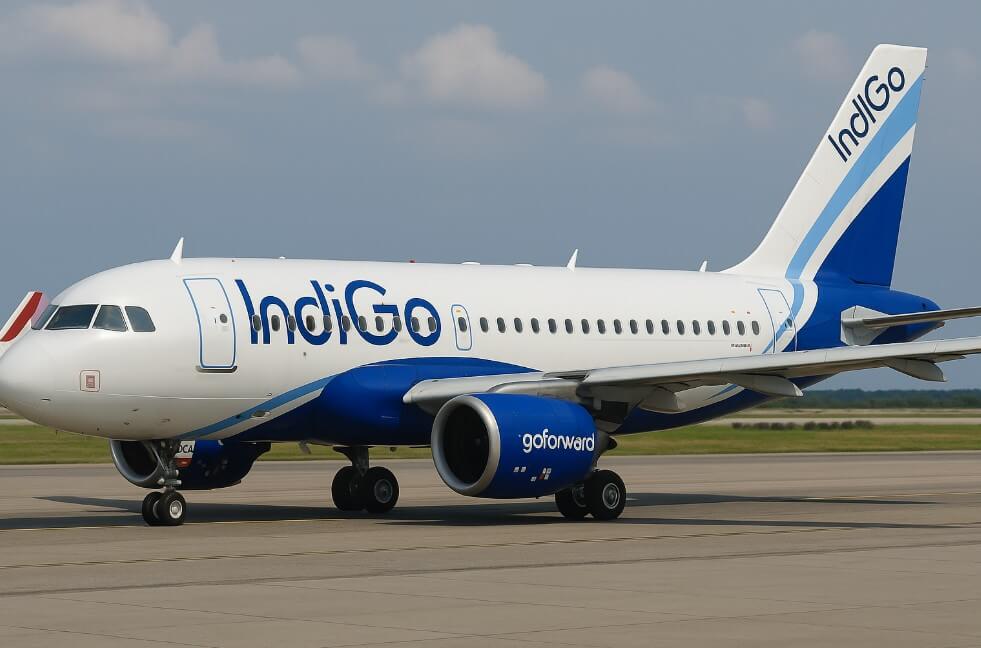
KOLKATA – IndiGo Airlines is set to restart direct flights between India and China for the first time in more than five years, marking a significant milestone in regional aviation connectivity and a potential thaw in strained diplomatic ties.
The carrier announced that it will launch daily non-stop services between Kolkata and Guangzhou starting October 26, 2025, pending final regulatory approvals. The move will reconnect eastern India with southern China, a route IndiGo last operated before the COVID-19 pandemic forced widespread international flight suspensions.
A Long Pause in the Skies
Direct air services between the two Asian neighbors were suspended in early 2020 when the pandemic led to sweeping global travel restrictions. While most international routes gradually reopened, India-China flights remained grounded amid escalating geopolitical tensions.
Relations between the two nations deteriorated sharply during this period, with border disputes and trade frictions spilling over into aviation. As a result, passengers traveling between India and China were forced to transit through hubs such as Singapore, Bangkok, Kuala Lumpur, and Hong Kong, often adding hours to journeys and driving up costs.
The resumption of direct service reflects months of behind-the-scenes work by Indian and Chinese aviation authorities. Technical teams have been negotiating route designations and clearing regulatory hurdles, with the October launch aligning with the international winter schedule.
IndiGo Returns to Guangzhou
IndiGo will deploy Airbus A320neo aircraft on the Kolkata-Guangzhou route, offering daily service to ensure reliability and connectivity for both leisure and business travelers.
Guangzhou, known as the “factory of the world,” is a major commercial hub in southern China and the capital of Guangdong province. Its economic significance and massive passenger traffic make it a natural choice for IndiGo’s return to the Chinese market.
“Kolkata, as the first reconnection point, makes sense,” an IndiGo spokesperson noted, pointing to the city’s longstanding trade ties with East Asia and its role as a gateway to northeastern India.
Bookings for the new service are expected to open soon. In addition, IndiGo is preparing to launch another Guangzhou route from Delhi, though timelines have not been finalized.
Trade and Business Implications
Despite political tensions, China remains one of India’s largest trading partners. Bilateral trade spans electronics, pharmaceuticals, machinery, and raw materials. The return of direct flights is expected to streamline business travel, particularly for Indian exporters, importers, and manufacturers who regularly engage with Chinese factories and suppliers.
The Indian business community has long pushed for restored air links. Direct connectivity, they argue, reduces logistical barriers, shortens travel times, and improves efficiency in a competitive global market.
Airlines that benefited from the suspension of direct flights — including Singapore Airlines, Thai Airways, and several Middle Eastern carriers — may now face reduced India-China transit traffic as passengers shift to faster non-stop services.
Competition on the Horizon
IndiGo will not remain alone in this market for long. Air India is preparing its own services from Delhi to China, and Chinese carriers are expected to reenter the Indian market. Before 2020, Air China, China Southern, and China Eastern operated multiple routes connecting Indian metros to Chinese hubs, supported by established infrastructure and strong government backing.
Their eventual return could reshape competitive dynamics, putting pressure on IndiGo to maintain load factors, pricing, and service standards. The airline will need to carefully balance affordability with profitability, especially in the critical first months of resumed operations.
Testing the Waters
Both governments appear to be approaching the restart cautiously. Instead of immediately reinstating all pre-2020 routes, they are beginning with limited frequencies and select city pairs to gauge passenger response and operational feasibility.
If the Kolkata and Delhi services succeed, industry analysts expect further expansion. Mumbai, India’s financial hub, is a natural candidate for direct links, while Bengaluru — with its thriving technology sector and significant Chinese investment interest — could also see renewed service.
On the Chinese side, potential future destinations include Shanghai and Beijing, both of which have strong business and tourism demand, as well as Shenzhen, a global technology hub with close ties to India’s IT sector.
Outlook
The return of direct India-China flights is more than just an airline route resumption; it is a signal of cautious normalization in bilateral relations and a practical boost to trade and connectivity. For IndiGo, the challenge will be to capitalize quickly before competition intensifies, while maintaining reliable service on a politically sensitive corridor.
The airline’s move underscores the enduring demand for direct connectivity between Asia’s two largest emerging markets — and the high stakes for businesses that rely on efficient cross-border travel.
