


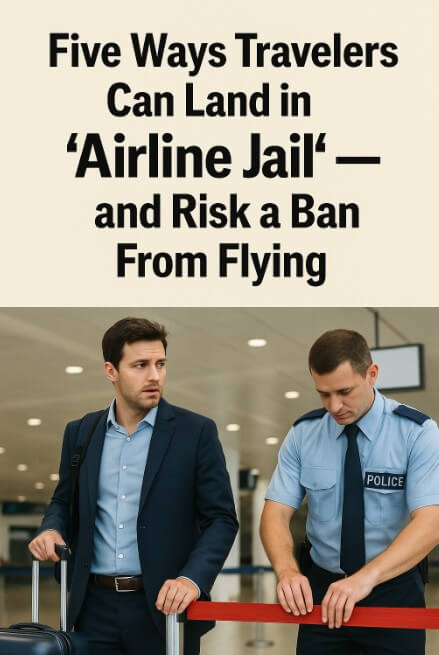
For many, air travel is as ordinary as commuting to work. But stepping onto a plane doesn’t just mean boarding with your carry-on — it also means following a host of rules designed to keep flights orderly. Cross those lines, and you might end up in what frequent flyers grimly call “airline jail.”
That doesn’t mean a cell in the back of the aircraft. Instead, it refers to the real-world consequences of violating airline rules: being banned from future flights, losing loyalty privileges, or in severe cases, facing federal penalties.
The Federal Aviation Administration (FAA) is monitoring passenger behavior closely. In 2024 alone, the agency reported more than 2,100 incidents of misconduct, ranging from failing to obey crew instructions to outright violence. While not all result in bans, airlines are making it clear: break their trust, and you may no longer be welcome on board.
Here are five behaviors that industry insiders say can lead to airline penalties — or a permanent place on a no-fly list.
Selling Your Frequent Flyer Miles
Earning miles feels like a personal achievement — travelers often treat them as a kind of currency they can spend as they please. But technically, those miles belong to the airline.
Selling or bartering them is a direct violation of loyalty program terms. “Most loyalty programs specifically forbid selling or bartering miles,” airlines warn. If caught, passengers risk canceled bookings, forfeited balances, or even a lifetime ban.
The penalties can be severe: accounts closed without warning, years of accumulated rewards wiped out, and potential restrictions on future travel. A single suspicious transaction may be enough.
The takeaway is clear: what looks like a quick cash opportunity could end with the loss of a prized travel perk.
Skipping the Last Leg of a Flight
The travel hack known as “skiplagging” — buying a connecting ticket that’s cheaper than a nonstop and exiting at the layover city — may save money upfront. But airlines call it hidden-city ticketing, and they strongly oppose it.
While not illegal, it violates ticketing agreements. Carriers have developed tools to detect patterns, and consequences can be serious. Frequent offenders risk canceled loyalty accounts and bans.
“Airlines use technology to track hidden-city ticketing,” industry sources note. Even those who try it occasionally may jeopardize miles and status. What feels like a clever workaround can end up being a costly gamble.
Complaining Too Much
Airlines expect — and often welcome — legitimate complaints. Refunds, vouchers, and apologies are part of the customer service process. But persistent nitpicking can draw the wrong kind of attention.
“Frequent or minor complaints can get you labeled as a ‘chronic complainer,’” carriers acknowledge. In some instances, loyalty accounts have been closed altogether.
Travelers are advised to be selective when raising issues. Escalating every inconvenience not only dilutes credibility but could also brand a passenger as more trouble than they are worth.
Abusing Lounge Access
Airport lounges offer a reprieve from crowded terminals, but access is tightly regulated. Some passengers, however, attempt to game the system — purchasing refundable tickets solely to enter or constantly rebooking flights for entry.
Carriers are watching. “Buying refundable tickets only for lounge access can get you flagged,” airlines have stated. In certain cases, abuse has escalated to legal action.
One example came when Lufthansa took a passenger to court for repeatedly booking flexible tickets to gain lounge privileges — and won. The case underscored the lengths airlines will go to protect their premium services.
Filing a Credit Card Dispute
When airlines cancel flights or deny refunds, passengers sometimes resort to chargebacks with their credit card companies. While this can deliver a quick resolution, it also risks retaliation.
“Airlines may refuse to let you book future flights if there’s a payment dispute,” experts warn. Even if a bank sides with the traveler, the carrier may treat the passenger as indebted until the matter is resolved.
Instead, consumer advocates recommend purchasing travel insurance to cover cancellations and emergencies. Otherwise, a one-time dispute could lead to long-term travel restrictions.
The Bottom Line
The rules of the sky may not always feel intuitive, but ignoring them can have lasting consequences. At best, violators lose loyalty benefits; at worst, they face bans or even federal scrutiny.
Airlines emphasize that they are not seeking perfection from passengers, only adherence to clear guidelines. As one industry insider put it, “Whether it’s selling miles, skipping flights, abusing perks, or misusing refunds, each of these actions could land you in what’s often called ‘airline jail.’”
For travelers, the lesson is straightforward: respect the system, save complaints for genuine problems, and use benefits responsibly. Otherwise, the next trip you plan might be one you’re no longer allowed to take.
