


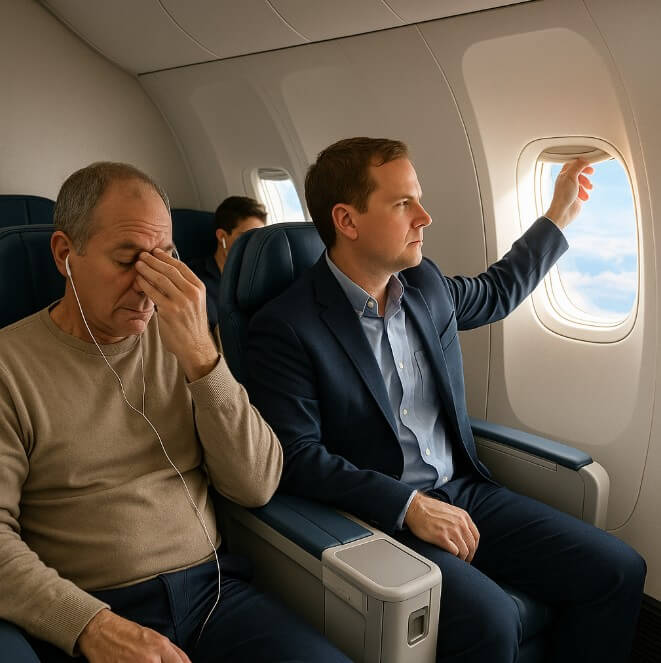
ATLANTA — Delta Air Lines is facing renewed scrutiny over in-flight etiquette after a business class passenger refused to lower a window shade on a long-haul flight, disturbing fellow travelers attempting to rest. The incident, captured on video, has reignited debate about the balance between personal preference and shared comfort in premium cabins.
The episode, reported by View from the Wing, occurred on a transatlantic flight where “bright sunlight flooded the cabin while many fellow travelers attempted to sleep.” The passenger’s refusal to close the shade drew criticism from others in the cabin, who said the glare disrupted rest and undermined the quiet, dimmed environment typical of long-haul business class service.
The footage, according to the report, “shows most passengers upright with earphones, possibly having abandoned sleep efforts due to the light.” Such behavior, critics argue, can be especially aggravating on Delta’s Boeing 767 aircraft, where “business class seats already challenge comfort, making such disruptions even more frustrating.”
A Clash of Comforts at 35,000 Feet
The incident underscores a broader tension in modern air travel — one rooted not in policy, but in etiquette. Passengers in business class often pay a premium expecting peace, rest, and control over their immediate environment. Yet, in shared spaces like aircraft cabins, those expectations sometimes collide.
“On flights from Europe to the US, some passengers resist mandatory shade closures, preferring light to combat jet lag,” Delta noted in internal discussions reviewed by aviation observers. The airline has not issued a formal comment on this specific event, but similar disputes have become increasingly common as carriers work to balance passenger autonomy with collective comfort.
The Rules Behind the Shades
Window shade usage is governed by both safety procedures and social convention. Federal Aviation Administration regulations require shades to remain open during takeoff and landing to allow eyes to adjust to light in case of evacuation. Beyond that, discretion typically rests with the person seated at the window.
“The window seat passenger controls the shade position, granting them decision rights,” one section of Delta’s onboard guidance explains. However, “flight attendants hold ultimate authority, especially on aircraft with electronic shades that crews can lock.”
While etiquette allows some flexibility, most airlines encourage courtesy when cabin lighting is dimmed. “Passengers should avoid directing blinding light into the cabin, particularly on overnight or early morning flights crossing time zones,” according to Delta’s travel guidelines. On daytime transatlantic routes, however, the balance between personal comfort and communal rest remains contentious.
Balancing Views and Rest in the Skies
For many travelers, the appeal of a window seat lies in the view. “Window seats attract passengers eager to enjoy aerial sights, such as cloud formations, destination approaches, or landscapes like Greenland’s ice,” the report notes. “These views provide value, especially for those who paid extra.”
Yet that enjoyment can come at a cost to others. As cabins grow quieter and more tightly configured, even small decisions — such as whether to open a window shade — can affect the collective experience.
On newer aircraft like the Boeing 787, where crews can electronically dim or lock shades, passenger control is limited. That capability helps reduce disputes but can frustrate those hoping to use natural light to stay awake and minimize jet lag. “Etiquette suggests using sunglasses or eye masks from amenity kits for those needing darkness, rather than demanding changes from others,” according to the same report.
Practical Solutions and Passenger Cooperation
Industry observers say such disputes are best prevented through preparation and empathy. “To mitigate shade disputes, travelers can prepare with personal items like eye masks,” the guidance advises. Cabin crews are trained to mediate these conflicts when necessary, though “confrontations rarely resolve favorably.”
The incident has prompted renewed discussion among frequent fliers about courtesy and expectations in premium travel. For Delta and other carriers, maintaining harmony among high-paying customers has become as important as service quality itself.
As airlines continue refining their cabin environments and etiquette messaging, the lesson from this episode is simple: respect for shared space remains as vital at 35,000 feet as it is on the ground.
“Understanding these dynamics promotes harmony in business class, where rest and enjoyment both hold importance,” Delta’s internal summary noted.
