


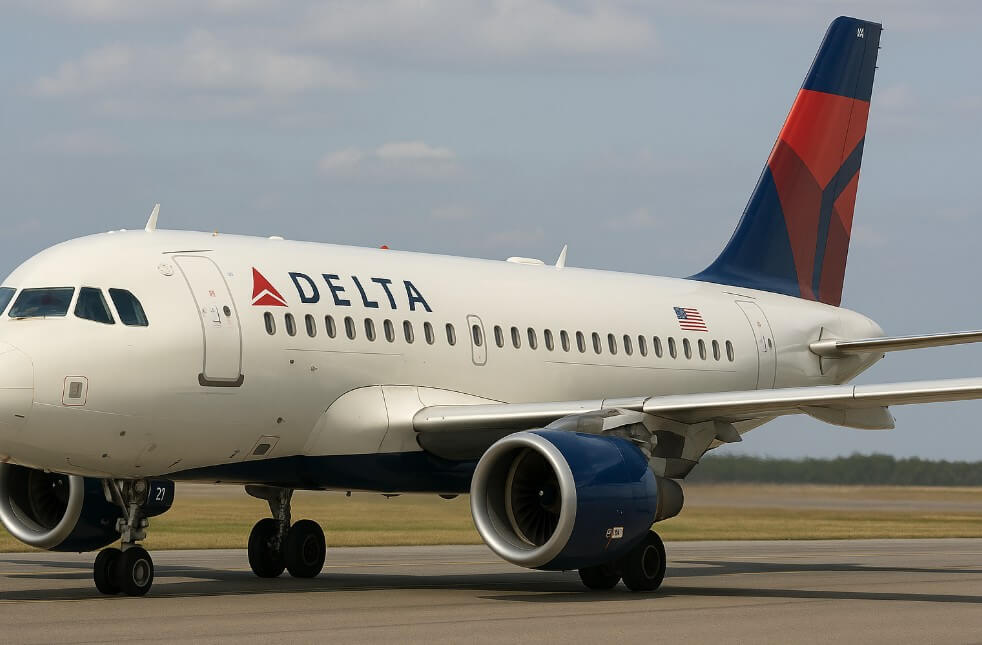
ATLANTA — Delta Air Lines is nearing completion of a sweeping fleet upgrade aimed at eliminating toxic fumes from its Airbus A320 aircraft, a problem that has raised persistent health concerns among crew and passengers across the airline industry.
The Atlanta-based carrier has been replacing auxiliary power units (APUs) — the small engines used to provide electricity and air conditioning when planes are on the ground — on more than 300 A320 family aircraft. The initiative, launched in 2022, is more than 90% complete and on track for full implementation by late 2025.
Delta says the move is designed to address incidents in which faulty seals and oil leaks allowed harmful vapors to seep into the cabin ventilation system. While such occurrences are relatively rare, they have drawn heightened scrutiny from regulators, unions, and airlines as the health impacts of repeated exposure become better understood.
Flight Crew Sound the Alarm
Cabin crews have long reported experiencing distressing symptoms after fume events, ranging from dizziness to breathing difficulties. In some cases, the episodes have been severe.
According to CBS News reporting, flight attendants have described collapsing mid-flight or struggling to remain conscious after sudden exposure. One such case was recounted by Vanessa Woods, a flight attendant who recalled a 2016 flight where toxic fumes overwhelmed her.
“I feared for my life mid-flight due to overwhelming toxin inhalation,” Woods said.
Such accounts have intensified pressure on carriers and manufacturers to improve designs and maintenance practices, particularly for narrowbody workhorses like the Airbus A320, which dominate short-haul routes in the U.S.
Engineering Response
Investigations have pointed to a design vulnerability in the A320, where oil burning in engines can generate harmful vapors that enter cabin airflow. A Wall Street Journal analysis found the issue to be more pronounced in some Airbus aircraft compared with newer designs.
In response, Delta engineers are not only replacing APUs but also experimenting with synthetic oils from multiple suppliers to reduce the risk of chemical breakdown under high temperatures. They are also monitoring pressure levels and seal integrity more closely to ensure reliability.
“These replacements are being integrated seamlessly without disrupting schedules,” the airline said in a statement.
Health Consequences
The health toll of cabin fumes has become increasingly visible. Dr. Robert Harrison, an occupational medicine specialist at the University of California, San Francisco, says he treats more than 100 crew members annually for fume-related illnesses.
“Toxic fumes trigger neurological disorders, including memory loss and chronic fatigue,” Harrison explained. “Symptoms mimic acute poisoning, with long-term effects like neuropathy persisting for years.”
Although passengers may also be affected, Harrison notes incidents are sporadic. He stresses that early detection through air-quality monitoring could mitigate risks. Delta has begun outfitting its upgraded aircraft with such sensors, in line with Federal Aviation Administration safety guidance.
Industry-Wide Vigilance
Delta is not alone in facing the challenge. Competitors are taking different approaches to prevention.
United Airlines, for example, has emphasized tracking oil consumption as a way to identify problems early. “Our program replaces seals preemptively, minimizing leaks on legacy fleets,” CEO Scott Kirby said. He added that newer designs, such as the Boeing 787 Dreamliner, avoid such issues altogether by isolating air circulation from engine systems.
Frontier Airlines, another major operator of Airbus jets, says it has not seen widespread problems but remains vigilant. “Occurrences are rare, but we maintain oversight through rapid-response maintenance teams,” said CEO Barry Biffle.
Both airlines, along with Delta, are exploring the use of sustainable aviation fuels, which may provide longer-term improvements in engine stability and emissions.
Looking Ahead
Delta has framed its APU replacement program as part of a broader commitment to safety and crew well-being. Beyond mechanical fixes, the airline is expanding training for flight attendants to recognize symptoms of fume exposure and implement evacuation procedures if necessary.
Partnerships with oil manufacturers are also in the works to develop more resilient lubricants, with a target of deploying them fleet-wide by 2026.
For now, Delta appears to be ahead of the industry in implementing large-scale fixes. With more than 90% of its A320 family already upgraded, the airline is closing in on the final stage of a project that may help set new standards for cabin safety in U.S. aviation.
