


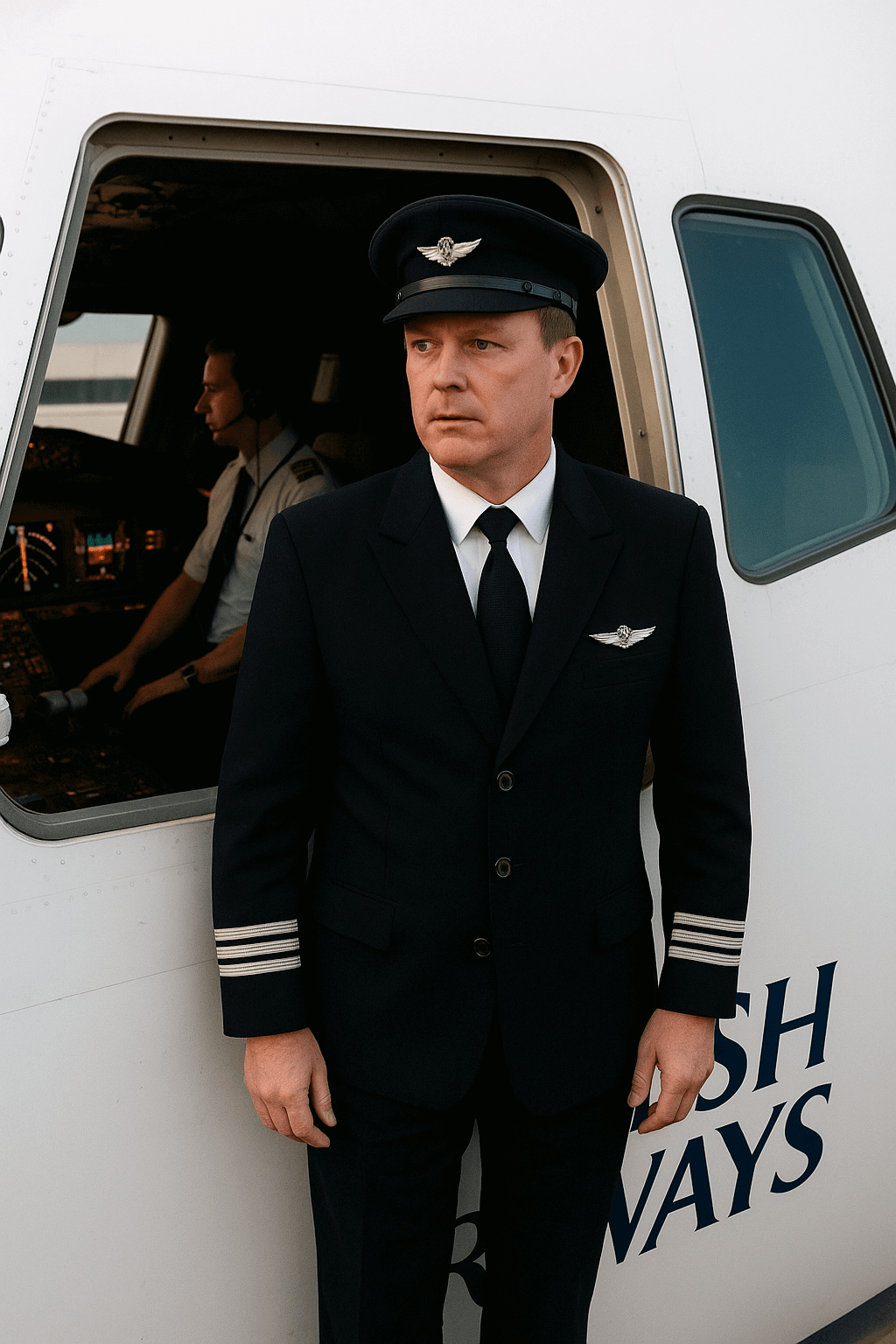
London/New York — August 18, 2025 — British Airways is under scrutiny after one of its pilots was suspended for allegedly leaving the cockpit door open during a transatlantic flight earlier this month. The incident has reignited debate over aviation security protocols that have remained in place since the September 11 attacks.
The event occurred on August 6, 2025, during British Airways flight BA173, a Boeing 777-300ER carrying 256 passengers from London Heathrow Airport to New York’s John F. Kennedy International Airport. Midway through the flight, reports surfaced that the pilot permitted family members, who were traveling as passengers, to enter the cockpit — a violation of international aviation security rules that require flight deck doors to remain locked at all times during flight.
Breach of Security Protocol
According to multiple accounts, the cockpit door was left ajar for an extended period, catching the attention of both crew members and passengers seated nearby. “It was surprising to see the door open during a transatlantic flight,” one passenger remarked, noting that several individuals appeared uneasy about the situation.
Aviation safety standards have been unambiguous on this point for nearly 25 years. Following the 9/11 hijackings, regulators in the United Kingdom, the United States, and across Europe mandated reinforced doors and strict procedures to prevent unauthorized cockpit access. An open cockpit door, even briefly, is viewed by security experts as an unacceptable lapse that risks endangering passengers and crew.
Airline Response and Investigation
The issue was formally reported to British Airways once the flight landed at New York JFK. The airline responded by immediately suspending the pilot pending an internal investigation. As a direct consequence, the return flight BA174 scheduled for August 8 was canceled. Passengers on that service were rebooked, with most arriving at their destinations within four hours of their original schedule.
In a statement, British Airways stressed that passenger safety remains its top priority. The airline said its internal review found “no direct security threat” resulting from the breach. After completing the investigation, the pilot has reportedly been reinstated, though British Airways has not disclosed whether additional disciplinary measures were considered.
Regulators are also examining the case. Both the UK Civil Aviation Authority (CAA) and the U.S. Federal Aviation Administration (FAA) have initiated reviews to determine whether British Airways complied with international aviation security standards. The airline has pledged full cooperation with both agencies. “Safety and security are our highest priorities, and we continue to work closely with regulators,” British Airways said in its statement.
Passenger and Public Reactions
News of the incident sparked a wave of reactions from passengers and the wider public. Some travelers described the lapse as a serious error in judgment, while others applauded the crew for taking swift action once the matter was identified. On social media, users expressed concern that such a violation could occur on a leading global carrier, questioning whether other lapses may go unreported.
“The cockpit door should never be open during a flight, especially on a long-haul route like London to New York,” one commenter posted on X (formerly Twitter). “It’s unsettling that something so basic could be overlooked.”
Implications for Airline Safety
The incident highlights the continuing importance of vigilance in aviation security more than two decades after heightened measures were first introduced. While British Airways maintains that no passengers were in direct danger, industry analysts note that the perception of risk can be nearly as damaging as the incident itself, particularly in an industry where trust and safety are paramount.
British Airways has announced it will reinforce staff training on cockpit security procedures to prevent a recurrence. “While no malicious intent was found, this event serves as a reminder that the industry maintains a zero-tolerance approach to security breaches,” the airline said.
The aircraft involved in the incident, a Boeing 777-300ER registered G-STBH, is 11 years old and part of the airline’s long-haul fleet. The widebody jet remains in active service.
Looking Ahead
As regulators conclude their reviews, industry observers expect renewed focus on compliance and enforcement of cockpit security rules across international carriers. While the British Airways investigation concluded without evidence of a direct threat, the controversy underscores how even minor deviations from established safety protocols can trigger broad concern.
For now, the airline is working to restore passenger confidence. With heightened scrutiny from both regulators and the public, British Airways faces the challenge of ensuring that trust in its operational discipline remains intact.
