


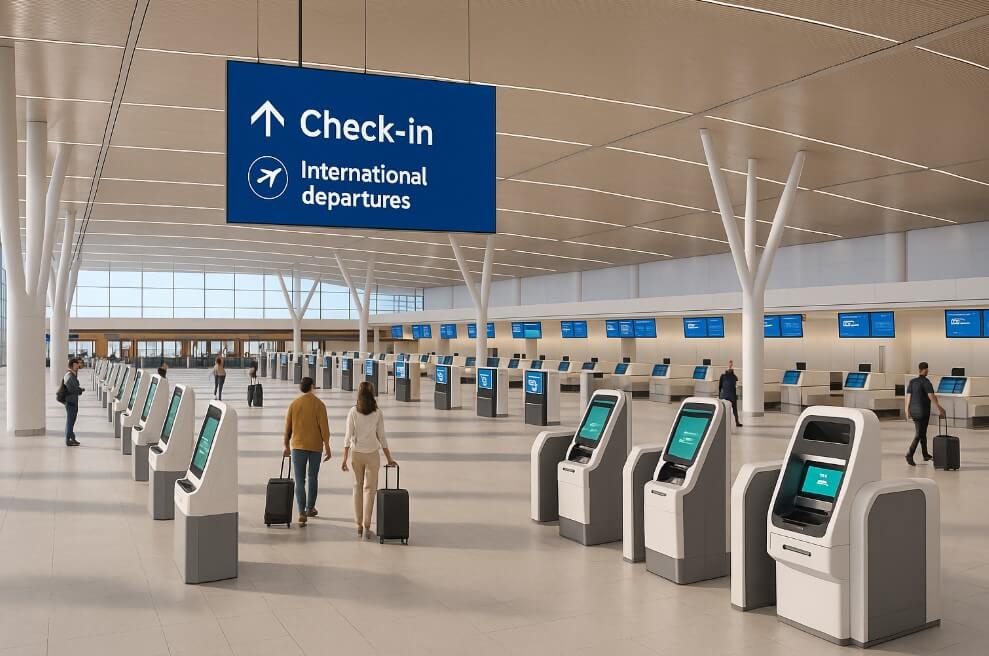
Auckland Airport is preparing for one of the most significant infrastructure transformations in its history, unveiling plans for a four-year overhaul of its departures hall aimed at streamlining check-in and eliminating outdated processes.
The project will replace traditional counters with a modern, technology-driven system, merging domestic jet and international passenger services under one roof for the first time since the 1970s. The 13,000-square-meter space will be redesigned to emphasize efficiency, digital access, and intuitive passenger flow, a move that airport leaders say will redefine the traveler experience.
“This is a once-in-a-generation chance to redefine the check-in experience,” said Carrie Hurihanganui, Chief Executive of Auckland Airport. “We’re building a gateway that meets the expectations of today’s travelers, offering a fast, seamless process powered by smart technology and supported by dedicated staff.”
Responding to Digital Demand
The upgrade comes amid a global shift toward digital-first air travel. Industry surveys show that 77% of passengers—and 90% of those under 25—prefer to use smartphones for digital passports, payments, and travel details.
Auckland Airport plans to phase out roughly 60 traditional check-in desks by the decade’s end, replacing them with self-service kiosks and automated bag drops. These systems are modeled on operations at airports such as Changi, Dubai, and Heathrow, where technology has already transformed passenger flow.
The airport has piloted the model in one section of the terminal, replacing 30 desks with 36 kiosks and 22 bag drops. Feedback from airlines has been incorporated into the design to ensure a smoother rollout across the wider terminal.
A Flexible, Shared System
One of the hallmarks of the redesign will be its “common-use” approach. Rather than tying kiosks and bag drops to specific carriers, the facilities will be shared among airlines to increase efficiency and reduce redundancies.
“Shared-use spaces are cost-effective to build and operate,” Hurihanganui noted. “They’re a cornerstone of our vision for a modern, efficient airport.”
The model is also expected to encourage new carriers to enter the market by lowering infrastructure barriers. Looking ahead, the system is designed to accommodate biometric identification and digital travel credentials, technologies already in use at leading airports worldwide. These tools integrate biometric and cryptographic data to accelerate check-in, border clearance, and boarding while maintaining privacy safeguards.
Bringing Domestic and International Under One Roof
The project also addresses a longstanding operational divide. Currently, Auckland’s 27 international airlines operate separately from domestic jet services. The new design will consolidate these functions, with flights to New Zealand destinations checking in at the modernized international terminal.
“Moving away from desk-based check-in frees up space, eases congestion, and improves flow,” Hurihanganui explained.
The expansion will add 2,800 square meters to the terminal, improving passenger amenities and pedestrian flow while connecting seamlessly with a domestic terminal currently under construction. The unified design is expected to simplify transfers and reinforce Auckland Airport’s role as a central gateway for travelers.
Construction Ahead
Work is scheduled to begin in early 2026, starting with upgrades to the front face of the terminal to integrate new amenities and provide access to the domestic terminal link. To avoid disruptions, a temporary check-in pavilion will be constructed near the airport’s Transport Hub beginning later this year.
“We’re committed to keeping the airport running smoothly while prioritizing the safety of travelers and staff,” Hurihanganui said. She added that the airport will work closely with airlines to maintain efficient operations throughout the transition.
A Global Gateway for New Zealand
When complete, the overhaul will position Auckland Airport among the world’s top digital-first hubs, aligning it with international leaders in passenger experience.
“This project is about creating a future-ready gateway for New Zealand,” Hurihanganui said. “When it’s complete, travellers will enjoy a seamless, modern journey that rivals the best airports in the world.”
