


A New Policy Meant to Ease Tensions at the Gate
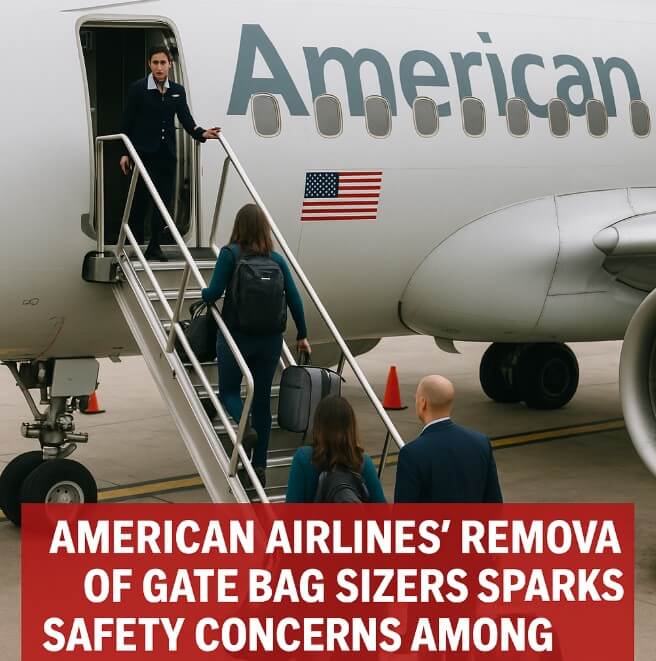
American Airlines’ move to eliminate carry-on bag sizers from gate areas—long a symbol of airport stress—has set off new concerns among flight attendants who say the decision could worsen cabin safety and complicate an already congested boarding process. The Fort Worth–based carrier began removing the metal frames from gates in October 2025, positioning the change as a customer-friendly update that would reduce conflict and speed up boarding.
The sizers remain in check-in lobbies, but passengers who bypass that area and head directly to the gate no longer encounter them. Gate agents instead make visual judgments about whether a bag meets the airline’s longstanding size limit of 22 x 14 x 9 inches, including handles and wheels.
Why American Removed Gate Sizers
American says the move is designed to prevent ugly confrontations—many of which have gone viral online—between passengers and employees as travelers attempt to force clearly overstuffed bags into what some have described as “horrible and incredibly customer-unfriendly” metal contraptions. The airline hopes removing them will reduce stress at the gate.
Those familiar with such scenes know the pressure well. Passengers, often anxious about added fees, wrestle their luggage into the frames while crowds watch. These encounters can escalate quickly, leading to delays and heated exchanges. By eliminating the devices from gate areas, the airline aims to prevent those meltdowns and keep the boarding process moving.
Flight Attendants Sound the Alarm
But flight attendants say the change simply shifts the problem from the gate to the cabin. With gate agents now “erring on the customer’s side when in doubt,” crews warn that many oversized bags may end up onboard—creating new bottlenecks and a more stressful environment during boarding.
Research has consistently shown that people struggle to accurately judge object size. Without physical measurement tools, attendants argue, enforcement becomes inconsistent and unreliable. Bags that once would have been stopped at the gate now enter the aircraft, contributing to overflowing bins, cluttered aisles, and delays as passengers and crew scramble to find space.
The Association of Professional Flight Attendants (APFA) has been particularly vocal. The union says cluttered cabins “create real frustration for everyone involved” and add unnecessary strain to crews already managing tight turn times and full flights.
Safety Risks in Emergency Situations
Beyond inconvenience, flight attendants warn of potentially serious safety risks. Aviation regulations require passengers to be able to evacuate an aircraft in 90 seconds, a standard that depends on completely clear aisles and unobstructed exits. Oversized bags can block access, slow movement, and impede crew response when seconds count.
Blocked aisles and excess luggage “pose clear dangers during emergency evacuations,” APFA notes, stressing that stricter gate enforcement is a simple and effective prevention tool. According to the union, the new policy trades public disputes for “hidden in-flight problems” that passengers may not fully understand until they encounter them during a real emergency.
Passenger Experience: A Mixed Bag
Ironically, the shift intended to improve customer satisfaction could create new frustrations. Without gate sizers, gate agents may preemptively order more gate-checks to avoid cabin congestion. That can lead to situations in which passengers are forced to surrender bags, only to discover later that overhead bins still had space.
These inconsistencies—rooted in subjective visual assessments—can undermine customer trust. Passengers may see the policy as unpredictable, with different outcomes depending on the airport, the gate agent, or even the time of day.
Operational Ripple Effects
American’s policy highlights an industry-wide challenge: balancing passenger convenience with safety and efficiency. Carry-on luggage remains vital for travelers who want to avoid checked-bag delays or tight connections. Yet airlines must manage finite cabin space and maintain orderly boarding, especially as aircraft routinely depart at or near capacity.
By removing gate sizers, American hoped to smooth one friction point in the travel experience. But flight attendants say the airline may instead have only shifted the pressure—from the gate area to the jet bridge and cabin, and from gate agents to crews already stretched thin.
What Comes Next
As the policy continues rolling out across the airline’s network, both employees and passengers will be watching closely. The question now is whether the benefits of eliminating gate sizers outweigh the operational and safety concerns raised by crews.
For now, the debate underscores a central tension in modern air travel: customers want speed and convenience, while airlines must balance those expectations with safety, fairness, and efficient operations.
Stay tuned with us. Further, follow us on social media for the latest updates.
