


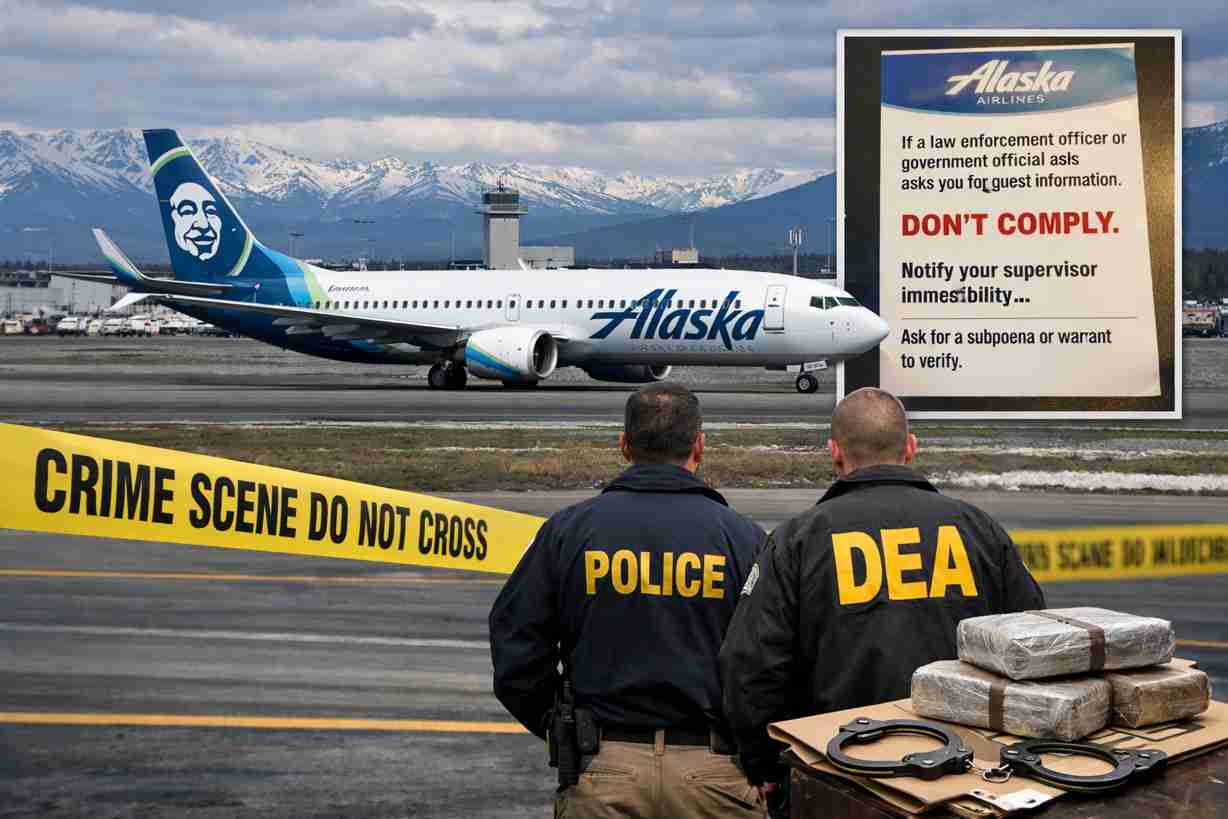
Alaska Airlines is facing mounting scrutiny from Alaska state officials after the Attorney General warned that internal company policies may be discouraging employee cooperation with law enforcement, prompting prosecutors to abandon otherwise viable criminal cases. The concerns come amid heightened attention on Anchorage’s role as a major gateway for passengers and cargo entering the state, particularly as Alaska grapples with the growing impact of illegal narcotics.
In a letter dated Dec. 30, 2025, to Alaska Airlines Chief Executive Officer Ben Minicucci, Alaska Attorney General Stephen Cox said state prosecutors have declined to pursue certain criminal cases due to fears that airline employees could face retaliation if they were called as witnesses. The letter, which was later made public, has raised questions about whether the airline’s internal guidance is inadvertently obstructing law enforcement efforts.
Public Safety and Prosecutorial Concerns
Cox framed the issue as part of what he described as an unprecedented public safety and public health crisis caused by illegal narcotics entering Alaska. According to the Attorney General, law enforcement partners advised him that Alaska Airlines “has adopted internal policies and practices that actively discourage employees from cooperating with law enforcement outside of formal legal process.”
Anchorage’s Ted Stevens Anchorage International Airport serves as one of the nation’s busiest cargo hubs and a critical entry point into the state. Cox emphasized that commercial aviation plays an unavoidable role in the movement of people and goods, placing airlines at the intersection of commerce, security, and criminal investigations.
While acknowledging the importance of privacy protections, due process, and individual rights, Cox warned that when employees witness conduct that is plainly suspicious or dangerous, policies that deter good-faith cooperation with law enforcement may unintentionally shield criminal activity. He suggested that such deterrence can undermine prosecutions when employee testimony is essential, ultimately discouraging prosecutors from filing charges.
Alleged Policy Contradictions
In his letter, Cox also pointed to what he described as a contradiction within Alaska Airlines’ internal guidance. He noted that the airline’s Code of Conduct encourages employees to contact law enforcement about bullying or potential human rights violations, yet appears to restrict cooperation when investigators seek information related to criminal activity.
This inconsistency, Cox argued, may be contributing to confusion among employees about when they are permitted to engage with authorities. That uncertainty, in turn, has reportedly led prosecutors to worry that calling airline staff as witnesses could expose them to workplace consequences.
Leaked Poster Sparks Backlash
Cox cited a leaked internal Alaska Airlines poster as a primary reason for formally raising the issue. The poster, which appeared earlier this year at several airports, was later shared on social media by an Alaska Airlines employee and quickly went viral.
The poster warned employees: “If a law enforcement officer or government official asks you for guest information, don’t comply.
Notify your supervisor immediately.” It further instructed staff to “ask for a subpoena or warrant to verify.”
Although the messaging reflected basic principles of data protection and legal compliance, it triggered intense public backlash. Critics accused the airline of obstructing federal law enforcement operations, and the controversy escalated to calls for federal authorities to review or potentially withdraw funding tied to the airline.
Alaska Airlines Responds
Alaska Airlines has sought to distance itself from the poster, stating that it was distributed without approval from corporate headquarters. The company said the signage did not reflect any change in its longstanding policies regarding cooperation with local, state, and federal law enforcement agencies.
The airline emphasized that it takes its legal obligations seriously and remains committed to working cooperatively with authorities. A spokesperson added that Alaska Airlines has not introduced any policy designed to discourage lawful cooperation, noting that employees receive training on how to engage with law enforcement in a manner consistent with legal process and company guidelines.
Calls for Clarification and Cooperation
Attorney General Cox has requested a meeting with senior Alaska Airlines leadership to determine whether existing policies require clarification or refinement. He said the objective is to explore how the airline and the State of Alaska can work together, consistent with the law, to reduce the flow of illicit controlled substances into the state.
As scrutiny continues, the situation highlights the growing tension between corporate compliance practices and law enforcement priorities, particularly in industries that serve as critical gateways for commerce and travel.
