


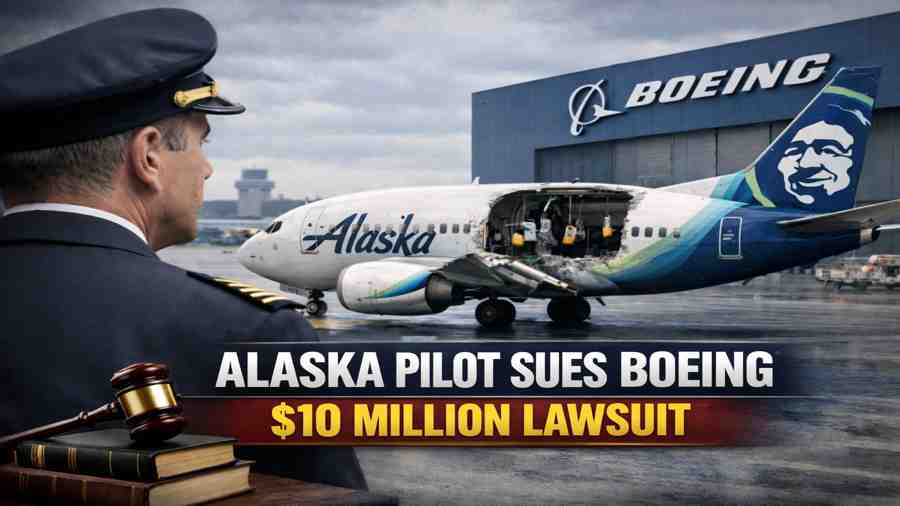
A high-profile legal challenge adds pressure on Boeing as scrutiny over manufacturing quality continues
An Alaska Airlines pilot has filed a $10 million lawsuit against Boeing, alleging reputational and professional harm following a January 2024 midair emergency involving a Boeing 737 MAX 9. The lawsuit adds a new dimension to the ongoing fallout from the incident, which prompted a nationwide grounding of the aircraft type and intensified regulatory scrutiny of Boeing’s manufacturing processes.
The case stems from a fuselage failure that occurred shortly after Alaska Airlines Flight AS1282 departed Portland International Airport en route to Ontario International Airport in California. The aircraft was carrying 171 passengers and six crew members at the time of the incident.
The January 2024 Decompression Event
The incident occurred minutes after takeoff on January 5, 2024, as the aircraft climbed through approximately 16,000 feet. A fuselage door plug covering an unused mid-cabin emergency exit separated from the aircraft, triggering an explosive decompression inside the cabin.
The sudden pressure loss caused oxygen masks to deploy automatically and expelled personal belongings from the aircraft. Despite the chaotic conditions, the flight crew stabilized the aircraft and performed an emergency return to Portland.
No fatalities were reported. Several passengers and crew members later described minor injuries, including ear trauma and bruising. Aviation authorities subsequently praised the crew’s response, noting it was consistent with emergency training and procedures.
Federal Investigation Findings
The National Transportation Safety Board (NTSB) launched an investigation into the incident, focusing on the aircraft’s structural integrity and manufacturing history. Investigators determined that the door plug assembly was missing four critical retaining bolts that are required to secure it to the fuselage.
The NTSB traced the issue to manufacturing and installation lapses involving Boeing and its supplier, Spirit AeroSystems. According to the investigation, the door plug had been reinstalled during prior maintenance work at Boeing’s Renton, Washington, facility without the necessary hardware, compromising the aircraft’s structural integrity.
In response to the findings, U.S. regulators grounded the Boeing 737 MAX 9 fleet nationwide. The decision further intensified regulatory oversight of Boeing, which has faced ongoing scrutiny since earlier safety crises involving the 737 MAX program.
Lawsuit Allegations and Claims
The pilot’s lawsuit, filed on December 31, 2025, seeks $10 million in damages for emotional distress and reputational harm. According to the complaint, Boeing attempted to shift responsibility for the incident in its legal defenses against passenger lawsuits by implying improper aircraft operation or maintenance by third parties.
The pilot alleges that these implications indirectly cast blame on the cockpit crew, contributing to public misperceptions regarding pilot responsibility for the incident. The filing claims that this narrative influenced media coverage and exposed the pilot to personal legal actions, professional strain, and damage to career standing.
The lawsuit argues that the reputational consequences extended beyond the immediate aftermath of the incident, affecting the pilot’s professional life even as federal investigations placed responsibility squarely on manufacturing and installation failures.
Broader Legal and Industry Impact
The pilot’s case follows earlier lawsuits filed by flight attendants who were onboard the aircraft. Those suits cited lasting physical and psychological injuries stemming from the decompression event. Passenger class-action lawsuits related to the incident also remain active.
Boeing has not publicly commented on the pilot’s specific claims. The company has previously acknowledged quality control shortcomings and pledged to strengthen manufacturing oversight, while working to restore confidence among regulators, airlines, and the traveling public.
A Human Dimension to Boeing’s Safety Reckoning
While much of the focus surrounding the January 2024 incident has centered on technical failures and regulatory compliance, the pilot’s lawsuit underscores the personal and professional consequences faced by airline crews caught in high-profile aviation crises.
As courts continue to examine responsibility and liability, the outcome of the case could influence how aviation manufacturers address crew protection and reputational harm in future litigation. The lawsuit adds to the growing list of legal challenges confronting Boeing as it works to stabilize its business and reputation amid heightened scrutiny of aircraft safety and production quality.
