


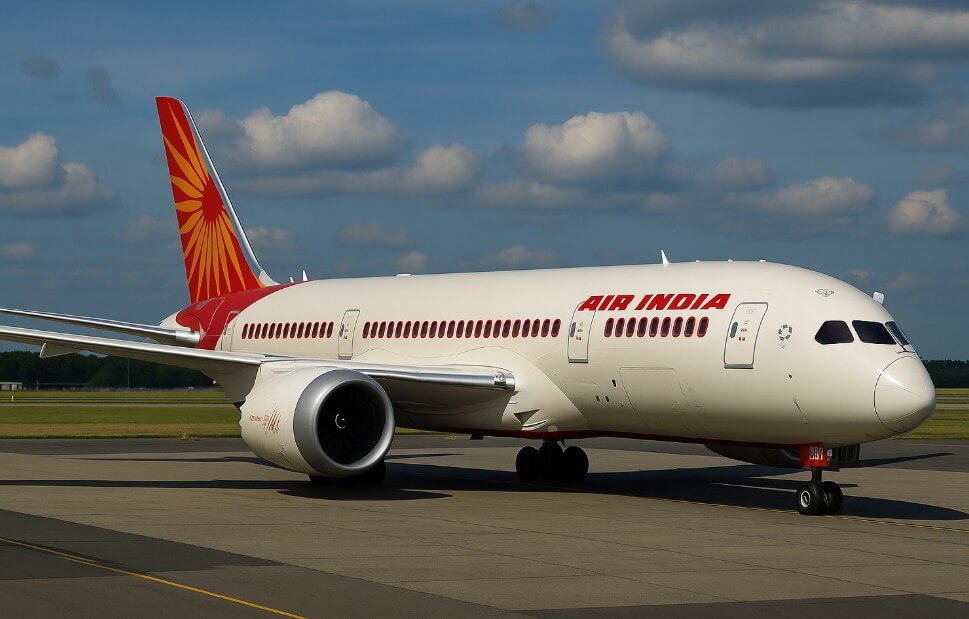
GURUGRAM — Air India is preparing for a pivotal year in 2026, planning to induct 26 new aircraft and accelerate major cabin and fleet upgrades even as overall capacity is expected to remain flat. The moves mark the next phase of the Tata Group–owned carrier’s multiyear transformation, which continues to be shaped by supply chain disruptions, integration milestones, and the fallout from the June 12 Boeing 787 crash.
CEO Campbell Wilson said the coming year will be defined by significant progress in fleet renewal and retrofits, despite the airline simultaneously retiring older jets and returning leased wide-bodies. He described 2026 as a period of “very visible change,” driven by new aircraft arrivals and upgrades across both wide-body and narrow-body fleets.
Air India currently operates nearly 300 aircraft across its full portfolio, including roughly 187 under the Air India brand and more than 110 for Air India Express. Its wide-body operation comprises 22 Boeing 777s and 32 Boeing 787s, many of which are now scheduled for phased upgrades or retirement.
According to Wilson, the airline will return several leased Boeing 777s next year and retire three owned 777s as part of its plan to modernize long-haul operations. The exits will offset planned additions. “The number of aircraft we go into the year with is about the same as the number of aircraft we end the year with,” he said, underscoring that 2026 will be a transitional period rather than one of net growth.
Air India expects to induct six wide-body aircraft in 2026—including Boeing 787-9s and Airbus A350-1000s—alongside 20 narrow-body jets. The airline also plans to introduce its first Boeing 787-9 from its massive 570-aircraft order before Christmas. But Wilson noted that meaningful fleet expansion will occur later, as most “net additions begin” in 2027 and 2028. Supply chain delays have slowed deliveries, leaving Air India with “white-tail” aircraft originally intended for other carriers. Of the 570 aircraft on order, 524 have yet to be delivered.
Retrofits will form another major component of next year’s transformation. Air India’s long-haul fleet modernization program, long constrained by shortages of premium seating, is set to accelerate. The first two upgraded Boeing 787-8s are due to reenter service in February, with the airline targeting two to three wide-body retrofits each month. By the end of 2026, approximately two-thirds of its Boeing 787 fleet will be refurbished, with full completion expected by mid-2027.
On short-haul routes, Air India has already refreshed about 83 percent of its narrow-body aircraft. But slower-than-expected Airbus and Boeing deliveries are forcing the carrier to keep 17 older narrow-bodies in service longer than planned.
Integration work following the November 2024 merger of Vistara into Air India will also advance in the coming months. Vistara aircraft will begin adopting Air India’s new livery and cabin branding, a shift the company says will support group-wide product consistency. The rebranding will roll out gradually as individual aircraft undergo maintenance and cabin modifications.
The airline’s operational strategy in 2026 is also being shaped by the June 12 crash of a Boeing 787-8 operating from Ahmedabad to London Gatwick. The accident killed 260 people—241 passengers and crew and 19 on the ground—leaving a single survivor. Wilson said that 95 percent of families affected have now received interim compensation, and he emphasized that the carrier “will continue long-term support.”
Market dynamics remain mixed across Air India’s network. The airline currently averages one flight departure every 70 seconds, reflecting its scale across domestic and international markets. But the CEO said demand on U.S. routes has weakened amid airspace restrictions, extended flight times, and ongoing visa challenges. He described the softening as temporary and said he expects demand to rebound.
Air India is also preparing to expand its loyalty offerings. The Maharaja Club program will soon allow passengers to redeem points on Air India Express, opening cross-network benefits as the companies align under the Tata aviation platform.
Looking ahead, Air India forecasts that major growth will resume from 2027 onward. With hundreds of aircraft yet to be delivered, the airline anticipates a substantial expansion phase once supply chain conditions normalize and aircraft retirements and retrofits are complete. Management expects the next two years to lay the operational foundation for that growth.
