


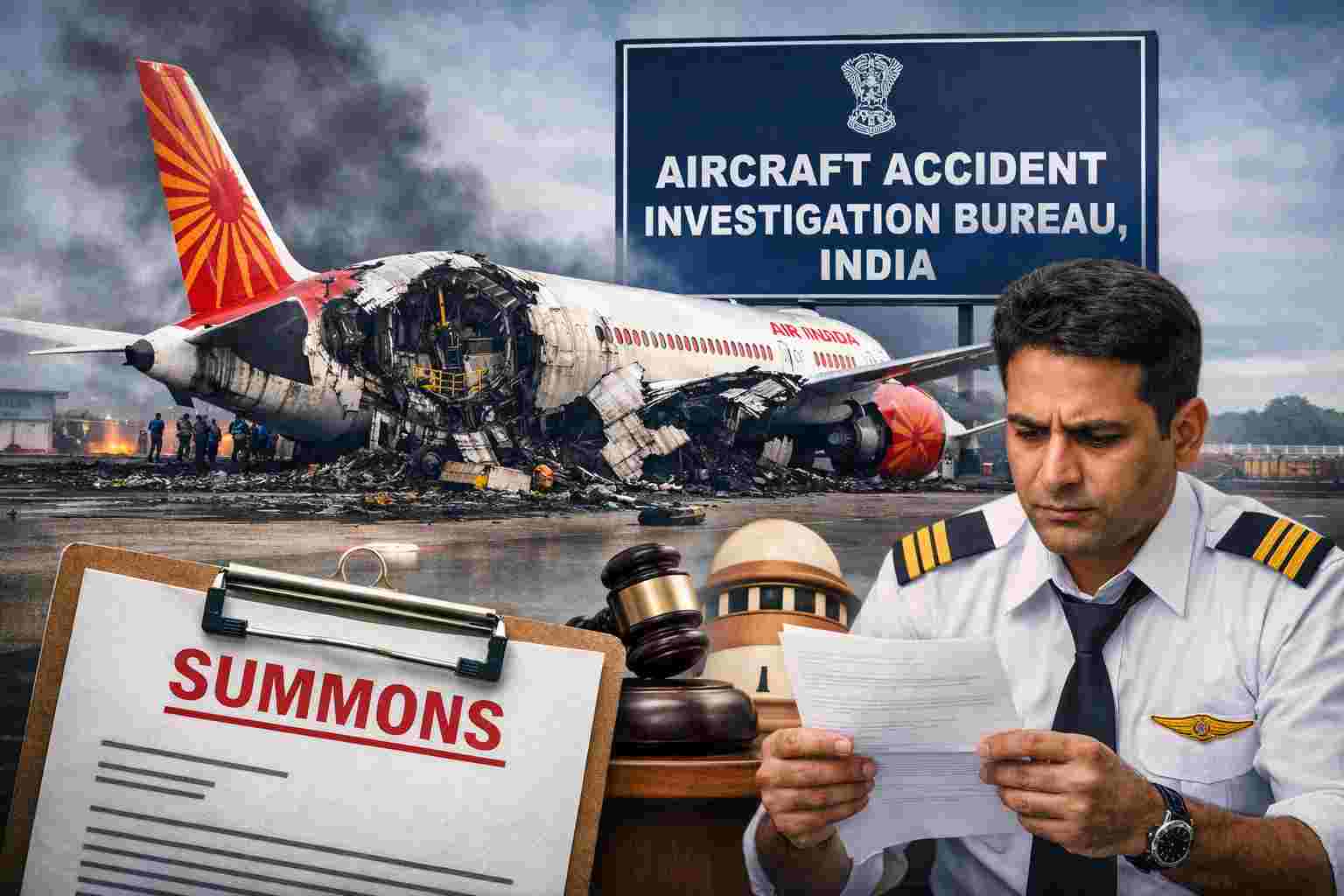
Strong Pushback From Pilots’ Body
AHMEDABAD—India’s aviation safety oversight is under renewed scrutiny after a pilots’ association objected to the Aircraft Accident Investigation Bureau’s (AAIB) decision to summon a relative of a deceased flight crew member in the ongoing probe into last year’s fatal Air India Boeing 787-8 crash in Ahmedabad.
The Federation of Indian Pilots (FIP) said it has served a legal notice challenging the AAIB’s summons issued to Capt Varun Anand, a commercial pilot and the nephew of the late pilot-in-command linked to the accident at Sardar Vallabhbhai Patel International Airport (AMD). The crash claimed multiple lives and remains under active examination.
Dispute Centers on Lack of Clarity in Summons
The pilots’ grouping said the summons was communicated to Capt Anand through his employer, Air India, without specifying the legal basis for the request or the investigative purpose behind it.
According to the FIP, Capt Anand was not told the statutory authority under which the AAIB was acting, the reason his appearance was being sought, or the capacity in which he was expected to participate. The federation argued that such omissions raise procedural concerns in an aviation safety investigation, where due process and transparency are considered essential.
The notice also questioned how a summons could be justified without clear explanation of the relevance of the individual being called.
FIP Questions Investigative Relevance
In its objection, the FIP maintained that Capt Anand had no connection to the aircraft, the flight, or any operational, maintenance, or certification activities related to the accident.
The federation emphasized that he was not present at the crash site and had no factual, technical, or operational knowledge relevant to the incident. As a result, the pilots’ body said the summons appears unnecessary and unsupported by any direct investigative need.
The grouping further argued that the AAIB should focus on evidence and testimony directly tied to the crash rather than summoning individuals who lack a demonstrable nexus to the event.
Concerns Over Broader Investigative Direction
Beyond the individual case, the FIP warned that summoning relatives of deceased crew members could signal a troubling shift in investigative direction.
The pilots’ association said that calling family members without clear justification creates an impression that the inquiry is drifting away from objective, technical fact-finding. It also raised concerns about the emotional toll such actions may impose on grieving families and the potential for reputational consequences for those summoned.
The federation described the summons as unwarranted and distressing, particularly given the timing and the personal loss involved.
Legal and Regulatory Standards Cited
The FIP cited the Aircraft (Investigation of Accidents and Incidents) Rules and international standards under ICAO Annex 13, arguing that the AAIB must operate within a defined mandate.
According to the federation, these frameworks restrict investigations to technical and safety analysis and explicitly discourage the attribution of blame or liability during the inquiry stage. The pilots’ body categorically rejected the idea that Capt Anand could be treated as a factual, technical, or expert witness in the matter.
The notice asserted that the AAIB had exceeded its mandate by pursuing testimony from an individual without direct involvement in the accident.
Supreme Court Petition Adds Legal Dimension
The dispute comes as the wider crash investigation faces judicial scrutiny.
According to the FIP, the father of the deceased captain, along with Capt Anand, has approached the Supreme Court through a writ petition challenging the independence and fairness of the AAIB-led probe. The legal filing adds a significant institutional layer to what is typically a technically driven process.
Such a challenge could increase pressure on investigators to demonstrate procedural integrity and reinforce public confidence in the independence of the inquiry.
Implications for Trust in Aviation Safety Oversight
The pilots’ grouping warned that the summons could harm professional standing and weaken trust between flight crew communities and investigative authorities.
Aviation accident investigations typically rely on technical evidence, flight data, maintenance records, air traffic control communications, and interviews with individuals directly connected to the aircraft and flight operations. Industry standards emphasize that investigations are intended to identify safety risks and prevent recurrence, rather than assign fault.
The FIP’s objection highlights the tension that can arise when investigators seek broad cooperation while stakeholders demand strict adherence to due process and the limited scope of safety inquiries.
Bottom Line
As the Air India Ahmedabad crash investigation continues, the pilots’ body’s legal challenge underscores growing unease over how the probe is being conducted. With legal scrutiny intensifying, the episode highlights the balance investigators must maintain between exhaustive fact-gathering and compliance with national and international norms governing aviation accident investigations.
