


Dual Long-Haul Strategy Gives Emirates Flexibility on the Dubai–Auckland Market
DUBAI — Emirates has spent nearly a decade testing two distinct long-haul strategies on one of the world’s most challenging airline routes, linking Dubai International Airport (DXB) and Auckland Airport (AKL).
Instead of choosing between a nonstop ultra-long-haul service and a traditional one-stop connection, the Dubai-based carrier continues to operate both models simultaneously. The approach has turned the route into a real-world case study of how airlines balance passenger demand, operational efficiency, and network flexibility on some of the longest flights in commercial aviation.
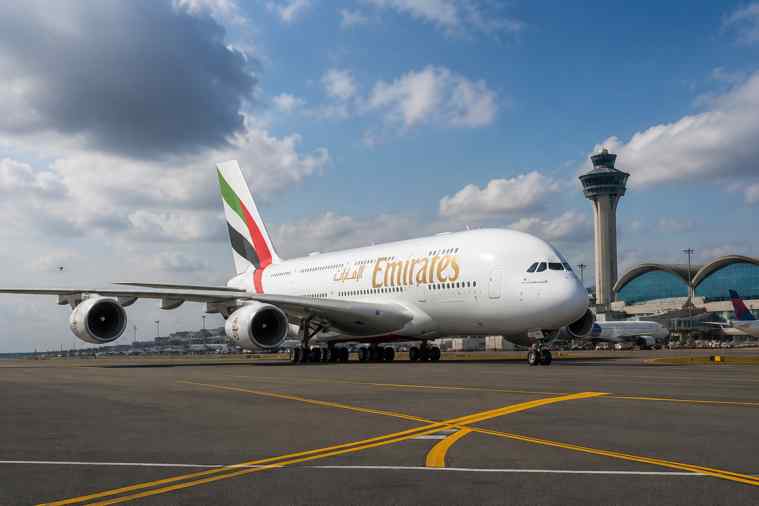
The approximately 8,820-mile (14,200-kilometer) journey between Dubai and Auckland remains the longest route in the Emirates network and is operated by the airline’s flagship Airbus A380 aircraft. Alongside the nonstop service, Emirates also maintains a one-stop option through Australia, most commonly via Sydney Airport (SYD), providing travelers with an alternative connection to its global hub in Dubai.
The strategy gained renewed attention in June 2026 when Emirates increased its nonstop Auckland service to daily operations while continuing to support traffic through its Australian network. The move highlights the airline’s effort to serve varying passenger needs while maximizing the performance of its long-haul fleet.
Nonstop Service Meets Demand for Faster Travel
Business and Premium Travelers Drive Interest in Direct Flights
When Emirates introduced the nonstop A380 service between Dubai and Auckland in 2016, it did not replace its existing Australia-based connections. Instead, the airline layered the new route on top of an already established network that linked New Zealand travelers to Europe, the Middle East, and Africa through Australian gateways including Sydney, Melbourne, and Brisbane.
The nonstop option was designed to reduce total travel time for passengers increasingly focused on convenience and efficiency. The service provides the fastest eastbound journey between Dubai and Auckland, taking approximately 15 hours and 50 minutes.
For business travelers and premium leisure passengers, eliminating a connection can significantly improve the travel experience. The direct route also strengthens Emirates’ competitive position against other international carriers serving New Zealand.
One-Stop Flights Provide Operational Resilience
While the nonstop flight offers speed, the one-stop model serves a different strategic purpose. Ultra-long-haul operations are particularly vulnerable to operational challenges such as adverse winds, payload restrictions, and seasonal weather conditions.
By maintaining connections through Australia, Emirates gains additional flexibility to manage passenger demand and aircraft deployment. Traffic can be shifted between the nonstop and connecting services depending on aircraft availability, fuel costs, cargo demand, and passenger loads.
Industry observers note that the one-stop routing can sometimes generate stronger financial returns, particularly during periods of softer premium-cabin demand or when cargo capacity becomes a higher priority. Distributing passengers across multiple flight segments can improve overall network efficiency while reducing some of the risks associated with operating a single ultra-long-haul service.
Economics of Operating the World’s Longest A380 Route
High Capacity Helps Offset Long-Haul Costs
The Dubai-to-Auckland route is among the most demanding regularly scheduled flights operated by the Airbus A380. The westbound sector exceeds 17 hours, placing it among the longest commercial flights flown by any airline.
Emirates relies on the A380’s large seating capacity to make the route economically viable. With more than 400 seats in a typical configuration, each flight can carry a substantial number of passengers while spreading operating costs across a larger customer base.
The route’s economics are heavily influenced by fuel consumption, crew costs, and aircraft utilization. During peak deployment periods, the service can offer roughly 6,800 seats across the schedule, helping Emirates maintain a strong presence in the New Zealand market.
In June 2026, the airline increased the nonstop service from four weekly flights to daily operations, according to Aero Routes. The change reflects Emirates’ effort to match capacity with seasonal demand while improving aircraft utilization.
Aircraft Allocation Remains a Key Consideration
Operating an A380 on the Auckland route also carries an opportunity cost. Every aircraft assigned to New Zealand is unavailable for other major international markets such as London, New York, or Sydney.
As a result, Emirates continually evaluates the performance of the route within its broader global network. Aircraft schedules are adjusted based on expected yields, passenger demand, and cargo opportunities, ensuring the airline allocates capacity where it can generate the strongest returns.
Tasman Network Strengthens Emirates’ Regional Presence
Fifth-Freedom Rights Expand Connectivity
A critical part of Emirates’ Auckland strategy lies in its fifth-freedom operations across the Tasman Sea. These rights allow the airline to operate flights between Australia and New Zealand, extending connectivity beyond its Dubai hub.
Although the nonstop Dubai–Auckland service attracts the most attention, the Australian routing provides valuable backup capacity and helps the airline absorb fluctuations in demand without major schedule disruptions.
Historically, Emirates used Sydney as a gateway to both Auckland and Christchurch Airport (CHC). Over time, Christchurch has become a more prominent destination within the Tasman network, allowing Emirates to avoid concentrating excessive capacity in Auckland while still maintaining strong connectivity across New Zealand.
Flexibility During Disruptions
The value of the dual-route strategy becomes particularly apparent during operational disruptions. Weather conditions in Auckland, congestion in Dubai, or payload limitations on ultra-long-haul flights can affect the reliability of nonstop operations.
When those challenges arise, the Australian connection allows Emirates to maintain service continuity without significant cancellations or major changes to its network.
The Tasman services also create additional revenue opportunities. Emirates can offer premium products, including the Airbus A380’s First Class suites, on relatively short Australia–New Zealand sectors where such amenities are uncommon. This helps the airline differentiate itself from regional competitors while generating additional premium revenue.
By operating both nonstop and one-stop services between Dubai and Auckland, Emirates has built a flexible long-haul model that balances customer convenience, operational resilience, and commercial performance. As airlines continue to evaluate the future of ultra-long-haul travel, the Emirates approach offers a practical example of how multiple route structures can coexist successfully within a single market.
