


German Airline Group Deepens Fleet Modernization Strategy With 20 Long-Haul Aircraft Purchase
FRANKFURT — Lufthansa Group has ordered 20 new long-haul aircraft from Airbus and Boeing in a deal valued at approximately $7.7 billion at list prices, as the airline group accelerates its long-term fleet modernization and sustainability strategy.
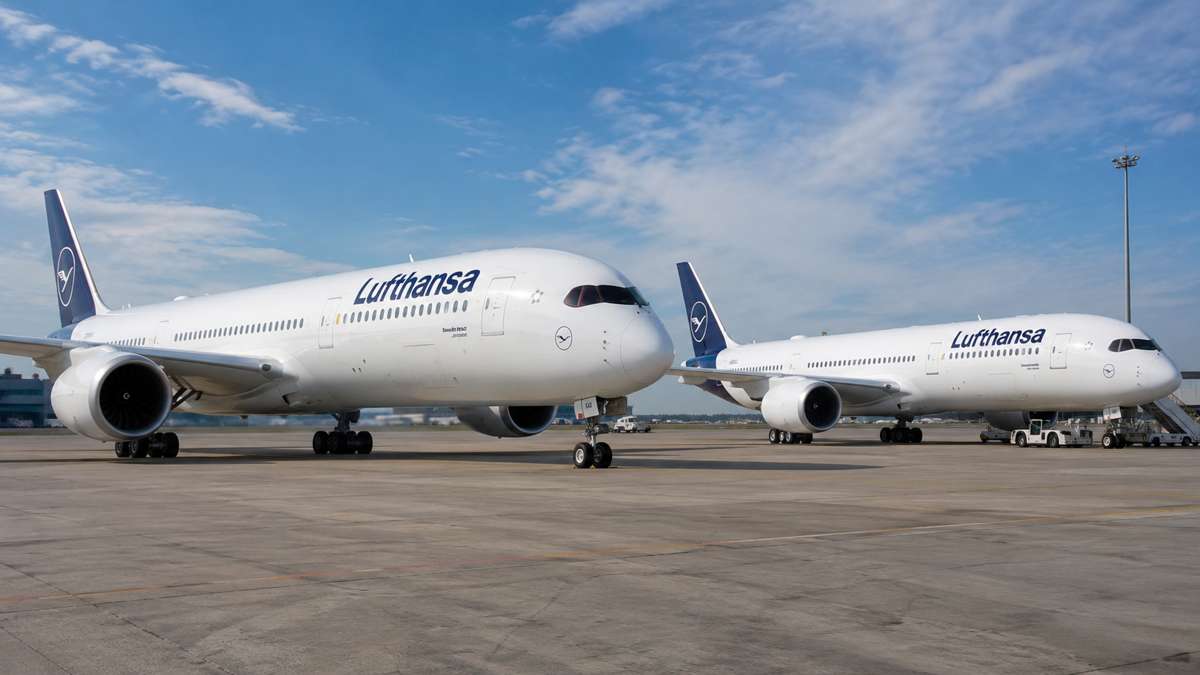
The order includes 10 Airbus A350-900 aircraft and 10 Boeing 787-9 Dreamliners, with deliveries scheduled between 2032 and 2034. The aircraft are expected to replace older, less fuel-efficient long-haul jets beginning in 2032.
The decision was initially approved by the Executive Board of Deutsche Lufthansa AG before receiving final authorization from the company’s Supervisory Board during its latest meeting.
The latest purchase extends what the airline group has described as the largest fleet renewal program in its history, reflecting growing pressure on global airlines to improve fuel efficiency, reduce emissions, and streamline operating costs amid evolving environmental regulations and volatile fuel markets.
Lufthansa Balances Orders Between Airbus and Boeing
The company opted for an even split between the world’s two largest commercial aircraft manufacturers, reinforcing longstanding relationships with both suppliers while maintaining operational flexibility across its network.
The Airbus A350-900 and Boeing 787-9 are both twin-engine widebody aircraft designed for long-haul international operations. They are widely regarded in the aviation industry as among the most fuel-efficient aircraft currently in service.
Lufthansa said the new jets would deliver lower fuel consumption, reduced noise levels, and significantly lower emissions compared with the aircraft they are expected to replace.
The group has not yet determined which of its airlines or operational hubs will receive the aircraft once deliveries begin. Lufthansa Group oversees several carriers across Europe, including Lufthansa Airlines, SWISS, Austrian Airlines, Brussels Airlines, and Eurowings.
CEO Highlights Sustainability and Premium Strategy
Carsten Spohr, Chairman of the Executive Board and CEO of Deutsche Lufthansa AG, said the order underscores the company’s long-term commitment to fleet modernization and environmental goals.
“He described it as a clear commitment to a modern fleet, to premium quality, and to further reducing carbon dioxide emissions.”
Spohr also emphasized the operational importance of newer aircraft technology as airlines seek to balance growth with sustainability targets.
“He noted that the state-of-the-art Airbus A350 and Boeing 787 are more fuel-efficient, quieter, and have lower emissions than their respective predecessors.”
The aviation sector remains under mounting scrutiny from regulators and environmental groups over its carbon footprint. Airlines globally have increasingly turned toward next-generation aircraft as one of the most immediate ways to reduce emissions while maintaining network growth.
Fleet Standardization Expected to Lower Costs
Operational Efficiency Gains Across the Group
Beyond environmental benefits, Lufthansa expects the new aircraft to generate operational and financial efficiencies through greater fleet standardization.
The company said a more unified long-haul fleet would reduce operational complexity while improving flexibility and reliability across its airline network.
Maintenance expenses and operating costs are also expected to decline as a result of the modernization program. Additional efficiencies are anticipated in pilot and cabin crew training, aircraft certification, and spare parts management.
For multi-airline groups such as Lufthansa, standardized fleets can simplify aircraft deployment across hubs and subsidiaries while enabling more efficient staffing and technical support systems.
Industry analysts have increasingly pointed to fleet simplification as a critical strategy for airlines seeking to manage rising labor costs, supply chain disruptions, and ongoing aircraft maintenance challenges.
Lufthansa’s Aircraft Backlog Continues to Grow
More Than 230 Aircraft on Order
Including the newly announced purchase, Lufthansa Group now has 232 aircraft on order, according to the company. Of those, 107 are next-generation long-haul aircraft.
The delivery timeline between 2032 and 2034 reflects Lufthansa’s long-range planning approach as the carrier prepares for future replacement cycles across its intercontinental fleet.
The additional Airbus A350-900s and Boeing 787-9s will join a broader pipeline of aircraft expected to enter service over the coming years as the group continues reshaping its fleet around newer, more efficient models.
The order also provides a fresh boost for both Airbus and Boeing as global demand for widebody aircraft continues recovering following years of pandemic-related disruption in international air travel markets.
