


Boeing Advances Long-Delayed Widebody Program With First Customer Aircraft Flight
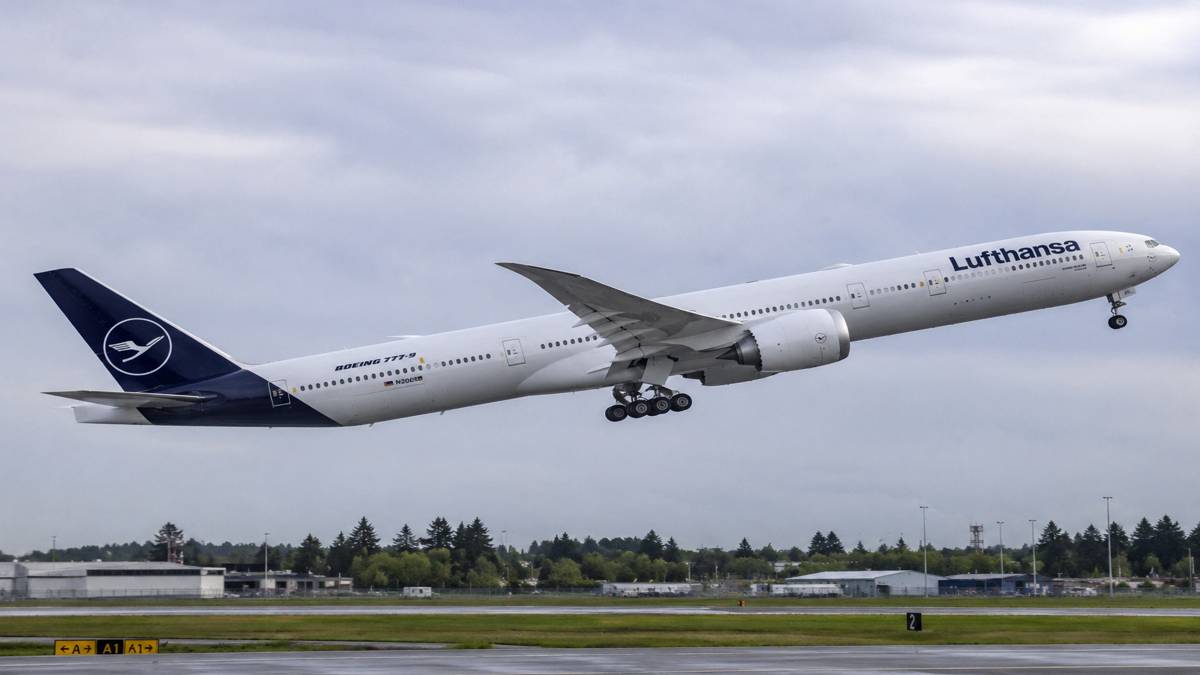
Boeing reached a key milestone in its long-delayed 777X program after the first production Boeing 777-9 built for Deutsche Lufthansa AG completed its maiden flight on May 7, signaling progress toward the aircraft’s expected commercial debut in 2027.
The aircraft, identified as WH128 with serial number 1781 and registration N20080, departed from Paine Field Airport in Everett, Washington, and returned shortly before 5 p.m. local time following a multi-hour evaluation flight.
The successful test marks the first time a customer-configured Boeing 777-9 aircraft has taken to the skies, representing an important step for Boeing as it works through years of certification setbacks and production delays.
Lufthansa remains the launch customer for the Boeing 777-9 and has firm orders for at least 20 aircraft as part of a broader effort to modernize its long-haul fleet.
The maiden sortie lasted approximately three hours. During the flight, the aircraft climbed to 39,000 feet and reached a top speed of 492 knots, according to publicly available flight tracking data.
Industry observers view the flight as a positive indication that Boeing’s 777X program may be entering a more stable phase after multiple disruptions delayed the aircraft’s introduction by nearly seven years.
Originally expected to enter service around 2020, the 777X program encountered a series of challenges, including heightened regulatory scrutiny, engineering modifications, and production-related issues that pushed deliveries well beyond initial timelines.
Lufthansa Positions 777-9 as Core Long-Haul Aircraft
Lufthansa plans to base the Boeing 777-9 primarily at Frankfurt Airport, where the airline operates most of its premium long-haul services.
The aircraft is expected to gradually replace older Boeing 747-400 jets, several of which have remained in service longer than originally planned due to delays affecting the 777X program.
Some of Lufthansa’s remaining 747-400 aircraft are now more than 26 years old, highlighting the airline’s need for more fuel-efficient and technologically advanced replacements.
Lufthansa Group Chief Executive Officer Carsten Spohr recently said the airline expects to begin receiving the new aircraft in 2027, enabling the phased retirement of aging jumbo jets.
The Boeing 777-9 is also expected to serve as a flagship aircraft for Lufthansa’s Allegris premium cabin concept, which is central to the airline’s strategy to strengthen its competitive position in the global premium travel market.
Allegris Cabin Strategy
The Allegris configuration will include redesigned First Class suites, upgraded Business Class seating, larger entertainment screens, and enhanced passenger comfort systems tailored for ultra-long-haul operations.
Among the most notable features is Lufthansa’s Allegris First Class Suite Plus layout, which introduces double-bed seating concepts aimed at high-end international travelers.
The airline is betting heavily on premium cabin improvements as carriers worldwide compete for lucrative long-haul business and luxury leisure demand.
Boeing 777-9 Features Efficiency and Capacity Improvements
The Boeing 777-9 incorporates several major aerodynamic and operational upgrades compared with previous Boeing widebody aircraft.
Powered by GE9X engines, the aircraft produces roughly 220,000 pounds of combined thrust while offering lower fuel consumption and reduced noise emissions compared with earlier-generation jets.
The aircraft also features composite wings with folding wingtips, a design intended to increase aerodynamic efficiency while maintaining compatibility with existing airport gates.
According to estimates cited by aviation publication Simple Flying, the Boeing 777-9 could deliver approximately 20% to 25% lower fuel burn per seat compared with the Boeing 747-400.
Passenger Comfort Enhancements
Beyond operational efficiencies, Boeing designed the aircraft with several passenger-focused upgrades, including lower cabin altitude, larger windows, wider cabin architecture, and improved humidity systems intended to enhance comfort on long-haul flights.
The aircraft is expected to accommodate approximately 426 passengers while also offering expanded cargo capability compared with several older four-engine widebody aircraft still operating globally.
The latest test flight underscores Boeing’s efforts to restore confidence in one of its most important commercial aircraft programs after years of delays and certification challenges.
For Lufthansa, the successful flight represents another step toward introducing a new generation of long-haul aircraft that will anchor its international operations for decades to come.
