


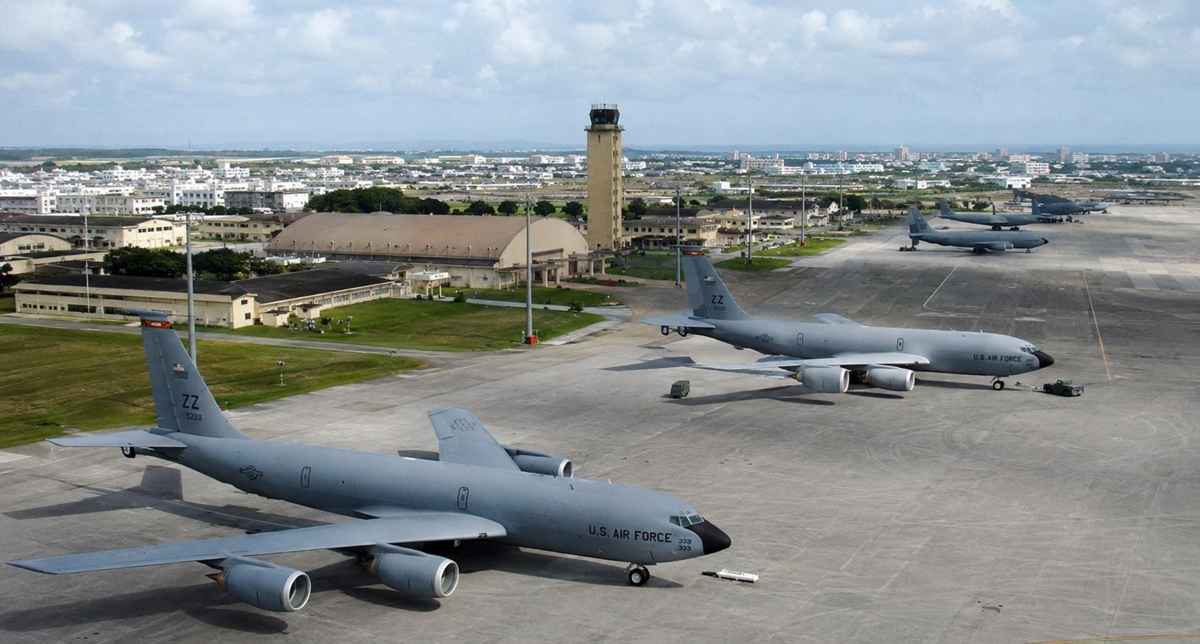
Six Key Overseas Installations Power America’s Global Air Operations
The United States maintains one of the world’s largest overseas military aviation networks, using strategically positioned air bases to support combat operations, deterrence missions, humanitarian response, and allied coordination across Europe, the Middle East, and the Indo-Pacific region.
These overseas installations allow the U.S. Air Force to rapidly deploy bombers, fighter aircraft, transport fleets, reconnaissance platforms, and support personnel far beyond the continental United States. The bases also serve as major logistics and command hubs for NATO operations, regional security missions, and coalition air campaigns.
From Japan and Guam to Germany and Qatar, the largest foreign U.S. Air Force bases play a central role in maintaining American military reach across multiple theaters.
Overseas Bases Anchor U.S. Global Strategy
The six largest and most strategically significant overseas U.S. Air Force bases each serve distinct operational purposes, ranging from bomber deployments and intelligence gathering to medical evacuation and combat coordination.
6. Yokota Air Base – Japan
Located near western Tokyo, Yokota Air Base functions as the command center for U.S. air operations in Japan and much of the Asia-Pacific region. Although smaller in land area than several other Pacific installations, Yokota remains one of the Air Force’s most important overseas facilities because it hosts both U.S. Forces Japan and the Fifth Air Force headquarters.
The base is heavily focused on logistics and transport missions throughout the Pacific theater. Aircraft assigned to the 374th Airlift Wing regularly move personnel, cargo, and emergency supplies across the region.
Key Highlights
Headquarters and Operations
- Headquarters of U.S. Forces Japan
- Hosts the 374th Airlift Wing
- Supports joint U.S.-Japan military coordination
Aircraft and Strategic Role
- Operates C-130J Super Hercules aircraft
- Serves as a major Pacific logistics hub
Base Details
- Land Area: 1,700 acres
- Runway Length: 11,000 feet
- Estimated Population: Up to 14,000
Incirlik Remains Critical NATO Airfield
5. Incirlik Air Base – Turkey
Incirlik Air Base in Adana, Turkey, continues to serve as one of NATO’s most strategically important airfields. While Turkey owns the installation, the U.S. Air Force maintains a substantial operational presence under alliance agreements.
The facility supports air combat operations, aerial refueling missions, surveillance activities, and broader regional deterrence efforts across the Middle East. Its hardened aircraft shelters and extensive fuel reserves make it a critical wartime support location.
Key Highlights
Military Operations
- Supports NATO air operations
- Conducts surveillance and refueling missions
- Hosts the 39th Air Base Wing
Strategic Importance
- Shared by Turkish and U.S. Air Forces
- Located near key Middle East operational zones
- Contains hardened aircraft shelters
Ramstein Serves as Europe’s Mobility Backbone
4. Ramstein Air Base – Germany
Ramstein Air Base in southwestern Germany serves as the backbone of U.S. air mobility operations across Europe. The installation hosts both U.S. Air Forces in Europe and NATO Allied Air Command, making it a central coordination point for allied air operations.
The base manages cargo transport, medical evacuation missions, training exercises, and coalition planning efforts. Ramstein also plays a leading role in large-scale NATO exercises involving multiple allied air forces.
Key Highlights
Headquarters and Missions
- Headquarters of U.S. Air Forces in Europe
- Major NATO coordination center
- Supports medical evacuation operations
- Home to the 86th Airlift Wing
Base Details
- Land Area: 3,500 acres
- Two runways
- Nearby American population: About 54,000
- Main aircraft: C-130J Super Hercules
Strategic Role
- Key gateway for European military operations
- Central hub for air mobility missions
Al Udeid Leads Middle East Air Operations
3. Al Udeid Air Base – Qatar
Al Udeid Air Base near Doha is the largest U.S. military installation in the Middle East and serves as the forward headquarters for U.S. Central Command air operations.
The base coordinates coalition air traffic throughout the region and hosts combat aircraft, aerial refueling tankers, reconnaissance platforms, and transport fleets. Qatar has invested billions of dollars in recent years to expand and modernize the installation.
Key Highlights
Operational Role
- Hosts CENTCOM’s air operations center
- Supports coalition combat missions
- Home to the 379th Air Expeditionary Wing
Infrastructure and Capacity
- Land Area: 11,000 acres
- Runway Length: 12,300 feet
- Troop Presence: More than 10,000 personnel
- Supports C-17 aircraft, tankers, and ISR platforms
Strategic Importance
- Largest U.S. base in the Middle East
- Critical hub for Gulf-region operations
Kadena Anchors Indo-Pacific Deterrence
2. Kadena Air Base – Japan
Kadena Air Base in Okinawa is widely viewed as the most powerful U.S. Air Force installation in East Asia. Positioned near Taiwan and mainland China, the base plays a major role in regional deterrence and rapid-response operations.
The 18th Wing operates fighters, tankers, surveillance aircraft, and rescue helicopters from Kadena. The installation also supports Navy patrol aircraft and missile defense systems.
Key Highlights
Military Capabilities
- Largest U.S. Air Force combat wing
- Supports joint military operations
- Houses significant ammunition stockpiles
Infrastructure
- Land Area: 11,000 acres
- Two parallel runways
- Runway Length: 12,100 feet
- More than 4,800 facilities
Strategic Role
- Front-line base for Indo-Pacific deterrence
Andersen Air Force Base Powers Pacific Bomber Missions
1. Andersen Air Force Base – Guam
Andersen Air Force Base in Guam stands as the most important forward bomber hub in the Pacific. The installation regularly hosts rotating deployments of B-52 Stratofortress, B-1 Lancer, and B-2 Spirit bombers.
Its extensive fuel reserves and large munitions storage facilities allow the base to support sustained combat operations throughout the Indo-Pacific region. Andersen’s location also provides rapid access to East Asia and the South China Sea.
Key Highlights
Bomber Operations
- Major U.S. bomber deployment hub
- Supports B-2 stealth bomber operations
- Home to the 36th Wing
Infrastructure and Logistics
- Massive fuel storage capacity
- Extensive weapons and munitions facilities
Strategic Role
- Central platform for Pacific combat operations
- Supports rapid deployment across the Indo-Pacific theater
