


Strong Q1 Performance Signals Momentum in Commercial Programs
SEATTLE — Boeing reported its strongest first-quarter commercial delivery performance since 2019, underscoring renewed operational momentum as it advances certification timelines for key aircraft programs and addresses engine-related challenges tied to its flagship widebody jet.
The company delivered 143 commercial aircraft in the first quarter of 2026, up from 130 in the same period last year. The 737 Max family accounted for the bulk of deliveries at 114 units, reflecting sustained demand for narrowbody aircraft.
Commercial aircraft revenue rose 13% year-over-year to $9.2 billion, while total company revenue reached $22.2 billion, up 14%. Boeing posted an adjusted loss per share of $0.20, outperforming analyst expectations of a $0.68 loss and lifting its shares by approximately 4% in pre-market trading.
CEO Kelly Ortberg emphasized operational discipline, stating the company remains focused on safety and quality while increasing production to meet customer commitments.
Certification Progress for 737 Max 7 and Max 10
Boeing remains on track to certify the 737 Max 10 and 737 Max 7 this year, with initial deliveries of both narrowbody variants expected in 2027.
The Federal Aviation Administration granted approval during the quarter for Boeing to begin Type Inspection Authorization Phase 2 for the Max 10, marking the final stage of its certification process.
Ryanair CEO Michael O’Leary stated in March 2026 that Boeing expects Max 10 certification in the third quarter of this year. FAA Administrator Bryan Bedford confirmed that regulators have not identified issues that would delay certification of either aircraft beyond 2026.
Meanwhile, Southwest Airlines expects the smaller Max 7 to receive certification by August 2026 and plans to serve as its launch operator.
777-9 Program Advances Toward 2027 Entry Into Service
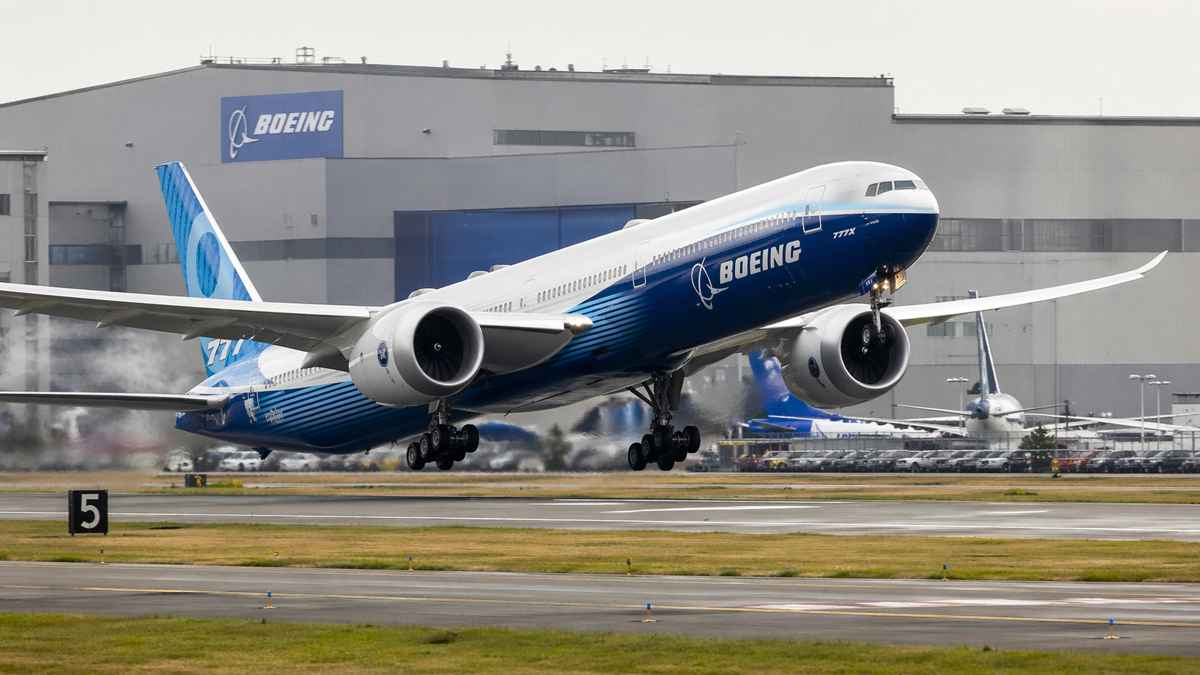
On the widebody front, Boeing reaffirmed that the 777-9 remains on track for first delivery in 2027. The aircraft is expected to enter service with Lufthansa at Frankfurt Airport.
The FAA cleared Boeing to proceed with Phase 4A of the Type Inspection Authorization process for the 777-9 during the quarter. This represents the fourth stage in a five-phase certification framework.
Boeing is currently conducting multiple certification phases in parallel using separate test aircraft, though only four of the more than two dozen 777-9 airframes built are actively used in flight testing.
Production Expansion and Growing Backlog
Boeing maintained its 737 production rate at 38 aircraft per month as of late March, with plans to increase output in increments of five per month.
A fourth 737 assembly line at the Renton, Washington facility is scheduled to open this summer, potentially boosting narrowbody production to 53 aircraft per month by year-end. The 787 Dreamliner program is currently producing eight aircraft monthly.
The company recorded net orders for 140 commercial aircraft in the quarter, including major deals with Delta Air Lines, Aviation Capital Group, and Air India. Boeing’s commercial backlog now exceeds 6,100 aircraft, valued at approximately $576 billion.
Airlines Adjust Fleets Amid Delivery Delays
Delays in the 777-9 program have forced airlines to extend the service life of older aircraft.
Lufthansa has reactivated Airbus A340s, Boeing 747-400s, and Airbus A380s to meet rising travel demand. The airline still plans to retire its 747-400 fleet by the end of the decade.
Similarly, Emirates—the largest 777X customer with 270 aircraft on order—has launched a large-scale retrofit program for its existing Boeing 777 and Airbus A380 fleets to manage capacity.
For the 737 Max 10, WestJet is the designated launch customer but expects entry into service in late 2026 or early 2027. United Airlines anticipates its first deliveries in 2027 or later, while Alaska Airlines has adjusted expectations to a similar timeframe.
GE9X Engine Fix Seen as Critical to 777-9 Timeline
A key factor in Boeing’s 777-9 schedule is the resolution of a durability issue in the GE9X engine, developed by GE Aerospace.
CEO Larry Culp confirmed during the company’s Q1 2026 earnings call on April 21 that engineers have identified the root cause of a mid-seal durability issue and are finalizing a redesign. The company is now ramping supplier production for the updated component.
The issue was first identified in January 2026 during a shop visit involving a flight-test engine, where a crack was discovered in a mid seal—a critical component that balances temperature and pressure within the engine core.
Despite the setback, GE Aerospace stated the fix is not expected to delay 777-9 certification beyond its current timeline.
Industry Implications and Outlook
The GE9X engine, the largest and most powerful commercial turbofan ever built, delivers 10% greater fuel efficiency than its predecessor. However, its development has been marked by recurring durability challenges, making the latest fix a focal point for airlines and regulators.
Carriers including Emirates, Lufthansa, Cathay Pacific, and Singapore Airlines are closely monitoring progress, as further delays could disrupt long-haul network planning and fleet modernization strategies.
Boeing’s ability to execute on certification milestones, scale production, and coordinate with GE Aerospace on engine readiness will be critical to meeting its 2027 delivery targets.
With improving financial performance, rising deliveries, and a substantial backlog, Boeing appears positioned for recovery—but execution risks tied to certification and supply chain stability remain central to the industry’s outlook.
